Physician-Led Non-Surgical Lifting & Aesthetic Medicine in Gangnam, Seoul
4.8 Google Rating (56 Reviews)
en-US

Medical Guide
Eye Rejuran: Fifteen Minutes, Three Visits, Thin Skin
The shortest appointment in the clinic's eye-area category and one of its longer commitments. Why those two facts belong in one sentence, and the risks.
Schedule a ConsultationEye Rejuran: Fifteen Minutes, Three Visits, Thin Skin
Medically reviewed by Dr. Jin-Woo Doh, Representative Director, JD Clinic
Fifteen minutes is the shortest treatment time published anywhere in JD Clinic's eye-area category.
At least three treatments is one of the longer commitments on it.
Those two facts sit in the same published description and they are the whole planning problem. A treatment that takes a quarter of an hour sounds like something you drop into a trip. A treatment that asks for three or more sessions at a stated two-to-three-month maintenance interval is not that, and confusing the two is the most common way patients end up having a third of a plan and evaluating it as though it were the whole.
What the clinic publishes
What it is. An eye-area treatment using Rejuran specifically formulated for the delicate skin around the eyes, intended to support skin regeneration, and described as able to be performed comfortably on sensitive areas.
Who it is for. Adults with under-eye skin-quality concerns who want a gradual, non-surgical approach and understand that results vary. Patients from this market are described as considering it for fine lines, crepey texture, or concerns about skin quality.
Who it is not for. People with active infection or inflammation around the treatment area, known allergy to product ingredients, or certain bleeding or healing concerns.
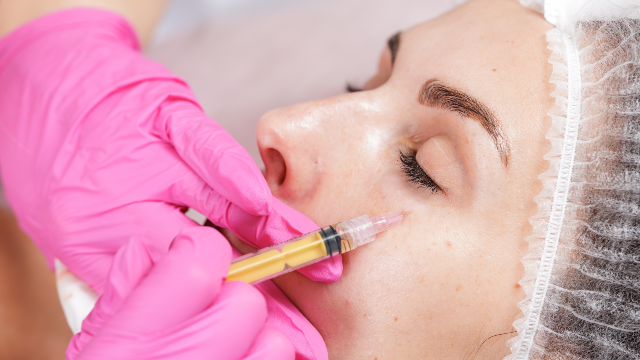
How the appointment runs. The eye area is prepared and cleaned. Anesthetic cream is applied for comfort. The eye-area formulation is administered to support skin regeneration. The treatment takes approximately 15 minutes. Afterward, avoid irritating the treated area, wash gently, protect from ultraviolet exposure and replenish moisture.
Afterward. Temporary swelling, redness, tenderness, bruising, small injection marks or raised bumps at injection points may occur. Stated recovery: one to two days.
Course and durability. A stated maintenance period of two to three months, with at least three treatments recommended.
Skin quality is not the same as structure
The most useful thing to establish before anything else: what this treatment is for, as distinct from what it is next to.
JD Clinic's eye-area category contains several treatments doing different jobs. Some address structure — laxity, sagging, the contour of the eye area. This one addresses skin quality — texture, fine lines, the crepey appearance of thin skin.
Those are different complaints that patients describe with the same words. "My eyes look tired." "The skin under my eyes has changed."
The distinction matters practically because a skin-quality treatment applied to a structural problem produces a small change and a disappointed patient — and the reverse is equally true. The National Library of Medicine's overview of skin aging describes both kinds of change, and its page on skin conditions covers the texture half.
So the question that belongs at the top of the consultation is: is what bothers me about the texture of the skin, or about where it sits?
Why fifteen minutes and three treatments are the same fact
Here is how to read those two numbers together.
A treatment designed to support regeneration is not producing a mechanical change you see when you stand up. It is prompting a process, and processes accumulate. That is why the appointment can be short and the plan cannot: the work is done by tissue over weeks, and the published expectation is built on at least three of those cycles.
Add the stated maintenance period of two to three months and the shape becomes clear. This is a course with intervals, not an appointment with a result.
Which produces three honest positions for a traveler, and it is better to choose one deliberately than to end up in one by accident.
Do the course. If you visit Korea more than once a year, or are staying long enough, the published plan is achievable.
Do one session knowing what it is. One of at least three. Not nothing, but not the described outcome either, and worth saying out loud to the clinician so the recommendation reflects it.
Ask whether this is the right treatment given one visit. The clinic's published approach is individualized assessment rather than device selection, and its about page sets that out. A patient who will be here once is a clinical input, not a scheduling detail.
The eye area changes the risk conversation
This is the part of the published record that deserves careful reading, because injectable treatments around the eye are not the same proposition as injectable treatments elsewhere on the face.
The named temporary effects are ordinary: swelling, redness, tenderness, bruising, small injection marks, raised bumps at injection points.
The less common list is not: infection, inflammatory nodules, allergic reaction, or vascular injury.
Four things to take from that, without alarm and without softening it.
Bruising here is visible. The skin around the eye is thin and bruises show. In a face where nothing else is treated, that is the thing people notice. The National Library of Medicine's page on bruises covers the timeline, which is measured in days rather than hours.
Raised bumps at injection points are named as an ordinary effect. Expected, temporary, and much less alarming when you were told in advance.
Allergy is on the list, which is why the ingredient question is real. Known allergy to product ingredients appears among the exclusions. Tell the clinic about allergies before you travel — the National Library of Medicine covers allergy and anaphylaxis if you want the background.
Vascular injury is the item that needs a threshold, not a search. Ask the clinic directly what would make them want to see you or hear from you urgently, and write the answer down before you leave. A threshold you were given beats a symptom list you looked up, particularly from a hotel room. The emergency medical services overview and the CDC's guidance on what to do when sick abroad cover the case where the answer is local care.
The bleeding and healing question
Among the exclusions: certain bleeding or healing concerns.
The practical version is the same as for any treatment that punctures skin, and it is worth repeating because patients consistently under-report it.
Write your medications down from the bottles, not from memory, and include products you would not describe as medication — the National Library of Medicine covers blood thinners, over-the-counter medicines and dietary supplements, and the last category is the one people leave out.
Never stop a prescribed medication on your own. That decision belongs to the clinician who prescribed it, in conversation with the clinic. Drug safety makes the general point.
Aftercare, which is mostly about light and friction
Four published instructions, all short: avoid irritating the treated area, wash the face gently, protect the skin from ultraviolet exposure, and replenish moisture.
For a visitor, the ultraviolet instruction is the one that collides with a trip. A week in Seoul contains daylight and the eye area is not easy to shade. Sunglasses and a hat are the cheapest compliance available, and the National Library of Medicine's guidance on sun exposure explains what recently treated skin is being protected from.
The friction instruction has a specific failure mode here too: rubbing your eyes is close to involuntary, particularly when tired, and a long-haul flight is the single most reliable way to become tired. Knowing that in advance is most of the fix.
What the record does not contain
No product identification beyond the name. The published description names the treatment family and that an eye-area formulation is used; it does not specify a product or manufacturer. Ask, and write the answer down — any future clinician will want it.
No comparison with the clinic's other eye-area treatments. There are several. Nothing in the record ranks them, and this article will not.
No outcome figures. No percentages, no response rates. The clinic publishes a patient review section, which is its own material rather than independent data.
No answer to "how many beyond three." The published minimum is three or more. The number for you comes from the consultation.
Five questions for the consultation
Is my concern the texture of the skin or the structure under it? The question that decides whether this treatment fits.
How many treatments would you plan, and at what intervals? The published minimum is a floor, not a plan.
Given that I can be here once, is this still your recommendation? Ask it plainly; the honest answer is useful either way.
How likely is visible bruising, and for how long? Thin skin, visible area, and you may have plans.
What would make you want to hear from me urgently? Get a threshold, in writing, before you leave the building.
Judging the result, and when
One more piece of timing, because it is the part patients get wrong most reliably.
A regeneration-based treatment does not produce a change you can evaluate on the way out of the building. The published aim is support for skin regeneration, which is tissue doing something over weeks — and the first week after any injectable treatment in thin skin is dominated by the ordinary after-effects rather than by the result.
So there are two distinct moments and they get confused.
The first days are swelling, small marks and possible bruising resolving. Nothing about them predicts the outcome.
Weeks later is where the described effect would show, and where a course-based plan starts to make sense.
Agree with the clinic in advance on when the result should be assessed, and — if you are having more than one session — on what should be visible before the next one. A plan with a review point in it is a plan. A plan without one leaves you judging a process at whatever moment you happen to look in a mirror, which for most travelers is the least representative day available.
And photograph yourself before the first session, in neutral light, without makeup. Comparing a memory with a face is not a comparison.
The Bottom Line
- Eye Rejuran is described as a skin-quality treatment for the delicate eye area — texture, fine lines, crepey skin — rather than a structural treatment for laxity or position.
- Published figures: about 15 minutes with anesthetic cream, a stated recovery of one to two days, a maintenance period of two to three months, and at least three treatments recommended.
- The short appointment and the multi-session course are the same fact: a regeneration-based treatment accumulates, so one session is a fraction of the described plan.
- The less common risk list names infection, inflammatory nodules, allergic reaction and vascular injury — ask the clinic for an urgency threshold and write it down.
- Disclose allergies and anything affecting bleeding or healing before you travel, and never stop a prescribed medication on your own.
Frequently Asked Questions
How long does the appointment take?
Approximately 15 minutes of treatment, after anesthetic cream is applied.
How many sessions are recommended?
At least three, according to the clinic's published description, with a stated maintenance period of two to three months.
What is the recovery like?
The clinic lists one to two days. Temporary swelling, small bumps, redness or bruising may occur.
Will the bruising show?
It can. The skin around the eyes is thin and bruising there is visible. Ask the clinic what to expect for your treatment.
Does it hurt?
Anesthetic cream is used. Some discomfort, pinching, tenderness or stinging may still occur during injections.
Who should not have it?
People with active infection or inflammation around the treatment area, known allergy to product ingredients, or certain bleeding or healing concerns.
Is this the same as the clinic's other eye-area treatments?
No. The clinic lists several, addressing different concerns. This one is described for skin quality rather than structure.
What should I avoid afterward?
Irritating or rubbing the area, harsh washing, and ultraviolet exposure. Keep the area moisturized and protected.
This article is for general informational purposes and does not constitute individualized medical advice. It is not a self-diagnosis tool. Treatment results may vary depending on individual conditions, skin characteristics, and treatment plans, and whether a procedure is appropriate for you can only be determined through a consultation with a qualified dermatologist or other appropriately qualified clinician who has examined you in person.
More Articles
Continue reading our clinical guides.
Ulthera vs Thermage FLX: Closer Than You Would Expect
Put the two published records side by side and the durability, appointment length and onset pattern nearly match. One line in the candidate list does not.
Learn More

Ulthera HIFU Lifting at JD Clinic: Seeing the Layer First
One step in the published sequence separates this from the other lifting devices here: the layer is imaged before the energy goes in. What that changes.
Learn More
Oligio vs Shrink HIFU: The Widest Gap in Durability
One states six to nine months and the other one to two. No other pair of lifting treatments here is further apart, and the shorter one is also quicker.
Learn More