Physician-Led Non-Surgical Lifting & Aesthetic Medicine in Gangnam, Seoul
4.8 Google Rating (56 Reviews)
en-US

Medical Guide
Forma RF for the Neck: The Menu's Shortest Interval
Retreatment every one to two months is the most frequent cycle this clinic publishes anywhere. That single figure decides whether the treatment suits you.
Schedule a ConsultationForma RF for the Neck: The Menu's Shortest Interval
Medically reviewed by Dr. Hyunseon Kee, Director, JD Clinic
Across roughly thirty devices and dozens of published treatment descriptions, JD Clinic states retreatment cycles ranging from a couple of months to a full year.
The shortest one on the whole menu belongs to this treatment: approximately every one to two months.
That is not a detail. It is the defining fact about what Forma RF is, and it tells you more about whether the treatment suits your situation than any description of how radiofrequency works. This article starts there and works outward.
A note on the area, before anything else
If you arrived expecting this treatment to cover hands as well as the neck, the published description is narrower than that.
JD Clinic keeps a neck and hand category containing several treatments. Within it, the published description of Forma RF is specifically about the neck: deep stimulation of neck skin, assessment of neck skin and elasticity, aftercare for the treated neck area. Hands are addressed by other treatments in the same category.
This article follows the published record and covers the neck. If hands are your concern, that is a direct question for the clinic rather than something to infer from a category name.
What the clinic publishes
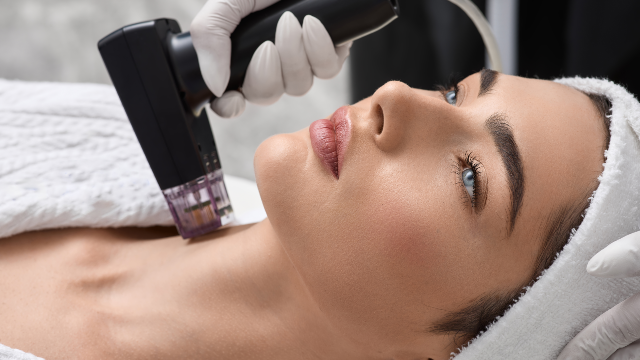
What it is. A non-surgical treatment using high-frequency energy to deeply stimulate the neck skin, intended to promote collagen regeneration and improve skin elasticity.
Who it is for. Adults experiencing mild to moderate loss of neck skin elasticity or early signs of skin aging.
Who it is not for. People with active skin irritation or infection in the treatment area may need to postpone. Suitability may also depend on medical history, implanted electronic devices, pregnancy, or other contraindications to radiofrequency treatment.
How the appointment runs. The neck area is assessed and prepared, then anesthetic cream is applied. The device is applied to deliver high-frequency energy and stimulate the deeper skin layers. Afterward, moisturizing and sun protection are recommended. Treatment time: approximately 25 to 30 minutes.
Afterward. Flushing is possible. The treated area may be sensitive to irritation, so friction and irritating cosmetics should be avoided. Recovery is generally the same day.
How long it holds. A stated maintenance period of approximately two to three months, with a recommended retreatment cycle of approximately every one to two months.
The interval, read properly
Here is the shape of this treatment in one paragraph.
Maintenance is stated at two to three months. Retreatment is recommended at one to two months. The retreatment interval is shorter than the maintenance window — which is the signature of a treatment designed to be stacked, with each session arriving while the previous one is still working, rather than repeated after the effect has faded.
Compare that with the clinic's radiofrequency lifting treatment for the face, where maintenance is stated at six to nine months and retreatment at a full year — retreatment arriving well after the maintenance window closes.
Two treatments, same category of energy, opposite scheduling logic. One is an annual event. This one is a series.
Which produces the question that decides everything for a visitor: can I attend a series?
If you live within easy reach of Gangnam, this is a routine — half an hour, every month or two, same-day recovery. If you are flying from the United States, the published plan does not fit a single trip, and the honest options are the same three that apply to every course-based treatment here.
Stay long enough, if your visit is measured in months rather than days.
Have one session and know what it is — one of a series, with the clinic's described outcome built on more than that.
Say your travel window at the consultation and let it inform the recommendation. The clinic's published position is individualized assessment rather than device selection, set out on its about page, and a plan built for a local patient is not the plan a visitor should receive.
Why the neck gets its own treatment
Worth a section, because patients routinely ask why facial treatments are not simply extended downward.
The neck's skin is thinner than the face's. It moves continuously — speech, swallowing, head rotation, looking down. It receives ultraviolet exposure that most skincare routines have historically skipped, cumulatively, over decades. And its underlying structure is different from the cheek's.
Energy settings appropriate for a cheek are not automatically appropriate there, which is why the clinic publishes a neck-specific treatment with a neck-specific assessment: the clinician assesses the neck skin, elasticity, degree of aging and treatment goals, then determines whether radiofrequency is appropriate and discusses the expected course.
The National Library of Medicine's overview of skin aging describes what changes in the tissue, and its guidance on sun exposure covers the exposure history that made the neck a separate problem in the first place.
Flushing, and why it matters more here
The named after-effect is flushing, and the treated area is described as sensitive to irritation.
For most treatments a day of redness is a cosmetic inconvenience. On the neck it has a specific complication: the neck is the area clothing touches.
Which makes the aftercare instruction — avoid friction and irritating cosmetics — a practical planning problem rather than a passive one.
Collars. A firm shirt collar rubs exactly the treated area.
Scarves. More of the same, for longer.
Seatbelts. The shoulder belt crosses near the base of the neck, and it stays on for the length of the journey.
Hair. Long hair against a freshly treated neck is friction you will not notice while it is happening.
None of this is dramatic. All of it is avoidable if you know before the appointment rather than after.
The other two published aftercare items — moisturizing and sun protection — are the ones that matter over weeks rather than days, and the sun instruction is not optional for an area whose problem is partly a history of exposure.
Same-day recovery, and what that does and does not mean
Recovery is described as generally the same day. That is genuinely convenient and it is the most travel-compatible feature of this treatment.
But read it alongside the other numbers rather than alone.
Same-day recovery means the appointment costs you an afternoon, not a day. It does not mean the treatment is complete — collagen regeneration, which is what the published description says the energy is for, develops over the following weeks. The visible change on the evening of the treatment is not the point of it.
Which is the standard reading error for anything in this category, and the correction is the same: ask what you should expect at two weeks and at two months, and judge it then.
Where it sits in the neck category
JD Clinic's neck and hand category contains several treatments with different mechanisms and different published figures.
| Mechanism | Anesthesia | Stated maintenance | |
|---|---|---|---|
| Forma RF (neck) | High-frequency energy, deep stimulation | Anesthetic cream | About 2–3 months |
| Neck Neogen Plasma Resurfacing | Plasma energy, deep regeneration | None used | 2–4 months |
| Neck Wrinkle Filler | Injectable filler into sunken lines | Anesthetic cream | 6–12 months |
Three different things: heat the tissue, resurface with plasma, or fill individual creases. They address different findings — general elasticity loss, skin quality and texture, and specific etched lines respectively.
The table compares what each is described as, not how well any of them works. No comparison of effectiveness is published, and this article will not construct one. What it shows is that "my neck" is not a request a clinic can act on without looking, which is the point of the assessment.
What the record does not contain
No manufacturer. The published description names the treatment and its mechanism, not a company. Ask directly if it matters to you.
No session count. A retreatment interval is published; a total course length is not. Ask how many the clinic would plan.
No energy settings or depths. Individual.
No outcome figures. No percentages, no comparison data. The clinic publishes a before-and-after gallery, which is its own material rather than independent evidence.
No hand treatment details on this page. As noted at the top — a separate question for the clinic.
Those are all consultation questions, and the conversation can start before you fly through the clinic's contact page, with English-language support on weekdays, 09:30 to 19:00.
Five questions for the consultation
How many sessions would you plan, and over how long? The interval is published; the course length is not.
Given my travel schedule, is this still your recommendation? Ask plainly. A series-based treatment and a single visit are a mismatch worth naming.
Is my concern elasticity, texture, or specific lines? Three findings, three different treatments in the same category.
How long should I avoid collars, scarves and friction? Then plan the flight home around the answer.
Do you also treat hands, and with what? If that was your reason for reading this.
The instruction nobody plans for
One last practical point, because it is the aftercare item most reliably ignored.
Sun protection on the neck is harder than sun protection on the face, for a simple reason: people apply sunscreen while looking in a mirror, and the mirror shows a face.
After a treatment whose stated aim is collagen regeneration in an area already shaped by decades of exposure, that habit is worth deliberately changing rather than intending to change. The published aftercare names moisturizing and sun protection together, and the second is the one that matters over the following weeks rather than the following days.
The Bottom Line
- Forma RF is published with the shortest retreatment cycle on this clinic's menu — approximately every one to two months — against a stated maintenance period of two to three months, which describes a series rather than an event.
- Published figures: about 25 to 30 minutes with anesthetic cream, same-day recovery, and flushing named as a possible after-effect.
- The published description covers the neck, not hands; the clinic's neck and hand category contains other treatments, and hands are a direct question for the clinic.
- Friction is the aftercare instruction that matters most here, because the neck is the area collars, scarves, seatbelts and hair all touch.
- The collagen response develops over weeks, so ask what to expect at two weeks and two months rather than judging on the evening of the appointment.
Frequently Asked Questions
How long does one session take?
Approximately 25 to 30 minutes, after anesthetic cream is applied.
How often would I need it?
The clinic recommends a retreatment cycle of approximately every one to two months, with a stated maintenance period of two to three months.
Is there downtime?
Recovery is described as generally the same day. Flushing may occur following treatment.
Does it treat hands as well?
The published description of this treatment is about the neck. The clinic's neck and hand category includes other treatments; ask the clinic directly about hands.
What should I avoid afterward?
Friction and irritating cosmetics on the treated area. Maintain moisturizing and sun protection.
Who should not have it?
People with active skin irritation or infection in the treatment area may need to postpone. Medical history, implanted electronic devices and pregnancy may also affect suitability.
When will I see a change?
The published aim is collagen regeneration, which develops over weeks rather than on the day. Ask the clinic what to expect at two weeks and at two months.
Can I have just one session?
You can, but the published plan is a series with a one-to-two-month interval. Tell the clinic your travel window so the recommendation reflects it.
This article is for general informational purposes and does not constitute individualized medical advice. It is not a self-diagnosis tool. Treatment results may vary depending on individual conditions, skin characteristics, and treatment plans, and whether a procedure is appropriate for you can only be determined through a consultation with a qualified dermatologist or other appropriately qualified clinician who has examined you in person.
More Articles
Continue reading our clinical guides.