Physician-Led Non-Surgical Lifting & Aesthetic Medicine in Gangnam, Seoul
4.8 Google Rating (56 Reviews)
en-US

Medical Guide
Neck Wrinkle Filler: Why the Neck Is Its Own Problem
The neck moves constantly, gets more sun than the face, and has thinner skin. A filler placed there is answering a different question from a facial one.
Schedule a ConsultationNeck Wrinkle Filler: Why the Neck Is Its Own Problem
Medically reviewed by Dr. Jin-Woo Doh, Representative Director, JD Clinic
JD Clinic keeps its neck and hand treatments in their own category rather than folding them into the facial menu, and that organizational choice is more informative than it looks.
The neck is not a continuation of the face. It moves — every time you speak, swallow, turn or look down. It receives more ultraviolet exposure than most people protect it from. Its skin is thinner than the skin of the cheek. And it is the area people notice last in themselves and first in others.
A filler placed in that environment is answering a different question from one placed in a cheek, and this article is about that difference.
What the clinic publishes
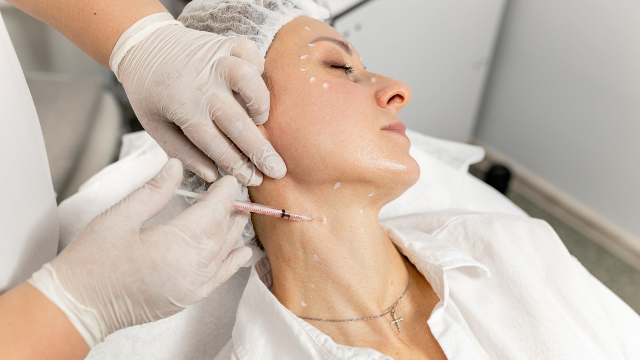
What it is. Injectable dermal filler used to add volume beneath or within targeted neck wrinkles and lines, helping reduce their appearance and create a smoother-looking skin surface.
Who it is for. Adults with visible or sunken neck wrinkles who want a smoother appearance without surgery. A professional assessment is recommended before treatment.
Who it is not for. People with active skin infection, significant inflammation, or certain conditions affecting the treatment area. Suitability is confirmed at consultation.
How the appointment runs. The neck is gently cleansed and prepared. Anesthetic cream is applied for comfort. Filler is precisely placed into areas with sunken neck wrinkles, to add volume and create a smoother-looking surface. The treatment takes approximately 20 minutes.
Afterward. Possible temporary swelling, redness, tenderness, bruising or unevenness. The record also notes that injectable fillers can have less common complications, which should be discussed before treatment. Stated recovery: same day to one day, with the treated area protected from friction and irritation.
Aftercare. Avoid friction and irritating cosmetics; pay attention to moisturizing and sun protection.
How long it holds. A stated maintenance period of six to twelve months.
The assessment word to notice: depth
The published consultation for this treatment says something specific that most filler descriptions do not: the treatment area and the depth of the neck wrinkles are assessed before deciding whether filler is appropriate.
Depth, rather than length or number.
That is a meaningful distinction, because it separates two things a patient describes identically. A line that is etched — a crease with depth, sitting in a fold the skin has learned — is a candidate for something that fills it. A neck whose issue is laxity or texture across the whole area is not the same problem, and adding volume into it is not the answer.
Which gives you the question that determines whether you are on the right page: are my neck lines individual creases, or is the whole area loose?
The clinic offers energy-based treatments in the same neck category for the second kind of concern. Its published approach is assessment before device selection, set out on its about page. Nothing in the record ranks those options against each other, and this article will not — the point is only that they address different findings.
Why the neck behaves differently
Four things make this area its own problem, and all four are worth knowing before an appointment.
It moves constantly. Speech, swallowing, head rotation, looking down at a phone. Facial filler in a cheek sits in tissue that moves when you smile. Neck filler sits in tissue that moves more or less continuously while you are awake.
It gets more sun than people think. The neck is routinely left out of sunscreen routines that cover the face carefully, over decades. The National Library of Medicine's guidance on sun exposure explains the cumulative effect, and its overview of skin aging covers what that does to the tissue.
The skin is thinner. Less covering over whatever is placed.
It is hard to rest. You cannot avoid using your neck the way you can avoid touching your cheek.
None of this makes the treatment unsuitable — the clinic publishes it as a treatment and states a six-to-twelve-month maintenance period. It does mean the aftercare instruction about friction is not a formality: collars, scarves, seatbelts and phone-cradling all apply pressure to the front of the neck, and a long flight involves at least two of those.
The friction instruction, made concrete
"Avoid friction and irritating cosmetics" is the published aftercare, and it is easy to agree to and hard to comply with.
Practical version, for the first day or so:
Loose collars. A shirt with a firm collar rubs the exact area treated.
No scarves. Same reason, more of it.
Watch the seatbelt. A shoulder belt crosses near the base of the neck. Worth adjusting rather than ignoring — the belt stays on.
Put the phone up rather than the head down. Looking down folds the treated area repeatedly.
Leave skincare simple. Irritating cosmetics are named; this is a good few days to use nothing interesting.
And the traveler-specific one: protect it from the sun, which is both an aftercare instruction and, given the area's history, a reason the problem exists.
The risk paragraph is briefer here, which is itself a prompt
The published risk material for this treatment names the ordinary temporary effects — swelling, redness, tenderness, bruising, unevenness — and then says that injectable fillers can have less common complications, which should be discussed before treatment.
That final phrase is doing work, and the correct response is to act on it rather than read past it.
Discuss them. Not as a formality. Ask the clinic directly what the less common complications of this treatment in this area are, what the early signs would be, and what it would want you to do.
Get a threshold, in writing, before you leave. Injectable treatments generally distinguish between effects you wait out and effects that need attention promptly, and only the treating clinic can tell you where that line sits for your treatment. The National Library of Medicine's overview of emergency medical services and the CDC's guidance on what to do when sick abroad cover the case where the answer is local care rather than a message.
Read the regulator's patient material. The U.S. Food and Drug Administration publishes an overview of dermal fillers and soft tissue fillers and a plain-language guide of dermal filler dos and don'ts. Both are written for patients and neither is selling anything.
Before the appointment
The published preparation is short and one item on it carries weight.
Inform the provider about medications, allergies, previous filler treatments, and any skin problems in the treatment area, then follow any individualized instructions given.
Two notes.
Previous filler is named explicitly, and patients frequently forget older treatments or treatments in other areas. Approximate dates and products, written down, are what is useful. If you have had filler anywhere before, say so even if it was years ago and elsewhere.
Bring the medication and supplement list from the bottles. Products affecting bleeding matter for anything injected, and supplements are the category people leave off. The National Library of Medicine covers drug safety, over-the-counter medicines and dietary supplements. Never stop a prescribed medication on your own — that decision belongs to whoever prescribed it.
Six to twelve months, and the honest framing
The stated maintenance period is six to twelve months, which is the same range the clinic publishes for facial filler.
Two things follow that are worth saying rather than implying.
It is temporary, and the plan should account for that. A twenty-minute appointment with a six-to-twelve-month window is a recurring commitment if you want the result maintained. For a patient who travels once a year, that is close to workable; for one who will not return, it is a clear statement that the effect fades.
"Six to twelve" is a doubling. Which end applies depends on product, area and individual. Ask for the narrower answer at the consultation, because the published range is deliberately wide and your version of it is not.
What the record does not contain
No product name. The description says filler; it does not name a product or manufacturer. Ask, and write it down — if anything ever needs review, that is the first thing anyone will want.
No volumes or placement pattern. Individual.
No outcome figures. No percentages, no satisfaction data. The clinic publishes a before-and-after gallery, which is its own material rather than independent evidence.
No comparison with the clinic's energy-based neck options. They exist in the same category and address different findings; nothing published ranks them.
Five questions for the consultation
Are my neck lines creases with depth, or is the concern the whole area? The question the published consultation itself starts from.
Which product, how much, and where? Write the answer down.
What are the less common complications here, and what would you want me to do? The record explicitly asks for this conversation. Have it.
When should I judge the result? Swelling in the first day distorts anything you look at.
How long must I avoid friction, specifically? Then plan the collar, the scarf and the flight around the answer.
The Bottom Line
- The neck is a separate treatment area for real reasons: it moves constantly, receives more ultraviolet exposure than most people protect against, and has thinner skin than the face.
- Published figures: about 20 minutes with anesthetic cream, a stated recovery of same day to one day, and a maintenance period of six to twelve months.
- The published consultation assesses the depth of the wrinkles — which separates individual etched creases, the concern filler addresses, from general laxity, which it does not.
- Friction is the aftercare instruction that fights with real life — collars, scarves, seatbelts and looking down at a phone all apply pressure to the treated area.
- The record says less common complications should be discussed before treatment; treat that as an instruction and get a threshold in writing before you leave.
Frequently Asked Questions
How long does the treatment take?
Approximately 20 minutes, after anesthetic cream is applied.
Does it hurt?
Anesthetic cream is used before the procedure for comfort.
What is the recovery like?
The stated recovery period is same day to one day, with the treated area protected from friction and irritation.
How long does it last?
The clinic states a maintenance period of six to twelve months. Actual longevity varies by product, area and individual factors.
Is this the same as facial filler?
The material is injectable filler in both cases, but the neck is treated as its own area — it moves more, has thinner skin, and the aftercare emphasis on avoiding friction reflects that.
Will it help if my whole neck looks loose?
The published consultation assesses the depth of individual wrinkles. General laxity is a different finding, and the clinic lists other neck treatments; the assessment decides.
What should I avoid afterward?
Friction and irritating cosmetics. Keep the area moisturized and protected from the sun, and ask the clinic how long each instruction applies.
What should I tell the clinic beforehand?
Medications, allergies, any previous filler treatment anywhere, and any skin problems in the treatment area. Bring the medication and supplement list written down.
This article is for general informational purposes and does not constitute individualized medical advice. It is not a self-diagnosis tool. Treatment results may vary depending on individual conditions, skin characteristics, and treatment plans, and whether a procedure is appropriate for you can only be determined through a consultation with a qualified dermatologist or other appropriately qualified clinician who has examined you in person.
More Articles
Continue reading our clinical guides.