Physician-Led Non-Surgical Lifting & Aesthetic Medicine in Gangnam, Seoul
4.8 Google Rating (56 Reviews)
en-US

Medical Guide
Ulfit HIFU Body Contouring: Contouring Is Not Weight
Two words in the published aftercare — drink water — point at what this treatment actually does, and at the one complication its record names by name.
Schedule a ConsultationUlfit HIFU Body Contouring: Contouring Is Not Weight
Medically reviewed by Dr. Hyunseon Kee, Director, JD Clinic
The published aftercare for this treatment contains an instruction that appears on almost nothing else at this clinic: drink plenty of water.
It is easy to read as generic wellness advice. It is not. It sits next to an instruction to avoid high-temperature environments, on a treatment described as using focused ultrasound to selectively stimulate the fat layer — and together those three things describe what the treatment is doing rather than decorating it.
This article is about that, and about the distinction that decides whether the treatment is right for you at all: contouring is not weight loss. They are different goals, achieved differently, and confusing them is the most common disappointment in this entire category.
What the clinic publishes
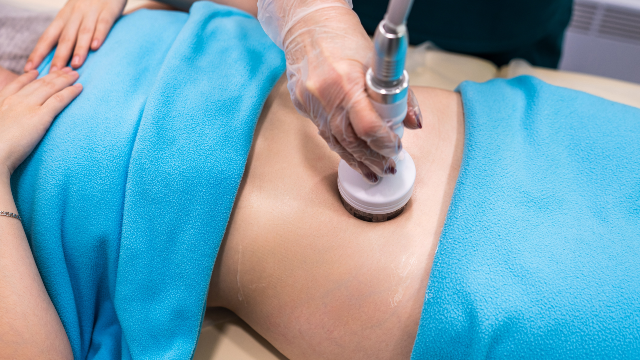
What it is. A non-invasive, device-based treatment using high-intensity focused ultrasound to target the fat layer, designed to support body contouring while improving skin elasticity and the appearance of body lines.
Who it is for. Adults with localized fat deposits or mild-to-moderate skin laxity seeking non-surgical body contouring. A clinician should evaluate fat distribution, skin condition and treatment goals beforehand.
Who it is not for. People with active skin infections or irritation in the treatment area, certain medical conditions, or contraindications to ultrasound-based treatment.
How the appointment runs. The treatment area is assessed and goals established. The skin is prepared and the area identified. The device delivers focused ultrasound energy to the targeted tissue. Post-treatment instructions follow, including avoiding high-temperature environments and drinking plenty of water. Treatment time: approximately 30 minutes.
Anesthesia. None required.
Afterward. Temporary tenderness, redness, swelling or discomfort may occur. Thermal tissue injury is named as a potential treatment-related complication. Stinging or temporary sensitivity may occur. Stated recovery: approximately one to two days.
Course and durability. Maintenance approximately three to six months, with a retreatment cycle of approximately every three months.
Localized fat is not general fat
Start here, because everything else follows from it.
The published candidate description is localized fat deposits — a specific area where fat sits in a way the patient wants changed. It is not a description of overall body composition, and the treatment is not described as a weight treatment.
That distinction is real and it is worth holding on to.
A contouring treatment addresses a shape in an area. It works on the tissue it is applied to.
Weight is a whole-body matter, determined by factors this treatment does not touch. The National Library of Medicine's material on weight control, obesity and nutrition covers that territory, and it is genuinely separate from what is described here.
The practical version: if your goal is a number on a scale, this is the wrong page. If your goal is a specific area whose shape you want changed, and your expectations are calibrated to "localized" and "mild-to-moderate," you are reading the right one.
Ask the clinic directly which of those two you are describing. A clinic whose published approach is assessment before device selection — set out on its about page — is the right place to have that conversation honestly.
Why the water instruction is there
Now the aftercare line, and what it points at.
A treatment that delivers focused energy into the fat layer is affecting tissue, and the body processes what happens next. That processing is a physiological activity, and hydration supports physiological activity. The clinic's instruction to drink plenty of water is not ceremonial — it belongs to the mechanism.
The companion instruction — avoid high-temperature environments — has a more direct logic. A treatment that has just deposited thermal energy in tissue is followed by a period where adding more heat is unhelpful. In Seoul, "high-temperature environments" means something specific and popular: bathhouses, saunas and hot springs.
For a visitor, the fix is sequencing and it is free. Do the bathhouse before the treatment, not after. This is the single most repeated planning error across this clinic's entire menu, and it costs nothing to avoid if you know in advance.
Thermal tissue injury, named plainly
Among the possible complications, the published record names thermal tissue injury.
That is unusually direct language for a treatment page, and it deserves to be read without either alarm or softening.
What it means. Focused ultrasound works by depositing energy that raises tissue temperature in a targeted way. The mechanism that produces the intended effect is the same mechanism that, if misapplied, produces injury. That is true of every energy-based treatment; this record simply says so.
Why it is worth knowing. Not because it is likely — no frequency is published and this article will not estimate one — but because it tells you what kind of appointment this is. A thirty-minute treatment with no anesthesia and a same-week recovery is still a treatment where energy is being deposited below your skin, by a clinician, using settings chosen for your tissue.
What to do with it. Ask for a threshold. "What would make you want to hear from me, and how soon?" is the question, and a specific answer is worth more than any amount of reading. The clinic states that it operates a feedback channel after treatment with English-language aftercare; settle which channel is yours before you leave. The National Library of Medicine's overview of wounds and injuries covers the general territory, and the CDC's guidance on what to do when sick abroad covers the case where the answer needs to be local.
The FDA maintains a general, non-commercial overview of non-invasive body contouring technologies that is worth reading before any appointment in this category anywhere.
Body ultrasound is not face ultrasound
JD Clinic uses focused ultrasound on both the face and the body, and patients reasonably assume the treatments are versions of one another. The published descriptions say otherwise.
| Facial focused ultrasound | Ulfit HIFU Body Contouring | |
|---|---|---|
| Target | Deeper facial tissue, including structural layers | The fat layer |
| Goal | Tightening and lifting | Contouring, plus skin elasticity |
| Anesthesia | Anesthetic cream, about 20 minutes | None required |
| Stated recovery | Same day to 1 day, depending on treatment | 1–2 days |
| Stated maintenance | From about 1–2 months up to 6–12 months | About 3–6 months |
Same category of energy, opposite intentions: the facial treatments are generally trying to tighten what is there, while this one is directed at the fat layer. On a face, unwanted fat loss appears among the complications of focused ultrasound. On the body, fat-layer stimulation is the stated purpose.
That inversion is the clearest illustration available of why the target matters more than the technology name — and why "I want HIFU" is not a request a clinic can act on.
Every three months, and what that means from abroad
Maintenance is stated at three to six months; retreatment is recommended approximately every three months.
Like several treatments on this menu, retreatment arrives at or before the maintenance window closes, which describes a repeated treatment rather than a single event.
For a patient in Seoul, that is a quarterly appointment of half an hour. For a patient flying from the United States, it is a decision to make deliberately rather than by default:
One session, understood as one session. Not nothing, and the clinic's described outcome is built on a plan rather than a single visit.
A treatment aligned to a specific window. A three-to-six-month maintenance figure suits a defined horizon better than an indefinite one.
Or a conversation about whether this fits at all. Say your travel window at the consultation. It is clinical input, not logistics.
Fitting it into a trip
Thirty minutes, no anesthesia. The appointment itself is undemanding.
One to two days of stated recovery, with tenderness, redness, swelling or stinging possible. Plan for the upper end.
No saunas, no hot springs, no hot baths afterward. Ask the clinic how long.
Drink water. It is in the published instructions for a reason.
Do not schedule it against a departure. The clinic's general position across treatments is that patients should confirm travel readiness before flying, and the CDC's overview of air travel covers the general considerations for flying after a procedure.
Remember the instructions stack. If this is one item on a longer plan, your week is governed by the union of every treatment's aftercare, not this one's alone.
What is not in the record
No manufacturer. The published description names the treatment and its mechanism, not a company.
No treatment areas listed. Which parts of the body are treated is not specified; ask.
No session count. A retreatment cycle is published; a course length is not.
No outcome figures. No percentages, no measurement data, no comparison against other body treatments. The clinic publishes a before-and-after gallery, which is its own material rather than independent evidence.
No settings or depths. Individual, and determined at the clinic.
All of which are consultation questions, and all of which can be raised in advance through the clinic's contact page, with English-language support on weekdays, 09:30 to 19:00.
Five questions for the consultation
Is my concern localized fat, skin laxity, or overall body composition? The question that decides whether this treatment is the right category.
Which areas would you treat, and which would you leave? A plan that names both came from an assessment.
What change should I expect, and when? "Contouring" is a direction, not a quantity.
What would make you want to hear from me afterward? Given that thermal tissue injury is named, get a threshold rather than a reassurance.
How long must I avoid heat? Then build the week around the answer rather than discovering it on day three.
The Bottom Line
- The published description targets the fat layer for contouring and skin elasticity — contouring is not weight loss, and overall body composition is a separate matter this treatment is not described as addressing.
- Published figures: about 30 minutes, no anesthesia, a stated recovery of one to two days, maintenance of three to six months, and retreatment approximately every three months.
- Thermal tissue injury is named as a potential complication. Ask the clinic for a threshold — what would make them want to hear from you, and how soon.
- The aftercare instructions to drink plenty of water and avoid high-temperature environments are part of the mechanism; in Seoul the second one means bathhouses, saunas and hot springs, so do those before the treatment.
- Focused ultrasound on the body and on the face are different treatments with opposite intentions — on the face, fat loss is a complication; here, the fat layer is the target.
Frequently Asked Questions
Is this a weight-loss treatment?
No. The published description is body contouring directed at localized fat deposits and skin elasticity. Overall weight is a separate matter.
How long does a session take?
Approximately 30 minutes, according to the clinic's published description, with no anesthesia required.
What is the recovery like?
The stated recovery period is approximately one to two days. Temporary tenderness, redness, swelling, stinging or sensitivity may occur.
How often would I need it?
The clinic recommends a retreatment cycle of approximately every three months, with a maintenance period of about three to six months.
Why do I need to drink water afterward?
It is part of the clinic's published post-treatment instructions, alongside avoiding high-temperature environments. Both relate to what the treatment does to tissue.
What are the risks?
Temporary tenderness, redness, swelling or discomfort are named, and thermal tissue injury is named as a potential treatment-related complication.
Is this the same as facial HIFU?
No. The same category of energy is used, but the target and intention differ — this one is directed at the fat layer, while facial treatments generally aim at tightening.
Can I use a sauna afterward?
The published aftercare asks patients to avoid high-temperature environments. Ask the clinic how long that applies, and plan bathhouse visits before the treatment rather than after.
This article is for general informational purposes and does not constitute individualized medical advice. It is not a self-diagnosis tool. Treatment results may vary depending on individual conditions, skin characteristics, and treatment plans, and whether a procedure is appropriate for you can only be determined through a consultation with a qualified dermatologist or other appropriately qualified clinician who has examined you in person.
More Articles
Continue reading our clinical guides.
Ulthera vs Thermage FLX: Closer Than You Would Expect
Put the two published records side by side and the durability, appointment length and onset pattern nearly match. One line in the candidate list does not.
Learn More

Ulthera HIFU Lifting at JD Clinic: Seeing the Layer First
One step in the published sequence separates this from the other lifting devices here: the layer is imaged before the energy goes in. What that changes.
Learn More
Oligio vs Shrink HIFU: The Widest Gap in Durability
One states six to nine months and the other one to two. No other pair of lifting treatments here is further apart, and the shorter one is also quicker.
Learn More