Physician-Led Non-Surgical Lifting & Aesthetic Medicine in Gangnam, Seoul
4.8 Google Rating (56 Reviews)
en-US


Medical Guide
Your In-Person Consultation at JD Clinic: What Happens
Eight things US patients say they worry about before walking in. Seven have documented answers, one has to be asked on the day, and all eight are listed.
Schedule a ConsultationYour In-Person Consultation at JD Clinic: What Happens
Medically reviewed by Dr. Hyunseon Kee, Director, JD Clinic
Somebody wrote down what American patients worry about before an in-person consultation in Seoul, and the list is specific enough to be useful.
Eight items. English communication. Understanding the recommendation. Knowing which treatment is appropriate. Understanding expected results and their limits. Confirming which layers and areas are being treated. Understanding pain and downtime. Confirming whether the doctor personally consults and treats. And getting clear treatment details and pricing before agreeing to anything.
That list appears in JD Clinic's own market documentation, which makes it a rare thing: a clinic writing down what patients are anxious about rather than what the clinic would like them to be reassured by.
This article works through all eight. Seven have documented answers. One does not, and this article says so rather than filling the gap.
Before the eight: what the visit is for
One framing point, because it changes how the rest reads.
The in-person consultation is not an administrative step between deciding and being treated. It is where the treatment is decided. The clinic's published approach is individualized assessment before selection, and an assessment needs someone to look at your face — which no email can do.
Which means the appointment has a job, and it can be wasted. A patient who arrives having already chosen a device, and who treats the consultation as the moment to confirm the booking, has converted the only irreplaceable part of the trip into a formality.
1. English communication
What the record says. JD Clinic provides in-person consultation with multilingual communication options in English, Korean and Japanese for international patients, including interpreter assistance and translated documents when needed. A named coordinator — Cheon Seung-yeon, Team Manager — works in English, weekdays 09:30 to 19:00. The clinic's published position is that multilingual support is available across patient services.
What to do with that. Establish the English channel before you fly, through the clinic's contact page. Arriving as a known correspondent rather than a stranger changes the first ten minutes of any appointment.
One practical note. Medical vocabulary is the part of a second language that fails first, in either direction. Bringing your concern written down in plain sentences is a small act that removes a lot of friction, and the National Library of Medicine's material on health literacy is a good frame for how to phrase it.
2. Understanding the recommendation
What the record says. The clinic's published material describes the doctor analyzing facial structure and skin condition and creating an individualized plan, with the plan adjusted to the individual rather than intensified by default.
What that means in the room. You should leave knowing three things: what is being recommended, what it is aimed at, and what it is not aimed at. The third is the one people forget to ask for and the one that prevents the most disappointment.
If you do not understand something, say so twice. The first "do you understand?" in a cross-language consultation is answered "yes" by nearly everyone, everywhere. Asking the clinician to state the plan a second time in different words is not rude; it is the most reliable comprehension check available. Patient rights covers the general principle.
3. Knowing which treatment is appropriate
What the record says. The clinic's facial menu is large — its published service list runs to dozens of named treatments across eight categories. Its published approach contrasts individualized medical assessment with device-only selection, and names avoidance of unnecessary treatment.
What to do with that. Describe what changed and when, rather than naming a machine. A recommendation that names the finding it follows from is one you can act on; when it arrives as a device name alone, ask what was found.
And be prepared to be told something different from what you expected. That is the assessment working, not failing.
4. Expected results and their limits
What the record says. Across this clinic's published treatment descriptions, outcomes are stated with explicit hedges — results vary between individuals, effects are temporary, and specific treatments are described as not guaranteeing permanent results. Maintenance periods are published per treatment and they differ enormously, from a month or two at one end of the lifting menu to six to twelve months at the other.
The question to ask. "What should I see at two weeks, and what at two months?" Most treatments here develop over time, which means the face that boards the plane home is not the result. A patient who was not given a curve will judge a treatment on the wrong day and reach the wrong conclusion.
And the second question. "How long is this expected to hold, and what happens when it fades if I am not in Korea?" The maintenance figure is a fact about your calendar as much as about your face.
5. Confirming layers and areas
What the record says. Depth is the substantive variable in this category, and the clinic's published treatment descriptions specify targeted layers for many of its lifting treatments.
What to ask. Which areas are being treated, which are deliberately not, and at what depth. You are not going to evaluate the technical answer. You are confirming that a specific one exists and refers to your face.
Why this concern is on the list at all. Patients who have researched this category know that depth is what separates one treatment from another, and they arrive unsure how to check that the distinction is being respected. Asking directly is the check.
6. Pain and downtime
What the record says. This is documented per treatment and varies widely at this clinic. Anesthesia ranges from none at all, through anesthetic cream applied for roughly twenty minutes, to local anesthesia for thread-based treatment. Stated recovery ranges from same-day return to daily activities, through one day, up to two to three days for some treatments.
What to do with that. Get your own numbers, in writing, for the specific plan — not the category. Then map them onto your itinerary before you agree, because a recovery window is a scheduling fact and your flights are already booked.
Ask the threshold question too. "What would make you want me to come back, and what can I simply wait out?" Aftercare instructions tell you what to do; a threshold tells you when to stop doing it and call. The National Library of Medicine's overview of emergency medical services and the CDC's guidance on what to do when sick abroad cover the case where the answer needs to be local.
7. Whether the doctor personally consults and treats
What the record says. This one has a direct documented answer. The clinic's published material states that consultation and treatment are often handled directly by the doctor, and describes physician-led consultation and treatment as part of its approach. Representative Director Jin-Woo Doh's published availability is weekdays, 09:30 to 19:00 — the same window as the clinic's own hours. A second physician, Director Hyunseon Kee, also practices there, with the same published availability. The clinic's about page sets out its stated approach in its own words.
What to do with that. If it matters to you which of the two physicians performs your treatment, ask when you book rather than when you arrive. In a two-physician practice that question has a real answer, and the two have different published specializations.
8. Clear treatment details and pricing — the one this article cannot answer
Here is the item on the clinic's own list that the published material does not resolve, and it would be dishonest to write around it.
Treatment details are documented and you can expect them: what the treatment is, how long it takes, what anesthesia is used, what recovery is stated, what the maintenance period is. All of that appears per treatment and you should ask for your specific version of it.
Pricing is a question to put to the clinic directly. It does not appear in the material this article is built from, and rather than estimate, compare or gesture at a range, this article simply tells you to ask — before agreeing to anything, which is exactly how the concern is phrased on the clinic's own list.
Ask it in writing, before you fly. Through the contact page, with your concern described and your dates attached. A number obtained by email in advance is a number you can think about. A number obtained in a consultation room at the end of a long flight is a number you are deciding about under pressure, and that is the situation the eighth item on the list is really describing.
Be equally wary of figures found elsewhere. Cost content in this market is written by people with no access to the clinic's actual answer, and the National Library of Medicine's guidance on evaluating health information applies to price claims as much as to clinical ones.
What to bring
Short list, all of it derived from what this clinic's treatments ask for before proceeding.
A written medication and supplement list, from the bottles rather than from memory. Several treatments here require disclosure of medications affecting bleeding, and none of them are served by a guess. Drug safety and dietary supplements cover what belongs on it.
A note of any implanted device. Some energy treatments here exclude implanted metallic or electronic devices, or require medical assessment first. This can change the answer entirely, so it is worth raising by email even earlier.
Your medical conditions and previous aesthetic treatments, with approximate dates. "Roughly last spring" is usable; "a while ago" is not.
Photographs of yourself in neutral light, without makeup. Useful for describing what you want, and your only reliable baseline for judging what you got.
Your questions, written down. You will not remember them. Nobody does.
Two things the record does not state
How long the consultation takes. No duration appears in the published material. Plan your day loosely rather than around an assumed length.
Whether a treatment can happen the same day. That depends on the assessment, the treatment and the schedule, and it is a question for the clinic. Do not build an itinerary that assumes it.
Both are reasonable things to ask when you book, and both are better asked in advance than discovered.
The Bottom Line
- The in-person consultation is where the treatment is decided, not where a decision already made gets confirmed — arriving with a device chosen wastes the only step that cannot be done remotely.
- The clinic's published material describes English, Korean and Japanese options in person, interpreter assistance and translated documents when needed, and a named English-speaking coordinator on weekdays, 09:30 to 19:00.
- Ask for four specifics: which areas and depths, what you should see and when, what recovery your plan requires, and what would make you come back early.
- Whether a physician personally consults and treats is documented — the published material describes physician-led consultation and treatment, with both named physicians available in the same weekday window.
- Pricing is a question to put to the clinic directly, in writing, before you fly — and any figure you find elsewhere did not come from the people who would be treating you.
Frequently Asked Questions
Will the consultation be in English?
The clinic's published material describes in-person consultation with English, Korean and Japanese options for international patients, including interpreter assistance and translated documents when needed.
Does a doctor do the consultation?
The published material describes physician-led consultation and treatment, and states that consultation and treatment are often handled directly by the doctor.
How long does a consultation take?
A duration is not stated in the clinic's published material. Ask when you book, and keep the surrounding day loose.
Can I be treated the same day?
That depends on the assessment and the schedule. Ask the clinic rather than assuming it when planning your itinerary.
What should I bring?
A written medication and supplement list, notes on medical conditions, implants and previous treatments, neutral-light photographs, and your written questions.
How do I find out what it will cost?
Ask the clinic directly, in writing, before agreeing to anything. Price information is not something this article can supply.
What if I don't understand the recommendation?
Say so, and ask for it again in different words. Restating is a normal part of a cross-language consultation and a much better check than a nod.
Which physician will treat me?
The clinic lists two physicians with different published specializations. If it matters to you, ask when you book.
This article is for general informational purposes and does not constitute individualized medical advice. It is not a self-diagnosis tool. Treatment results may vary depending on individual conditions, skin characteristics, and treatment plans, and whether a procedure is appropriate for you can only be determined through a consultation with a qualified dermatologist or other appropriately qualified clinician who has examined you in person.
More Articles
Continue reading our clinical guides.
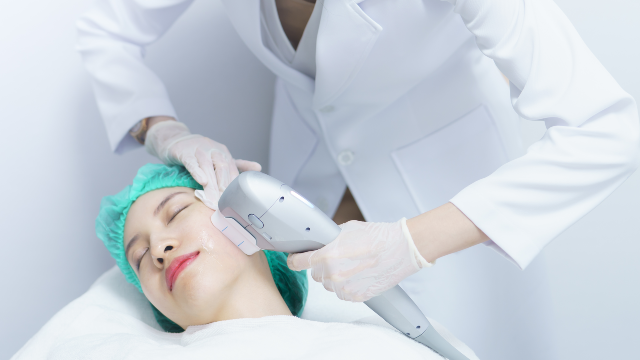
Ulthera vs Thermage FLX: Closer Than You Would Expect
Put the two published records side by side and the durability, appointment length and onset pattern nearly match. One line in the candidate list does not.
Learn More

Ulthera HIFU Lifting at JD Clinic: Seeing the Layer First
One step in the published sequence separates this from the other lifting devices here: the layer is imaged before the energy goes in. What that changes.
Learn More
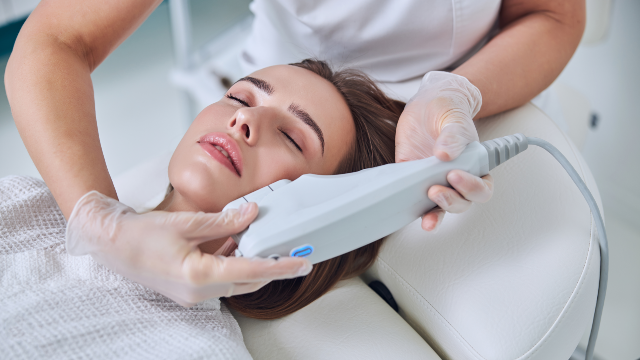
Oligio vs Shrink HIFU: The Widest Gap in Durability
One states six to nine months and the other one to two. No other pair of lifting treatments here is further apart, and the shorter one is also quicker.
Learn More