Physician-Led Non-Surgical Lifting & Aesthetic Medicine in Gangnam, Seoul
4.8 Google Rating (56 Reviews)
en-SG


Filler & Botox · Needs Clinic Confirmation
Dermal Fillers
Dermal fillers are minimally invasive injectable treatments that use a filler material — commonly hyaluronic acid — to add volume to selected areas that appear sunken or lack fullness.
Schedule a ConsultationDermal Fillers

Medically reviewed by Dr. Jin-Woo Doh, Representative Director, JD Clinic, Gangnam, Seoul, and Hyunseon Kee, Director, JD Clinic
Dermal fillers are minimally invasive injectable treatments that use a filler material — commonly hyaluronic acid — to add volume to selected areas that appear sunken or lack fullness. At JD Clinic in Gangnam, Seoul the treatment takes approximately ten to twenty minutes in an outpatient visit, with a recovery period the clinic states as same day to about one day. What it does is narrower than the phrase "facial rejuvenation" suggests, and the narrowness is the point: filler puts volume where volume is missing. It does not tighten skin, it does not relax a muscle, and it does not stop the face changing.
JD Clinic's doctor mapping is recorded at the specialty level, so this page names the doctors who direct care for this treatment area rather than claiming that one named doctor personally carries out every individual session.
What Is Dermal Filler Treatment?
A gel is injected into a chosen plane beneath the skin, and the area it occupies becomes fuller.
The material. Commonly hyaluronic acid, chosen by type and amount according to the individual's anatomy and treatment goals.
The purpose. Restoring volume to selected sunken areas and improving facial contours, for a fuller and more balanced appearance.
The time. Approximately ten to twenty minutes, as an outpatient visit.
Comfort. Anaesthetic cream or local anaesthesia may be used depending on the area, the filler and the individual.
The duration. The clinic states a maintenance period of approximately six to twelve months; actual longevity varies by product, area and individual factors.
The clinic's own limit on what may be claimed is worth quoting as a limit rather than paraphrasing as a benefit: results vary, the effects are temporary, and treatment does not guarantee permanent volume restoration or prevention of future facial ageing. A patient deciding between filler and something more durable should weigh that against the appeal of a treatment that needs no incision and no recovery to speak of.
Who Performs Dermal Filler Treatment at JD Clinic
|
|
Dr. Jin-Woo Doh | Dr, Hyunseon Kee |


Care in this treatment area is directed by Dr. Jin-Woo Doh, Representative Director of JD Clinic, and Hyunseon Kee, Director.
Dr. Doh graduated from Seoul National University College of Medicine and serves as a Guest Professor at Seoul National University Hospital. Fillers and Botox are named among his listed core specialisations.
Hyunseon Kee is a Director at JD Clinic whose listed areas are aesthetic plastic surgery, aesthetic procedures and laser-based aesthetic treatments. She is a full member of the Korean Society of Aesthetic Plastic Surgery, the International Society of Aesthetic Surgery, and the Korean Society of Aesthetic Plastic Surgery and Laser. Dr. Doh is additionally a full member of the Korean Society of Aesthetic Surgery and the Korean Society for Obesity Treatment.
JD Clinic has not provided licence or registration records for either doctor, so none is claimed here, and no educational institution is attributed to Hyunseon Kee because the clinic's records do not state one.
At consultation the clinician evaluates facial proportions, volume loss, skin condition, the treatment areas under discussion, medical history, allergies, medications and the desired outcome, and selects the filler type and amount from that assessment. Two of those inputs are easy to under-report and worth preparing for: previous filler treatments, including where and roughly when, and any medication or supplement that affects bruising or bleeding.
The clinic's records leave the filler brand, the injection technique, the treatment areas and the amount used unstated, and mark the equipment used as requiring confirmation, so this page names no product and describes no proprietary method. The Health Sciences Authority (HSA), whose position on fillers as a regulated medical device is relevant to Singapore patients considering treatment abroad, makes the product question a patient question rather than a technical one. Regulatory guidance advises that filler injection be treated as a medical procedure performed by a trained, registered health care provider using properly labelled, sealed, approved product, and that fillers sold directly to the public or injected with needle-free devices are not approved and may be counterfeit or contaminated.
Who Is a Good Candidate for Dermal Fillers?
Adults with localised volume loss, sunken areas, or facial contour concerns
People who want a non-surgical option and hold realistic expectations
Those looking to create a more balanced, three-dimensional facial appearance
Patients who accept that the effect fades and the treatment has to be repeated
Treatment may not be suitable for:
Anyone with an active infection or inflammation at the injection site
People with a known sensitivity to the selected filler
Patients with certain medical conditions, which may require additional assessment
Anyone pregnant or breastfeeding, depending on the product and clinical circumstances
Two of these exclusions are best settled before booking an international trip rather than discovered at the clinic door. An active infection or inflammation in the planned area is temporary and usually just moves the appointment; a known sensitivity to the filler being used does not, and it depends on which product the clinic intends to use — which is a reasonable thing to ask in advance of travelling. Pregnancy and breastfeeding sit between the two: whether they rule treatment out depends on the product and the clinical circumstances, so they are a conversation rather than an automatic no.
A history of complications from a previous injectable treatment deserves its own mention at consultation even when it does not appear on an exclusion list. What happened, where, with which product, and how it was managed are all relevant to planning the next one — and a patient who brings that history unprompted makes the assessment better.
What to Expect: Procedure, Recovery, and Results Timeline
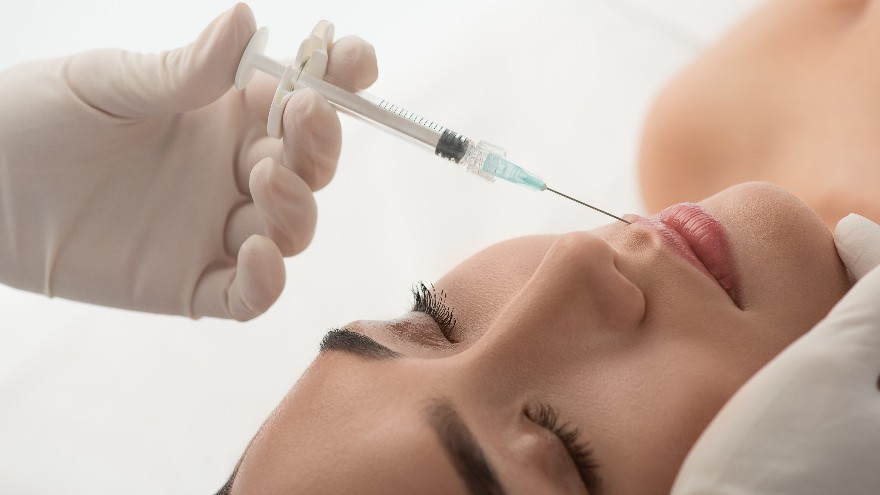
The treatment area is assessed and marked and the skin cleansed and prepared. Anaesthetic cream or local anaesthesia may be used for comfort. Hyaluronic acid filler is then carefully injected into the selected area, the clinician evaluates contour and symmetry, and aftercare instructions are given.
Stage | What happens | Timing |
|---|---|---|
Consultation | Proportions, volume loss, history, allergies; filler type and amount chosen | Before treatment |
Numbing | Anaesthetic cream or local anaesthesia | Before the injection |
Treatment | Filler injected; contour and symmetry assessed | Approximately 10–20 minutes |
Recovery | Stated period | Same day to approximately 1 day |
Early effects | Bruising and swelling; redness, tenderness, itching | Temporary |
Settled result | Appearance clarifies as swelling decreases | Days |
Maintenance | As the clinic states it | Approximately 6–12 months |
Temporary bruising and swelling may occur, and the clinic specifically asks patients to expect them. Other possible effects include redness, tenderness, itching, lumps or asymmetry. Mild swelling or bruising may continue beyond the stated recovery period in some patients, depending on the treated area.
Before treatment, tell the clinician about allergies, medications, previous filler treatments, medical conditions and any active skin problems, and follow the clinic's instructions — particularly on medications or supplements that may increase bruising. Do not stop prescribed medication without medical advice. Afterwards, avoid rubbing, pressing or unnecessarily manipulating the treated area, follow the clinic's guidance on exercise and other activities, and maintain skin moisture with appropriate sun protection.
One aftercare instruction is urgent rather than routine. Severe pain, unusual skin discolouration or visual changes after filler treatment require immediate medical attention. That is the clinic's own instruction, and the mechanism behind it is described in the safety section below.
With a stated recovery of same day to about one day, a prolonged medical stay is generally not needed, though international patients should allow time for consultation, treatment and any recommended follow-up. Travel home is generally possible once the patient is comfortable and the treating clinic has confirmed there are no concerns; the exact timing for a long flight is worth settling with the clinic rather than assuming. The clinic operates a 24-hour post-treatment feedback system, and English-language aftercare is available through remote follow-up consultation and ongoing channels such as email and messaging once a patient has returned home.
Combining Dermal Fillers with Other Treatments
Dermal fillers may be combined with botulinum toxin or other aesthetic treatments when clinically appropriate, individualised according to facial anatomy, treatment goals and safety considerations. The filler-and-toxin pairing is the most common one precisely because the two address different things — volume in one case, muscle activity in the other — so neither is doing the other's work.
Depending on the concern, alternatives may include energy-based skin treatments, collagen-stimulating treatments, botulinum toxin for dynamic wrinkles, fat grafting, or surgical facial procedures. The distinction that usually decides between them is whether the complaint is about volume, about skin quality, about movement, or about position. Filler answers only the first. More about the clinic and its team is on the JD Clinic about page.
Safety, Precision, and Clinic Standards
JD Clinic has been registered since 2023 as a Registered Medical Institution for Attracting Foreign Patients, certified by the Ministry of Health and Welfare in compliance with the Medical Overseas Expansion and Foreign Patients Attraction Act. The clinic's business registration number is 530-11-00701.
The clinic's stated quality-control process is individualised medical assessment rather than device-led selection, with treatment that is not needed avoided rather than added. Consultation and treatment are doctor-led. Its records mark a specific risk-reduction process for this treatment as requiring confirmation, so this page does not describe one.
The United States Food and Drug Administration (FDA) regulates dermal fillers as medical device implants approved only for specific sites, names unintentional injection into a blood vessel as the most serious risk — capable of causing tissue necrosis, vision loss including blindness, or stroke — and lists the nose, glabella, periorbital area, forehead and neck among the sites for which filler injection is not approved. That approval framework is United States regulation and does not govern practice in Korea, but it identifies which parts of the face carry the greatest vascular risk, and that anatomy is the same everywhere.
The American Society for Dermatologic Surgery's multidisciplinary task force records that injection-site reactions usually settle within one to two weeks, while rarer serious adverse events include vascular occlusion leading to skin necrosis or blindness, delayed inflammatory events and nodule formation. The word delayed in that list matters for someone treated abroad: the same source notes that reactions such as swelling, nodules or granulomas may appear weeks, months or years after injection, which is a reason to establish before treatment how the clinic handles a problem that surfaces after you have gone home.
The World Health Organisation (WHO) notes that cosmetic procedures are among the settings where unsafe injection practices occur, and that reusing needles or syringes or mishandling medication vials can transmit hepatitis B, hepatitis C, bacterial and fungal infections and possibly HIV. Patients considering any cosmetic treatment are advised to establish who will perform it, ask about their experience with that specific procedure, and discuss the risks and the realistic expected result before agreeing to anything.
English-language support is provided by a dedicated international patient coordinator, Cheon Seung-yeon, Team Manager, on weekdays from 09:30 to 19:00, with Korean and Japanese coordination also available.
The Bottom Line
Hyaluronic acid filler adding volume to selected sunken areas and improving contours.
Ten to twenty minutes, with a same-day to one-day recovery.
The clinic states a maintenance period of approximately six to twelve months.
Bruising and swelling are the effects the clinic asks patients to expect.
Severe pain, skin discolouration or visual change after treatment is an emergency, not a wait.
Frequently Asked Questions
Who is a good candidate for dermal fillers?
Adults who want to improve sunken areas, restore lost facial volume, or create a more balanced three-dimensional facial appearance. Suitability depends on the treatment area, facial anatomy, skin condition, medical history and the outcome you are hoping for.
Who should avoid or postpone treatment?
Treatment may need to be postponed where there is active infection, inflammation or significant irritation in the planned area. Relevant allergies, certain medical conditions, a history of complications from injectable treatments, and pregnancy or breastfeeding should all be discussed with the clinician beforehand.
How long does it take, and is it painful?
Approximately ten to twenty minutes. Mild discomfort such as brief pinching, stinging or pressure may occur during injection, and anaesthetic cream or local anaesthesia may be used to improve comfort.
How long should I stay in Korea, and when can I fly home?
The clinic lists a same-day to one-day recovery, so a prolonged medical stay is generally not needed — allow time for consultation, treatment and any follow-up. Travel is generally possible once you are comfortable and the clinic has confirmed there are no concerns; settle the timing of a long flight with them directly.
When will I see results, and how long do they last?
Volume improvement can generally be seen immediately, although initial swelling may temporarily affect the appearance, and the result settles as swelling decreases. The clinic lists a six-to-twelve-month maintenance period, with duration varying between individuals and treatment areas.
What are the common side effects?
Bruising and swelling are the two the clinic names specifically. Other temporary injection-site effects may include redness, tenderness, itching, mild discomfort, sensitivity, lumps or asymmetry while the area settles.
What should I ask about the product before treatment?
What it is, that it comes sealed and labelled, and how much is being used. Those are ordinary questions for a regulated implant, and the regulator's own guidance is that filler should be properly labelled, sealed and approved product administered by a licensed, trained provider.
Does JD Clinic publish a price for dermal fillers?
JD Clinic does not publish treatment prices for this market; a quotation is given after an individual consultation. Since the amount of filler used depends on the assessment, what is being priced follows from the consultation rather than preceding it.
Book a Consultation at JD Clinic
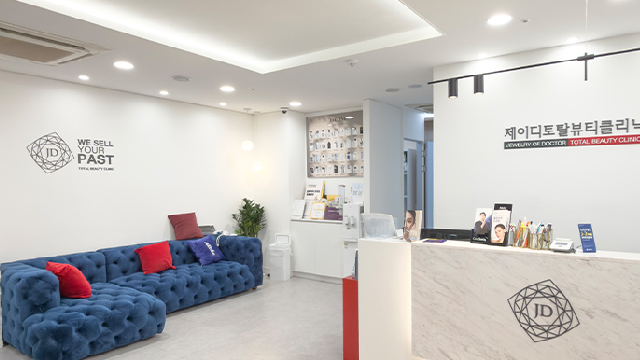
If the complaint is that a specific area has lost fullness, filler is the treatment aimed squarely at that — and a consultation is where the area, the amount and the product get decided. JD Clinic is located at B2, 616 Gangnam-daero, Gangnam-gu, Seoul, Republic of Korea, and can be reached on +82-2-523-7581 or through the clinic's contact page. Consultations run Monday to Thursday from 09:30 to 19:00, Friday until 21:00 and Saturday until 16:00, with a lunch break on weekdays from 13:00 to 14:00.
International patients can start with an online enquiry through the JD Clinic contact page, and an English-speaking coordinator will follow up.
Disclaimer
This page is for general information only and is not medical advice, a diagnosis, or a treatment recommendation. Outcomes differ from person to person, and whether any treatment is appropriate for you can only be decided in a consultation with a qualified doctor.
Sources & Further Reading
Dermal Fillers (Soft Tissue Fillers) — U.S. Food and Drug Administration
Dermal Filler Do's and Don'ts for Wrinkles, Lips and More — U.S. Food and Drug Administration
Preventing and Treating Adverse Events of Injectable Fillers — American Society for Dermatologic Surgery
Safe Injection Practices and Your Health — Centers for Disease Control and Prevention
Best questions to ask when considering a cosmetic treatment — American Academy of Dermatology
Other Services
Explore additional treatments offered at JD Clinic.