Physician-Led Non-Surgical Lifting & Aesthetic Medicine in Gangnam, Seoul
4.8 Google Rating (56 Reviews)
en-SG


Pigmentation, Pore & Scar Treatment · Needs Clinic Confirmation
mJOULE BBL Photorejuvenation
mJOULE BBL Photorejuvenation uses dual-wavelength broadband light energy to reach the skin below the surface, promoting collagen regeneration to improve tone and firmness at the same time.
Schedule a ConsultationmJOULE BBL Photorejuvenation

Medically reviewed by Dr. Jin-Woo Doh, Representative Director, JD Clinic, Gangnam, Seoul, and Hyunseon Kee, Director, JD Clinic
mJOULE BBL Photorejuvenation uses dual-wavelength broadband light energy to reach the skin below the surface, promoting collagen regeneration to improve tone and firmness at the same time. At JD Clinic in Gangnam, Seoul this treatment sits within the pigmentation, pore and scar menu, aimed at sun-related redness, dullness and uneven tone. Patients choose it for firmer, smoother-looking skin without surgery, with minimal downtime and a gradual result rather than a dramatic one.
JD Clinic's doctor mapping is recorded at the specialty level, so this page names the doctors who direct care for this treatment area rather than claiming that one named doctor personally carries out every individual session.
What Is mJOULE BBL Photorejuvenation?
Broadband light is delivered across the treatment area in measured passes, targeting colour in the skin and stimulating collagen beneath it.
The platform is named. The clinic uses the Sciton mJOULE platform with dual-wavelength broadband light energy.
The targets are tone and firmness together — redness, dullness, uneven tone, and elasticity.
No anaesthesia is used, and a session takes about fifteen to twenty minutes.
There is no downtime. Normal daily activities resume immediately.
It is a short course. Sessions spaced about two to four weeks apart, with maintenance every one to two months.
The clinic's records mark the approved claims field for this treatment as requiring confirmation, so this page describes what the treatment does from its procedure profile and does not present a claims list as settled.
Who Performs mJOULE BBL Photorejuvenation at JD Clinic
|
|
Dr. Jin-Woo Doh | Dr, Hyunseon Kee |


Care in this treatment area is directed by Dr. Jin-Woo Doh, Representative Director of JD Clinic, and Hyunseon Kee, Director.
Dr. Doh graduated from Seoul National University College of Medicine and serves as a Guest Professor at Seoul National University Hospital. Pigmentation, pores and scar treatments are named among his core specialisations.
Hyunseon Kee is a Director at JD Clinic whose listed areas are aesthetic plastic surgery, aesthetic procedures and laser-based aesthetic treatments. She is a full member of the Korean Society of Aesthetic Plastic Surgery, the International Society of Aesthetic Surgery, and the Korean Society of Aesthetic Plastic Surgery and Laser. Dr. Doh is additionally a full member of the Korean Society of Aesthetic Surgery and the Korean Society for Obesity Treatment.
JD Clinic has not provided licence or board-status records for either doctor, so none is claimed here, and no educational institution is attributed to Hyunseon Kee because the clinic's records do not state one.
The provider assesses skin tone, redness and pigmentation concerns, and texture; reviews medical history; and confirms the plan and the expected number of sessions at a personal consultation. For international patients, an online pre-consultation with photographs is typically done before travel — useful for planning, though the treatment decision is confirmed in person.
JD Clinic describes its approach as assessing skin thickness, the degree of laxity and facial structure before selecting a device, then targeting the intended tissue layer with the minimum number of passes needed rather than applying one fixed setting to every patient.
Who Is a Good Candidate for mJOULE BBL Photorejuvenation?
Adults with sun-related redness, dullness or uneven tone
People with mild fine lines who want brightening and firming together
Those with mild to moderate skin laxity or textural concerns
Patients with realistic expectations of gradual, moderate improvement
Treatment should be postponed or avoided for:
Patients who are pregnant or breastfeeding
Anyone with an active skin infection or severe acne in the treatment area
People with very recent tanning or sun exposure
Anyone seeking dramatic, surgical-level results
That last exclusion is not a disclaimer. A light-based treatment brightens and evens; it does not lift. A patient whose real goal is a change in facial shape will not get it here, and the honest version of that conversation belongs at consultation.
Redness deserves a specific note, because it is one of the two concerns this treatment is best at and one of the most commonly misattributed. Diffuse facial redness can come from sun damage and visible superficial vessels, which a light-based treatment addresses directly, or from an inflammatory skin condition, which it does not — and which can in some cases be aggravated by heat. If your redness flushes, burns, or comes and goes with triggers such as heat, alcohol or stress, say so at consultation. The distinction changes both the recommendation and the settings.
The same care applies to pigmentation. Sun-induced spots and post-inflammatory marks generally respond to light-based treatment; melasma is the exception that repeatedly does not, and is documented as sometimes worsening after light and laser treatment. Anyone whose pigmentation appeared during pregnancy or with hormonal contraception, or sits as symmetrical patches across the cheeks, forehead or upper lip, should raise that specifically rather than letting it be treated as general unevenness.
What to Expect: Procedure, Recovery, and Results Timeline
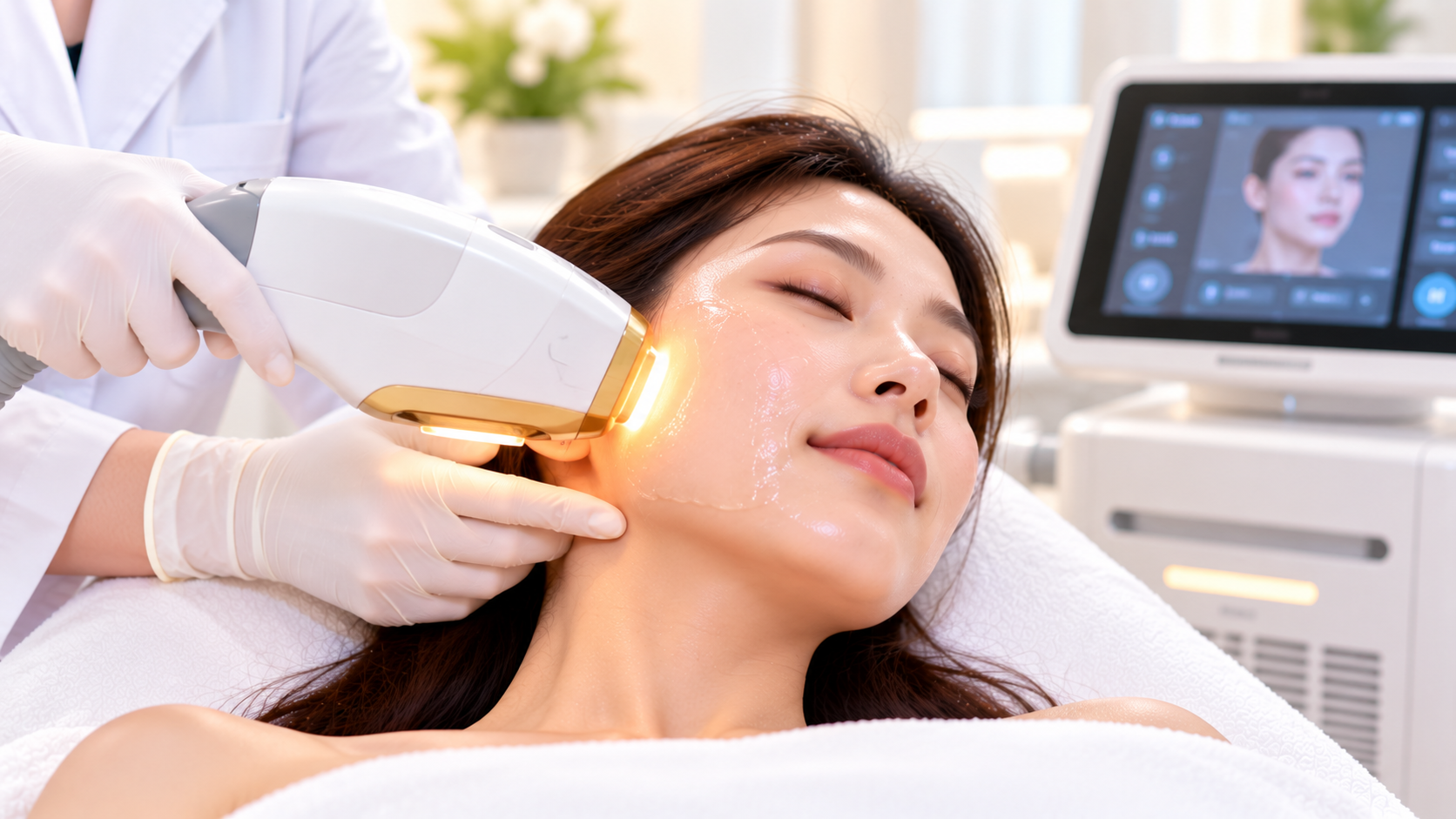
The sequence is cleansing the treatment area; guide-grid marking of the treatment zone; delivery of light-energy passes across the area with no anaesthesia; application of a cooling or soothing gel; then a post-treatment skin check and aftercare instructions.
Stage | What happens | Timing |
|---|---|---|
Consultation | Tone, redness, pigmentation, texture, history, session plan | Before treatment |
Treatment | Marked zones treated with light-energy passes | About 15–20 minutes |
Anaesthesia | None used | — |
Cooling | Soothing gel applied | End of session |
After | Normal activities resume | Immediately |
Early effects | Temporary redness, mild warmth, sensitivity | Short-lived |
Course | Sessions spaced | About 2–4 weeks apart |
Maintenance | Improvement maintained | Roughly 1–2 months |
No anaesthesia is used; most patients describe a warm, snapping sensation from the light pulses rather than significant pain, and the cooling gel helps. Temporary redness, swelling or a mild heat sensation may follow. Rare risks include burns, blistering, pigment changes — more relevant for darker skin tones with light-based treatments — or an unsatisfactory result if the treatment is not performed by a trained provider.
Before treatment, avoid excessive sun exposure and retinoid or exfoliating products for several days, and disclose pregnancy, recent tanning or active skin conditions. Discuss medical history, medications, supplements, previous aesthetic treatments, any tendency to develop pigmentation or scarring, and any photosensitivity. Avoid sunbathing, tanning beds and excessive ultraviolet exposure beforehand; waxing, chemical peels and potentially irritating products may also need pausing. Do not stop prescribed medication on your own.
Afterwards, avoid intense exercise, saunas and hot baths, keep the treated area well moisturised, and use sunscreen diligently. The skin stays more sensitive to irritation for a while, so gentle, non-irritating skincare is the rule rather than the exception.
The clinic's records do not state a recommended length of stay or a flight interval for this treatment. With no downtime, travel soon afterwards is plausible; confirm it with the clinic rather than assuming. The clinic operates a 24-hour post-treatment feedback system, and English-language aftercare is available through remote follow-up consultation and ongoing channels such as email and messaging once a patient has returned home.
Combining mJOULE BBL Photorejuvenation with Other Treatments
This treatment is often combined with skin boosters, dermal fillers or other in-house energy treatments as part of a fuller rejuvenation plan. Because this service uses only the broadband light module of the platform, the platform's separate fractional-laser module is a natural potential pairing for texture and pigmentation concerns where the clinic offers it — and a relevant alternative in its own right.
Other alternatives include other energy-based devices, injectable skin boosters, or, for more pronounced laxity, surgical lifting. The distinction worth holding is between colour and structure: this treatment is built for the first. More about the clinic and its team is on the JD Clinic about page.
Safety, Precision, and Clinic Standards
JD Clinic has been registered since 2023 as a Registered Medical Institution for Attracting Foreign Patients, certified by the Ministry of Health and Welfare in compliance with the Medical Overseas Expansion and Foreign Patients Attraction Act. The clinic's business registration number is 530-11-00701.
The clinic's stated quality-control process is individualised medical assessment rather than device-led selection, with treatment that is not needed avoided rather than added. Consultation and treatment are doctor-led.
Skin tone is the central safety variable for a light-based treatment, and it is worth being explicit about why. Broadband light works by being absorbed by pigment; skin with more pigment absorbs more of it, which is what raises the risk of burns, blistering and pigment change if the settings are not matched to the individual. That is the reason recent tanning is an exclusion rather than an inconvenience — a tanned patient is effectively presenting different skin from the one that was assessed.
The American Society for Dermatologic Surgery describes intense pulsed light as a non-ablative light-based treatment for ageing skin concerns such as sunspots, blemishes and fine wrinkles, and notes that treated skin may remain pink or red for several hours or longer afterwards. The American Society for Dermatologic Surgery advises avoiding sun exposure, tanning and peels in the weeks before laser and light therapy for sun-damaged skin. For hyperpigmentation, the American Society for Dermatologic Surgery describes treatment as starting with daily sunscreen and topical brightening agents, with peels, microdermabrasion, intense pulsed light or lasers added if needed — and lasers used with care in darker skin tones.
The U.S. Food and Drug Administration describes laser treatment of the skin as a regulated medical procedure whose recognised risks include incomplete treatment, pain, infection, bleeding, scarring and changes in skin colour.
English-language support is provided by a dedicated international patient coordinator, Cheon Seung-yeon, Team Manager, on weekdays from 09:30 to 19:00, with Korean and Japanese coordination also available.
The Bottom Line
Dual-wavelength broadband light on the Sciton mJOULE platform, aimed at redness, dullness and uneven tone.
Fifteen to twenty minutes, no anaesthesia, no downtime.
A short course spaced two to four weeks apart, with maintenance over one to two months.
Recent tanning is a genuine exclusion, not a scheduling preference.
This treatment addresses colour and skin quality; it does not lift.
Frequently Asked Questions
Who is a good candidate for BBL photorejuvenation?
Adults with sun-related redness, dullness, uneven tone or mild fine lines who want a non-surgical brightening and firming treatment. Mild to moderate laxity and textural concerns are also on the list, with the expectation being gradual, moderate improvement.
Who should postpone treatment?
Postpone during pregnancy or breastfeeding, with an active skin infection or severe acne in the treatment area, or after very recent sun exposure or tanning. Discuss any skin condition with the doctor at consultation rather than on the day.
How long does it take, and is it painful?
A session takes about fifteen to twenty minutes. No anaesthesia is used; most patients describe a warm, snapping sensation from the light pulses rather than significant pain, and a cooling gel is applied to help with comfort.
What is recovery like, and how soon can I travel?
There is no downtime and normal activities resume immediately. The skin stays more sensitive to irritation for a while, so gentle, non-irritating skincare and sun protection are recommended, along with avoiding intense exercise, saunas and hot baths. The clinic's records do not state a recommended length of stay or a flight interval for this treatment; with no downtime required, travel soon afterwards is plausible, but confirm it with the clinic, particularly if any skin reaction occurs.
When will I see results, and how many sessions will I need?
Results build gradually across a short course of sessions spaced about two to four weeks apart, with visible improvement maintained over roughly one to two months. The expected number of sessions is confirmed at consultation rather than fixed in advance.
Can this help with sun spots that keep coming back?
Sun-induced spots respond to light-based treatment, but they return with continued ultraviolet exposure — which is why sun protection is part of the treatment rather than an afterthought, and why a course without it tends to need repeating sooner. A skin examination is also worth having before treating a pigmented spot, because not every dark mark is a sun spot.
What risks should I know about, and does my skin tone matter?
Beyond temporary redness or mild discomfort, rare risks include burns, blistering and pigment changes — and yes, skin tone matters. Pigment changes are specifically more relevant for darker skin tones with light-based treatments, which is why the settings and the assessment behind them are the safety question here.
Does JD Clinic publish a price for this treatment?
JD Clinic does not publish treatment prices for this market; a quotation is given after an individual consultation. Since a short course is the design, the number of sessions being proposed is the figure worth establishing first.
Book a Consultation at JD Clinic
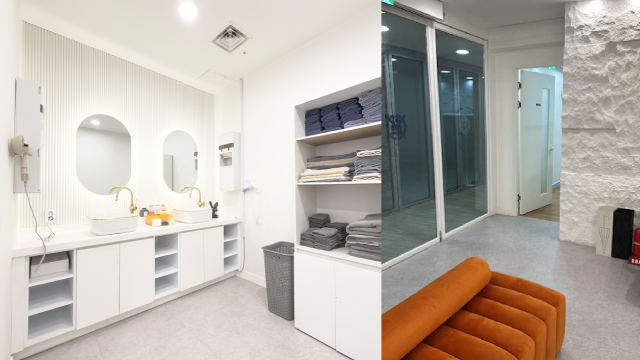
If redness, dullness and uneven tone are what you want addressed — and a treatment has to fit into a working day — broadband light is a reasonable starting point. JD Clinic is located at B2, 616 Gangnam-daero, Gangnam-gu, Seoul, Republic of Korea, and can be reached on +82-2-523-7581 or through the clinic's contact page. Consultations run Monday to Thursday from 09:30 to 19:00, Friday until 21:00 and Saturday until 16:00, with a lunch break on weekdays from 13:00 to 14:00.
International patients can begin with an online enquiry through the JD Clinic contact page, where the pre-travel photo consultation begins.
Disclaimer
This page is for general information only and is not medical advice, a diagnosis, or a treatment recommendation. Outcomes differ from person to person, and whether any treatment is appropriate for you can only be decided in a consultation with a qualified doctor.
Sources & Further Reading
Intense Pulsed Light Therapy for Aging Skin — American Society for Dermatologic Surgery
Laser/light Therapy for Sun-damaged Skin — American Society for Dermatologic Surgery
Hyperpigmentation — American Society for Dermatologic Surgery
Medical Lasers — U.S. Food and Drug Administration
Other Services
Explore additional treatments offered at JD Clinic.

truSculpt iD Facial Contouring
truSculpt iD Facial Contouring is a non-surgical treatment that uses radiofrequency energy to deliver controlled heat to targeted areas of the face, helping to support facial contouring and improve the appearance of localised areas without incisions.
Learn More
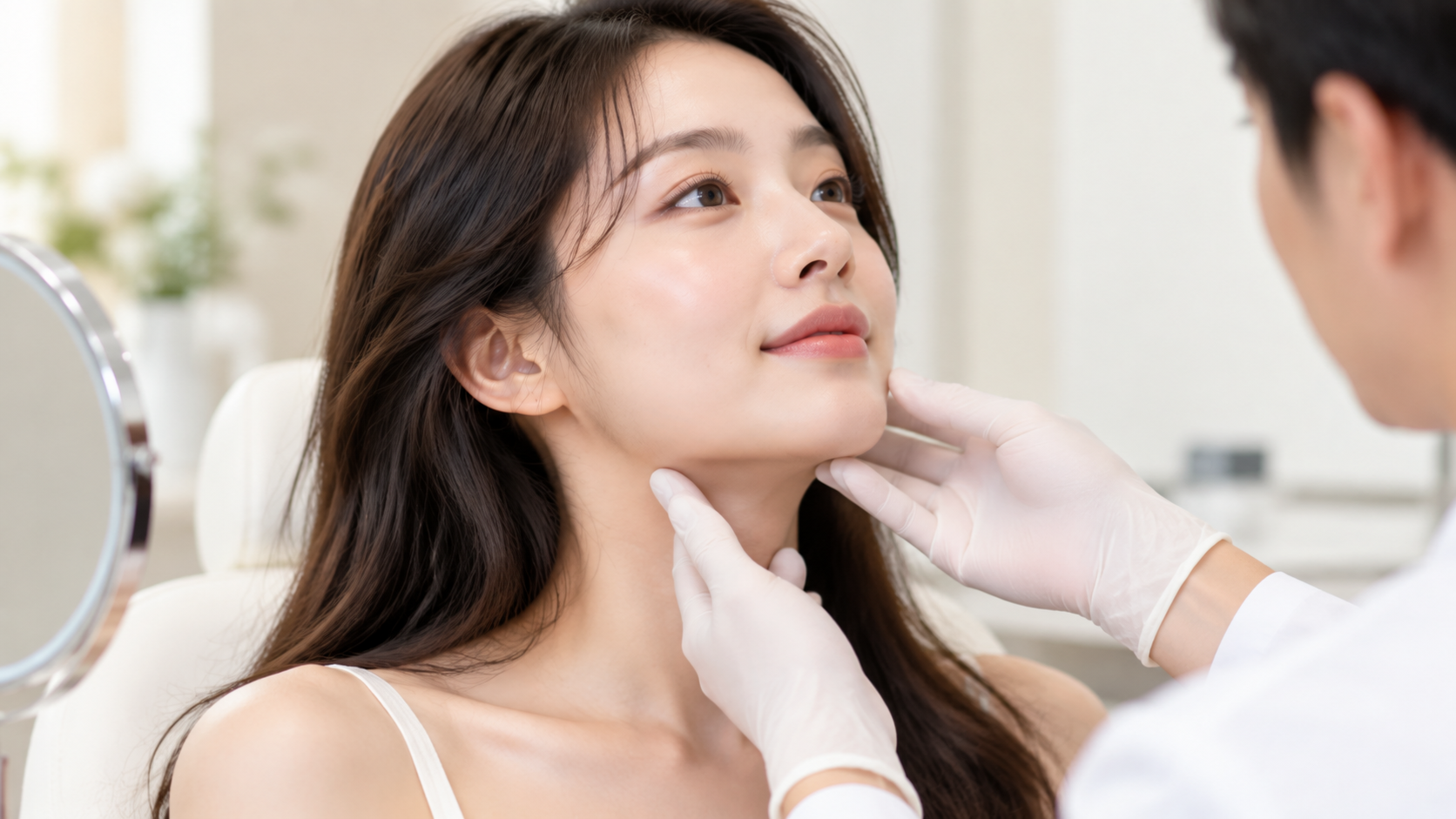
Emface RF Facial Toning
EMFACE RF Facial Toning is a non-invasive facial treatment that combines high-frequency energy with Hi-Pass technology to target the facial muscles and dermal layers simultaneously, supporting muscle toning and the appearance of firmer skin and more defined facial contours.
Learn More

Eye Area Shrink
Eye Area Shrink is a non-surgical micro-ultrasound treatment for the skin around the eyes, intended to improve the appearance of elasticity and to soften the look of mild laxity and fine lines.
Learn More