Physician-Led Non-Surgical Lifting & Aesthetic Medicine in Gangnam, Seoul
4.8 Google Rating (56 Reviews)
en-SG


Neck & Hand Wrinkle Care · Needs Clinic Confirmation
Neck/Hand Area Trinity
Trinity for neck and hands is non-invasive one — use three laser wavelengths (755 nm, 808 nm, and 1064 nm) to hit different skin layers, so one session can settle all your different concerns already
Schedule a ConsultationNeck/Hand Area Trinity

Medically reviewed by Dr Jin-Woo Doh, Representative Director, JD Clinic, Gangnam, Seoul, and Hyunseon Kee, Director, JD Clinic
Trinity for the neck and hands is a non-invasive treatment using three laser wavelengths (755 nm, 808 nm and 1064 nm) to reach different skin layers and address different concerns in one session. At JD Clinic in Gangnam, Seoul, it combines lifting and toning approaches. This is why it appeals to patients whose neck or hands show several changes at once: pigmentation, fine lines, texture and reduced elasticity, none of them dominant.
JD Clinic's doctor mapping is recorded at the specialty level, so this page names the doctors who direct care for this treatment area rather than claiming that one named doctor personally carries out every individual session.
What Is Trinity for the Neck and Hands?
Three wavelengths, three depths, one session. Each wavelength has a stated role.
755 nm is directed at the epidermis, the surface where tone and pigment sit.
808 nm is directed at the dermis, where collagen and elasticity are found.
1064 nm reaches deeper tissue and the fascia-related lifting effect.
Cream anaesthesia is used before treatment, and the session runs approximately twenty to thirty minutes.
It is planned as a course: treatment at four-week intervals, three sessions or more, with results lasting approximately two to three months.
The clinic describes improvements in hydration, elasticity, wrinkles and fine lines, pigmentation, tone and texture, alongside lifting-related effects. It also states that normal daily activities are possible on the same day.
Who Performs Trinity Treatment at JD Clinic
|
|
Dr. Jin-Woo Doh | Dr, Hyunseon Kee |

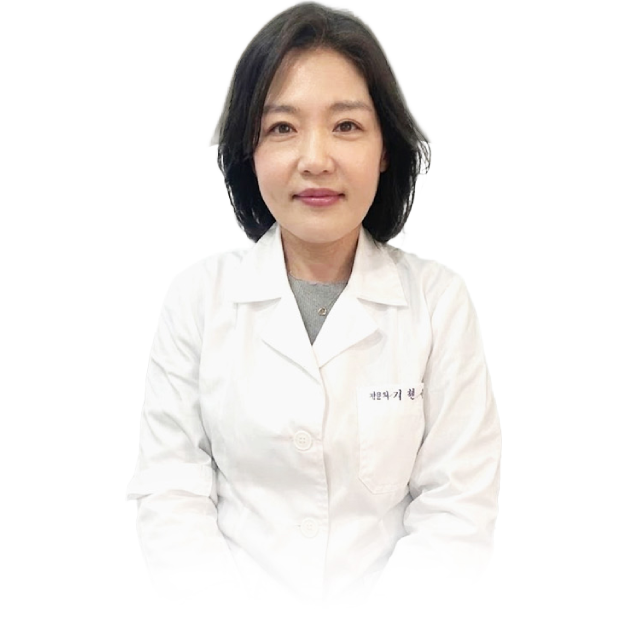
Care in this treatment area is directed by Dr Jin-Woo Doh, Representative Director of JD Clinic, and Hyunseon Kee, Director.
Dr Doh graduated from Seoul National University College of Medicine and serves as a Guest Professor at Seoul National University Hospital. Skin tightening and rejuvenation is among his listed core specialisations, and pigmentation, pores and scar treatments are also named among them.
Hyunseon Kee is a Director at JD Clinic whose listed areas are aesthetic plastic surgery, aesthetic procedures and laser-based aesthetic treatments. She is a full member of the Korean Society of Aesthetic Plastic Surgery, the International Society of Aesthetic Surgery, and the Korean Society of Aesthetic Plastic Surgery and Laser. Dr Doh is additionally a full member of the Korean Society of Aesthetic Surgery and the Korean Society for Obesity Treatment.
JD Clinic has not provided licence or board-status records for either doctor, so none is claimed here. No educational institution is attributed to Hyunseon Kee because the clinic's records do not state one.
The clinic states that the treatment is designed from an analysis of structure, proportion and the individual's skin concerns, with the practitioner assessing the area and determining the approach. Its stated risk-reduction approach is precise analysis and planning, followed by soothing and moisturising care afterwards and avoiding irritating cleansing, alcohol and saunas.
JD Clinic describes its approach as assessing skin thickness, the degree of laxity and facial structure before selecting a device. It then targets the intended tissue layer with the minimum number of passes needed, rather than applying one fixed setting to every patient.
Who Is a Good Candidate for Trinity on the Neck and Hands?
Adults concerned about fine lines in the treated area
People with uneven pigmentation or skin texture there
Those with dehydration or reduced elasticity in the neck or hands
Patients who want several concerns addressed without several appointments
Treatment may need to be postponed or avoided for:
Anyone with active skin irritation, infection or open wounds in the treatment area
People with significant inflammation there
Patients with a condition that increases sensitivity to energy-based treatment
Individual assessment is required. The case this treatment suits best is the one where no single concern dominates, where the neck looks tired rather than lined, or the hands look generally aged rather than specifically spotted. Where one concern clearly leads, a treatment built for it will usually do more.
What to Expect: Procedure, Recovery, and Results Timeline
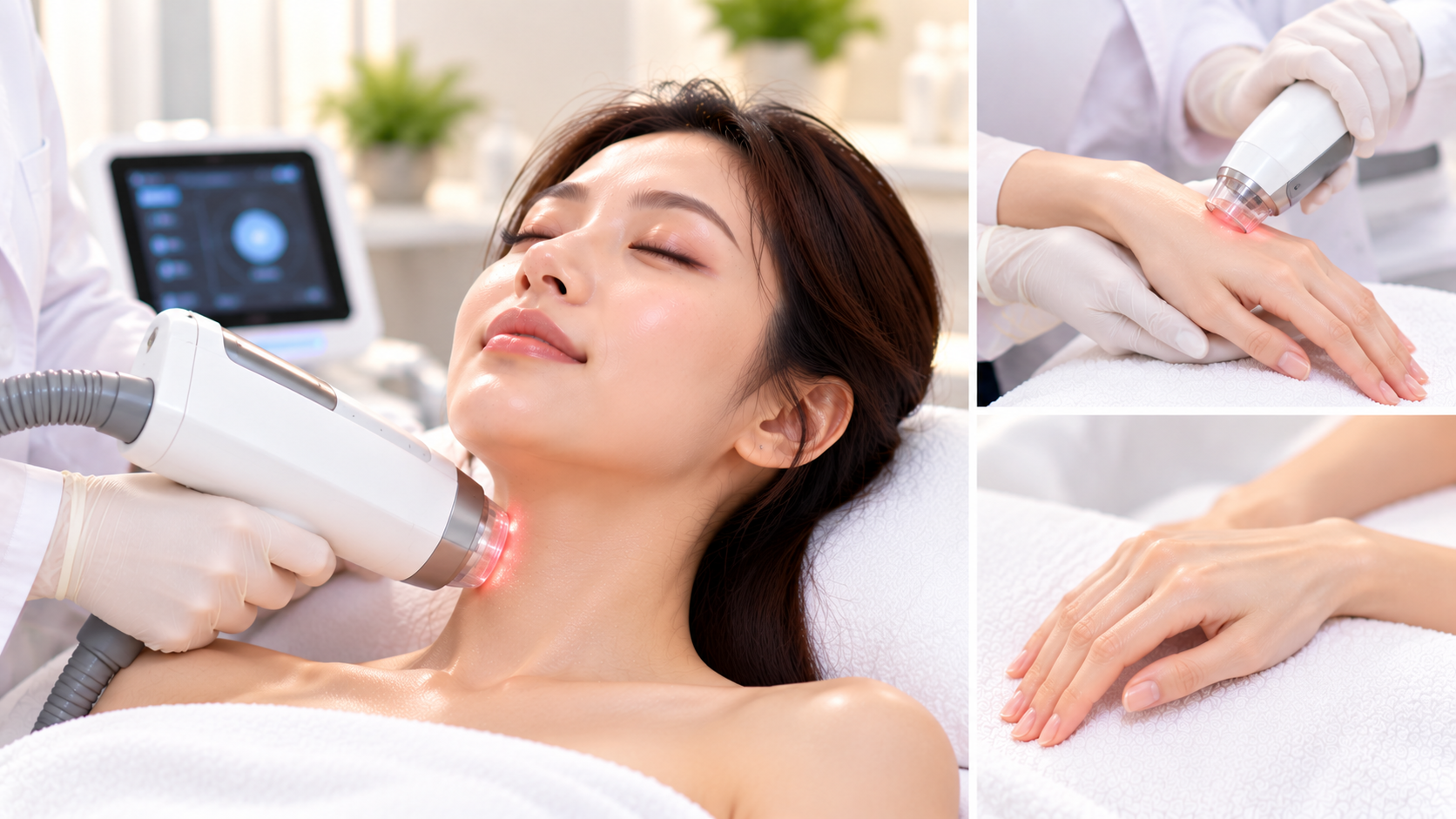
The clinic sets out a seven-step sequence: consultation and skin check; cleansing and preparation; three-wavelength laser treatment; cooling and soothing; an immediate finish with no downtime; aftercare at home; and follow-up sessions.
Stage | What happens | Timing |
|---|---|---|
Consultation | Skin check, area assessment, approach selected | Before treatment |
Numbing | Cream anaesthesia | Before the session |
Treatment | Three wavelengths at three depths | Approximately 20–30 minutes |
Cooling | Soothing after energy delivery | End of session |
Same day | Normal daily activities | Immediately |
Early effect | Hydration and a natural glow may be felt | Immediately |
Results | Elasticity, wrinkles, tone and texture develop | Over the course |
Duration | Stated | Approximately 2–3 months |
Course | Recommended | 3 or more sessions at 4-week intervals |
Cream anaesthesia is used, and individual sensations vary during energy-based treatment. Possible effects include temporary redness, warmth, swelling, sensitivity or pigmentation changes. Rarely, burns or prolonged pigmentation changes may occur, depending on the settings and the skin type.
Aftercare is specific: focus on soothing and moisturising care, avoid irritating cleansing and friction, pay attention to sun protection, and avoid alcohol and saunas as much as possible after treatment. Before treatment, arrive with clean skin, tell the practitioner about relevant skin conditions, medications or recent procedures, and avoid proceeding over actively irritated or infected skin unless medically cleared. Avoid aggressive exfoliation and irritating products beforehand.
Because normal daily activities are possible on the same day and no significant recovery period is described, an extended stay specifically for recovery is generally not expected, and many patients can travel relatively soon afterwards. The clinic operates a 24-hour post-treatment feedback system. English-language aftercare is available through remote follow-up consultation and ongoing channels such as email and messaging once a patient has returned home.
Combining Trinity Treatment with Other Treatments
The clinic's records do not state a combination protocol for this treatment, so this page does not describe one. The four-week course interval is the practical scheduling constraint, and anything else planned for the same area has to fit around it.
Depending on the primary concern, alternatives include other non-invasive laser treatments, radiofrequency-based treatments, ultrasound-based lifting, or pigment-focused procedures, with selection depending on clinical assessment. The clinic offers Trinity treatments under other parts of its menu as well, aimed at different concerns on different areas. It is the same platform, assessed separately each time. More about the clinic and its team is on the JD Clinic about page.
Safety, Precision, and Clinic Standards
JD Clinic has been registered since 2023 as a Registered Medical Institution for Attracting Foreign Patients, certified by the Ministry of Health and Welfare in compliance with the Medical Overseas Expansion and Foreign Patients Attraction Act. The clinic's business registration number is 530-11-00701.
The clinic's stated quality-control process is individualised medical assessment rather than device-led selection, with treatment that is not needed avoided rather than added. Consultation and treatment are physician-led.
The U.S. Food and Drug Administration describes laser treatment of the skin as a regulated medical procedure whose recognised risks include incomplete treatment, pain, infection, bleeding, scarring and changes in skin colour. Potential risks for this treatment specifically include prolonged irritation, pigmentary changes, burns, swelling or skin sensitivity, with the likelihood depending on skin type, the settings and individual response.
The American Society for Dermatologic Surgery advises avoiding sun exposure, tanning and peels in the weeks before laser and light therapy for sun-damaged skin. That matters here for a practical reason: the neck and the hands are the areas where recent sun is most likely and least noticed. Chronic ultraviolet exposure produces a characteristic regional pattern of photoageing, with coarse wrinkling on the back of the neck and fine wrinkling from skin thinning on the forearms and the backs of the hands. Incidental, everyday ultraviolet exposure also accumulates on habitually uncovered sites, so daily sun protection should include the neck and the hands, with sunscreen reapplied after washing.
English-language support is provided by a dedicated international patient coordinator, Cheon Seung-yeon, Team Manager, on weekdays from 09:30 to 19:00, with Korean and Japanese coordination also available.
The Bottom Line
Three laser wavelengths at three depths (surface, dermis and deeper tissue) in one session.
Cream anaesthesia, twenty to thirty minutes, and normal activities on the same day.
Planned as a course: three sessions or more at four-week intervals, with results lasting two to three months.
Best suited where several concerns are present and none dominates.
Sun exposure before treatment, and sun protection after it, both matter more on the neck and hands than elsewhere.
Frequently Asked Questions
Who is a good candidate for Trinity on the neck or hands?
People concerned about wrinkles, fine lines, pigmentation, uneven tone, reduced elasticity or texture in the treated area who want a non-surgical treatment. The treatment is designed to address several concerns at once using three wavelengths, which is what makes it a reasonable choice when no single concern leads.
Who should postpone treatment?
Anyone with active skin irritation, infection, open wounds or significant inflammation in the treatment area. A condition that increases sensitivity to energy-based treatment is a separate reason for caution, and individual assessment is what settles it.
How long does it take, and is it painful?
The clinic describes approximately twenty to thirty minutes. Cream anaesthesia is used for comfort, and individual sensations vary during energy-based treatment. Cooling and soothing form part of the session itself rather than being added afterwards.
How long should I stay in Korea, and when can I fly home?
Normal daily activity is possible on the same day and no significant recovery period is described, so an extended stay for recovery is generally not expected. Many patients can travel relatively soon afterwards; confirm your own timing with the clinic.
When will I see results, and how many sessions will I need?
A natural glow and a feeling of hydration may be noticeable immediately. Improvements in elasticity, wrinkles, tone and texture develop with treatment and ongoing skin care. The clinic recommends three sessions or more at four-week intervals, with results lasting approximately two to three months.
What are the common side effects?
Temporary redness, warmth, mild swelling, sensitivity or irritation after energy-based laser treatment. These are generally temporary, though individual reactions vary. Rarely, burns or prolonged pigmentation changes may occur, depending on settings and skin type.
What should I do before and after treatment?
Beforehand, arrive with clean skin, avoid aggressive exfoliation and irritating products, and disclose skin conditions, medications and recent procedures. Afterwards, focus on soothing and moisturising care, avoid irritating cleansing and friction, use sun protection, and avoid alcohol and saunas as much as possible.
Does JD Clinic publish a price for this treatment?
JD Clinic does not publish treatment prices for this market; a quotation is given after an individual consultation. With three or more sessions recommended at four-week intervals, the course is the useful unit to ask about.
Book a Consultation at JD Clinic
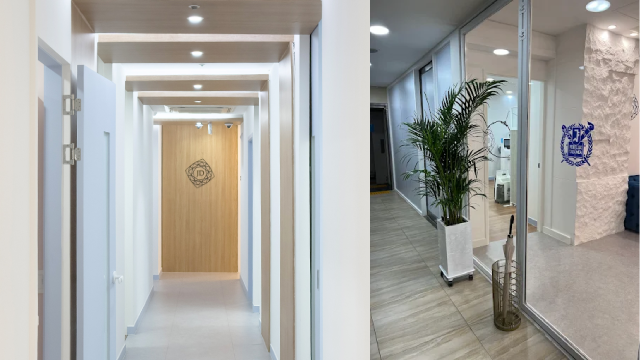
If your neck or hands show several small changes rather than one obvious one, a multi-wavelength treatment is a reasonable thing to weigh at consultation. JD Clinic is located at B2, 616 Gangnam-daero, Gangnam-gu, Seoul, Republic of Korea, and can be reached on +82-2-523-7581 or through the clinic's contact page. Consultations run Monday to Thursday from 09:30 to 19:00, Friday until 21:00 and Saturday until 16:00, with a lunch break on weekdays from 13:00 to 14:00.
International patients can start with an online enquiry through the JD Clinic contact page, and an English-speaking coordinator will follow up.
Disclaimer
This page is for general information only and is not medical advice, a diagnosis, or a treatment recommendation. Outcomes differ from person to person, and whether any treatment is appropriate for you can only be decided in a consultation with a qualified doctor.
Sources & Further Reading
Medical Lasers — U.S. Food and Drug Administration
Laser/light Therapy for Sun-damaged Skin — American Society for Dermatologic Surgery
Sun-damaged Skin — American Society for Dermatologic Surgery
Sun Protection — The Skin Cancer Foundation
Other Services
Explore additional treatments offered at JD Clinic.