Physician-Led Non-Surgical Lifting & Aesthetic Medicine in Gangnam, Seoul
4.8 Google Rating (56 Reviews)
en-SG


Facial Lifting & Skin Tightening · Needs Clinic Confirmation
Tixel Thermal
Tixel Thermal uses thermomechanical heat transfer to deliver heat directly to the skin, stimulating collagen production and remodelling the papillary layer with minimal skin damage and a short recovery period.
Schedule a ConsultationTixel Thermal

Medically reviewed by Dr. Jin-Woo Doh, Representative Director, JD Clinic, Gangnam, Seoul
Tixel Thermal uses thermomechanical heat transfer to deliver heat directly to the skin, stimulating collagen production and remodelling the papillary layer with minimal skin damage and a short recovery. At JD Clinic in Gangnam, Seoul, it is the resurfacing option within the lifting and tightening menu — the one chosen when the concern is texture, fine lines and selected scars rather than a dropped contour. It can also treat wrinkles around the eyes, the neck and the mouth.
JD Clinic's doctor mapping is recorded at the specialty level, so this page names the doctors who direct care for this treatment area rather than claiming that one named doctor personally carries out every individual session.
What Is Tixel Thermal?
Tixel is a thermomechanical treatment: heat is transferred to the skin by direct contact rather than by a light beam.
The mechanism is contact, not laser. A ceramic base heated to approximately 400°C transfers heat through an array of blunt titanium tips.
The target is the papillary layer. Collagen production is stimulated and that layer remodelled, with minimal damage to surrounding skin.
Settings decide the depth of effect. Treatment can be performed in ablative or non-ablative modes depending on the objective.
The session is short. Approximately twenty to thirty minutes, after twenty minutes of numbing cream.
Recovery is real but brief. The clinic's profile records about three to five days.
That last figure is what separates Tixel from the same-day treatments elsewhere on this menu, and it is the one to plan a trip around.
Who Performs Tixel Thermal Treatment at JD Clinic

Dr. Jin-Woo Doh
Representative Director of JD Clinic
Care in this treatment area is directed by Dr. Jin-Woo Doh, Representative Director of JD Clinic, who graduated from Seoul National University College of Medicine and serves as a Guest Professor at Seoul National University Hospital. Non-surgical facial lifting and anti-ageing is the first of his listed core specialisations, and skin tightening and rejuvenation is another.
The consultation assesses the skin condition and the treatment areas, and the Tixel settings are then selected for that individual. The clinic's records do not describe a proprietary technique for this device beyond that selection, so this page does not claim one — what they do describe is the physical parameter the treatment turns on: heat at approximately 400°C delivered through a small applicator.
He is a full member of the Korean Society of Aesthetic Surgery, the Korean Society of Aesthetic Plastic Surgery, the International Society of Aesthetic Surgery, the Korean Society for Obesity Treatment, and the Korean Society of Aesthetic Plastic Surgery and Laser. JD Clinic has not provided licence or registration records for this page, so none is claimed here.
JD Clinic describes its approach as assessing skin thickness, the degree of laxity and facial structure before selecting a device, then targeting the intended tissue layer with the minimum number of passes needed rather than applying one fixed setting to every patient.
Who Is a Good Candidate for Tixel Thermal?
Adults wanting improvement in fine lines, wrinkles or skin texture
People with photoaged skin or selected scars
Those concerned about enlarged pores alongside texture
Patients whose concern includes wrinkles around the eyes, the neck or the mouth
Anyone who can accommodate a few days of recovery
Tixel Thermal may not be suitable, or should be postponed, for:
People with active skin infection or significant irritation and inflammation
Anyone with open wounds in the treatment area
Patients with conditions that may interfere with healing
Those who are pregnant or breastfeeding
Because this is a thermal treatment that works on the surface as well as below it, skin type and a history of pigment change after previous procedures are worth raising specifically. Treated pigmented areas may temporarily darken before improving, and knowing in advance that this is expected is different from discovering it afterwards.
It is also worth separating two things people often bring to the same consultation. A treatment that resurfaces improves the quality of the skin's surface — how it reflects light, how even it reads, how a scar edge sits against the skin around it. It does not reposition tissue, and it will not restore a jawline that has softened. Where both concerns exist, they are usually addressed as two treatments with two different recovery patterns rather than as one, and the sequence between them is a clinical decision rather than a matter of convenience.
What to Expect: Procedure, Recovery, and Results Timeline
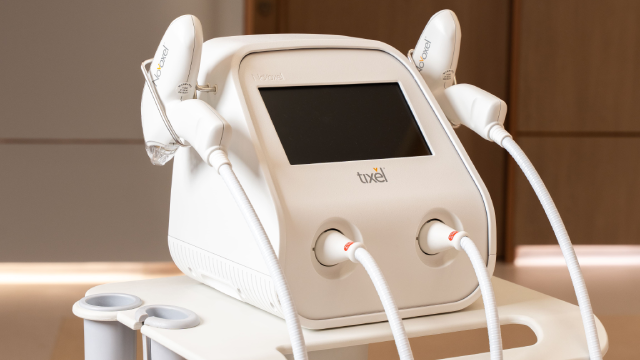
The sequence is a consultation and skin assessment in which the doctor evaluates the skin and discusses the plan; application of numbing cream; the Tixel treatment itself; post-treatment care per the clinic's aftercare instructions; and recovery over roughly three to five days.
Stage | What happens | Timing |
|---|---|---|
Numbing | Cream anaesthesia | 20 minutes |
Treatment | Heated tips applied to the treatment area | About 20–30 minutes |
Immediately after | Redness, warmth, sensitivity, dryness or microcrusting | Depends on intensity |
Recovery | Skin settles | About 3–5 days |
Visible change | First noticeable improvement | Approximately 5–7 days |
Continuing | Collagen remodelling and skin-quality change | Over subsequent weeks |
Tixel can cause heat, stinging or discomfort during treatment, with the level varying by intensity and individual sensitivity; numbing cream is applied beforehand. Temporary redness, warmth, swelling, sensitivity, dryness, peeling or microcrusting may follow, and pigmented areas may temporarily darken before improving. Potential risks include prolonged redness, pigmentary changes, infection, burns, scarring or delayed healing, varying with intensity, skin type and individual factors.
Aftercare is specific and short: moisturise thoroughly and apply sunscreen. The clinic's records do not set out a pre-treatment preparation protocol for this device, so what this page can say is the general rule its own FAQ gives — avoid excessive sun exposure and tanning, do not have treatment over irritated or infected skin, and tell the clinician about recent aesthetic procedures and any products or medications that affect skin sensitivity.
For travel, the recovery figure is the constraint. International patients should allow time for consultation and treatment on top of the recovery period, and confirm individual travel timing with the clinic — particularly after stronger settings. The clinic operates a 24-hour post-treatment feedback system, and English-language aftercare is available through remote follow-up consultation and ongoing channels such as email and messaging once a patient has returned home.
Combining Tixel Thermal with Other Treatments
The clinic's records do not state a combination protocol for this treatment, so this page does not describe one. The practical constraint is the same as for any resurfacing treatment: the recovery window belongs to this treatment, and anything else planned in the same trip has to sit outside it.
Depending on the concern, alternatives include fractional laser resurfacing, non-ablative fractional laser, radiofrequency microneedling and other skin-resurfacing treatments. Tixel differs from laser treatment in the mechanism itself — thermomechanical heat transfer rather than light absorbed by tissue — which is the reason it behaves differently in recovery and in how it interacts with skin tone. More about the clinic and its team is on the JD Clinic about page.
Safety, Precision, and Clinic Standards
JD Clinic has been registered since 2023 as a Registered Medical Institution for Attracting Foreign Patients, certified by the Ministry of Health and Welfare in compliance with the Medical Overseas Expansion and Foreign Patients Attraction Act. The clinic's business registration number is 530-11-00701.
The clinic's stated quality-control process is individualised medical assessment rather than device-led selection, with treatment that is not needed avoided rather than added. Consultation and treatment are doctor-led.
Resurfacing is where the risk in this treatment area concentrates, and the independent guidance is specific about it. The American Society of Plastic Surgeons describes skin resurfacing and rejuvenation as a medical procedure whose risks include burns, scarring, delayed wound healing, textural change and pigmentation irregularities, and states that absolute sun protection is needed for the first year afterwards to prevent irregular pigmentation. The American Society for Dermatologic Surgery describes non-ablative fractional rejuvenation as heating the skin without injuring its surface, delivering energy through microthermal treatment zones separated by untreated skin so that healing is faster, and notes that it usually requires multiple sessions with gradual change.
Less common complications reported in the clinical literature for this device class include post-inflammatory hyperpigmentation, dermatitis and infection. For hyperpigmentation, the American Society for Dermatologic Surgery describes treatment as starting with daily sunscreen and topical brightening agents, with peels, microdermabrasion, intense pulsed light or lasers added if needed — and lasers used with care in darker skin tones.
English-language support is provided by a dedicated international patient coordinator, Cheon Seung-yeon, Team Manager, on weekdays from 09:30 to 19:00, with Korean and Japanese coordination also available.
The Bottom Line
Tixel works by direct thermal contact, not by laser light — a different mechanism with different behaviour.
It is aimed at texture, fine lines and selected scars rather than at a dropped contour.
Allow twenty minutes of numbing, twenty to thirty minutes of treatment, and about three to five days of recovery.
First visible change is around five to seven days, with more developing over subsequent weeks.
Sun protection afterwards is part of the treatment, not an optional extra.
Frequently Asked Questions
Who is a good candidate for Tixel Thermal?
People seeking improvement in skin texture, fine lines, wrinkles, pores or selected scars. Suitability depends on the skin condition and on what you are trying to change — this is a resurfacing treatment, so a concern about a softening jawline is better answered elsewhere on this menu.
Who should postpone treatment?
Anyone with active skin infection, significant irritation or inflammation, open wounds, or a condition that may interfere with healing. Pregnancy and breastfeeding are also reasons to postpone. Because healing is central to how this treatment works, anything that impairs it matters more here than for a non-ablative energy treatment.
How long does it take, and what anaesthesia is used?
The treatment itself takes roughly twenty to thirty minutes, with numbing cream applied for about twenty minutes beforehand. You may feel heat, stinging or discomfort during the session, varying with the intensity used and individual sensitivity.
How long should I stay in Korea, and when can I fly home?
The clinic's profile records about three to five days of recovery, and its own FAQ elsewhere gives a shorter figure — so confirm your own expected recovery at consultation rather than relying on a single number. Allow time for consultation and treatment in addition to recovery, and confirm travel timing with the clinic, particularly after stronger settings.
When will I see results?
Around five to seven days for first visible change, with collagen remodelling and skin-quality improvement continuing over subsequent weeks. Clinical studies of this device class have assessed improvement several weeks to months after treatment, and multiple treatments may be used depending on the indication.
What are the common side effects?
Temporary redness, warmth, swelling, sensitivity, dryness, peeling or microcrusting. Pigmented areas may temporarily become darker before improving, which is expected rather than a complication. Less commonly there can be post-inflammatory hyperpigmentation, dermatitis or infection.
What should I do before and after treatment?
Beforehand, avoid excessive sun exposure and tanning, do not have treatment over irritated or infected skin, and tell the clinician about recent aesthetic procedures and any products or medications affecting skin sensitivity. Afterwards, moisturise thoroughly and apply sunscreen — and keep using it well beyond the recovery period.
Does JD Clinic publish a price for Tixel Thermal?
JD Clinic does not publish treatment prices for this market; a quotation is given after an individual consultation. Settings and the number of sessions depend on the indication being treated, so both are established at assessment.
Book a Consultation at JD Clinic
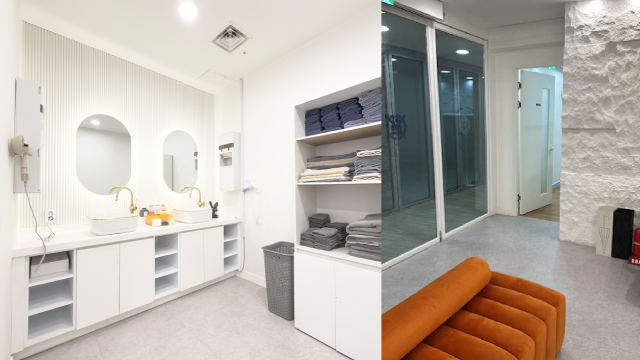
If texture, fine lines or a scar is what you want addressed, and a few days of recovery is something your trip can absorb, Tixel is worth discussing at consultation. JD Clinic is located at B2, 616 Gangnam-daero, Gangnam-gu, Seoul, Republic of Korea, and can be reached on +82-2-523-7581 or through the clinic's contact page. Consultations run Monday to Thursday from 09:30 to 19:00, Friday until 21:00 and Saturday until 16:00, with a lunch break on weekdays from 13:00 to 14:00.
International patients can begin with an online enquiry through the JD Clinic contact page, and an English-speaking coordinator will follow up.
Disclaimer
This page is for general information only and is not medical advice, a diagnosis, or a treatment recommendation. Outcomes differ from person to person, and whether any treatment is appropriate for you can only be decided in a consultation with a qualified doctor.
Sources & Further Reading
Skin Rejuvenation Risks and Safety — American Society of Plastic Surgeons
Non-ablative Laser Rejuvenation — American Society for Dermatologic Surgery
Hyperpigmentation — American Society for Dermatologic Surgery
Many ways to firm sagging skin — American Academy of Dermatology
Other Services
Explore additional treatments offered at JD Clinic.