Physician-Led Non-Surgical Lifting & Aesthetic Medicine in Gangnam, Seoul
4.8 Google Rating (56 Reviews)
en-SG


Facial Lifting & Skin Tightening · Needs Clinic Confirmation
Virtue RF Microneedling
Virtue RF Microneedling uses fine needles together with high-frequency radiofrequency energy, delivering the energy beneath the skin’s surface rather than across it.
Schedule a ConsultationVirtue RF Microneedling

Medically reviewed by Dr. Jin-Woo Doh, Representative Director, JD Clinic, Gangnam, Seoul
Virtue RF Microneedling uses fine needles together with high-frequency radiofrequency energy, delivering that energy below the surface rather than across it. At JD Clinic in Gangnam, Seoul, the clinic describes it as helping improve skin elasticity and the contour of the jaw and cheeks by supporting collagen and elastin regeneration and stimulating fat tissue through the energy the microneedles carry. Patients from Singapore ask about radiofrequency microneedling for mild skin laxity, fine lines, uneven texture, enlarged pores, acne scars and overall skin quality — a broader list than most of the devices on this menu address.
JD Clinic's doctor mapping is recorded at the specialty level, so this page names the doctors who direct care for this treatment area rather than claiming that one named doctor personally carries out every individual session.
What Is Virtue RF Microneedling?
Radiofrequency microneedling combines controlled needle placement with radiofrequency energy delivered from the needle tips, so the energy is deposited at a chosen depth rather than passing through the skin surface.
Two mechanisms, one pass. The needles create controlled micro-injury; the radiofrequency adds heat at depth.
The clinic's stated targets are elasticity and contour. Skin elasticity, and the contour of the jaw and cheeks.
The stated mechanism includes fat tissue. The clinic describes the high-frequency energy as stimulating fat tissue alongside supporting collagen and elastin regeneration.
The session has a set shape. Approximately twenty minutes of cream anaesthesia, then twenty to fifty minutes of treatment.
There is real recovery here. The clinic lists two to three days — the longest in this treatment area.
That recovery figure is the practical difference between this treatment and the rest of the lifting menu, and it is the thing to plan a trip around.
Who Performs Virtue RF Microneedling at JD Clinic

Dr. Jin-Woo Doh
Representative Director of JD Clinic
Care in this treatment area is directed by Dr. Jin-Woo Doh, Representative Director of JD Clinic, who graduated from Seoul National University College of Medicine and serves as a Guest Professor at Seoul National University Hospital. Non-surgical facial lifting and anti-ageing is the first of his listed core specialisations.
The clinic describes the technique for this treatment as microneedles delivering high-frequency energy, intended to support collagen and elastin regeneration and to stimulate fat tissue, while targeting skin elasticity and jaw and cheek contour. The provider selects treatment parameters based on the area being treated, after assessing the skin concern, the medical history, current medications and what the patient expects.
He is a full member of the Korean Society of Aesthetic Surgery, the Korean Society of Aesthetic Plastic Surgery, the International Society of Aesthetic Surgery, the Korean Society for Obesity Treatment, and the Korean Society of Aesthetic Plastic Surgery and Laser. JD Clinic has not provided licence or registration records for this page, so none is claimed here.
JD Clinic describes its approach as assessing skin thickness, the degree of laxity and facial structure before selecting a device, then targeting the intended tissue layer with the minimum number of passes needed rather than applying one fixed setting to every patient.
Who Is a Good Candidate for Virtue RF Microneedling?
Adults concerned about mild skin laxity
People with fine lines, wrinkles or uneven texture
Those with enlarged pores or acne scarring
Patients whose concern is the jaw and cheek contour alongside skin quality
Anyone wanting a non-surgical treatment and prepared for a short recovery
Treatment may need to be postponed or avoided for:
Anyone with active infection or inflammation in the treatment area
People with certain bleeding or coagulation problems
Patients taking blood-thinning medication, which must be disclosed to the treating clinician
Anyone with another medical condition that could increase procedural risk
Blood-thinning medication is not a reason to stop taking anything on your own — it is a reason for the clinician to know before choosing settings. Any change to prescribed medication is a decision for the prescriber, not for a treatment plan.
Two further points are worth raising yourself if they apply. Skin tone matters here more than on most of this menu: independent guidance identifies darker skin types as carrying a higher risk of pigmentary change with microneedling devices, which is a reason for a careful settings discussion rather than a reason to rule the treatment out. And a history of keloid or hypertrophic scarring belongs on the table early, because a treatment built on controlled micro-injury is exactly the kind that a scarring tendency interacts with.
The breadth of what radiofrequency microneedling is used for can also be misleading. A treatment listed as addressing laxity, texture, pores and acne scarring is not addressing all of them equally in one session at one setting; the parameters that suit a scar do not automatically suit a contour. Naming your single most important concern at consultation tends to produce a better plan than listing everything you would like improved.
What to Expect: Procedure, Recovery, and Results Timeline
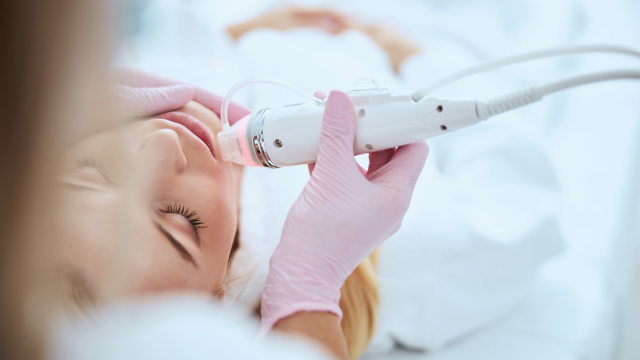
The sequence is: consultation and skin assessment; cleansing of the treatment area; application of cream anaesthesia; after the numbing period, application of the radiofrequency microneedling handpiece; microneedles entering the skin while radiofrequency energy is delivered; then a check of the treated area and soothing aftercare.
Stage | What happens | Timing |
|---|---|---|
Consultation | Skin concern, area, history, medications, expectations | Before treatment |
Numbing | Cream anaesthesia | Approximately 20 minutes |
Treatment | Microneedles with high-frequency RF energy | 20–50 minutes |
Immediately after | Redness and stinging | Reported by the clinic |
Recovery | Stated period | 2–3 days |
Maintenance | Stated period | 3–6 months |
Retreatment | Stated cycle | Every 2–3 months |
Some patients experience warmth, stinging, a scratching sensation or discomfort during the treatment; topical numbing is what makes it manageable, and how much you feel varies with the area, individual sensitivity and the settings used. The sensation is not uniform across a face either — thinner skin over bone tends to register more than the fuller areas, which is normal rather than a sign that something is wrong, and worth mentioning during the session rather than afterwards so the setting can be adjusted.
The clinic specifically warns that redness and stinging may occur afterwards, and recommends moisturising and soothing care. Before treatment, disclose blood-thinning medication, medical conditions, active skin inflammation or infection, and previous procedures. Avoid alcohol beforehand because it may increase bruising, mention potentially irritating skincare products, and expect to be asked to stop products containing salicylic acid before treatment. Discuss any medication change with the treating provider first.
For travel planning, the clinic's two-to-three-day recovery figure translates into a practical rule: allow approximately three days after treatment before a long-haul flight, and confirm that the skin is recovering normally before travelling. The clinic operates a 24-hour post-treatment feedback system, and English-language aftercare is available through remote follow-up consultation and ongoing channels such as email and messaging once a patient has returned home.
Combining Virtue RF Microneedling with Other Treatments
The clinic's records do not state a combination protocol for this treatment, so this page does not describe one. What can be said is that the two-to-three-day recovery makes sequencing a real constraint rather than a preference — a second treatment planned into the same short trip has to fit around it, not the other way round.
Alternatives depend on the concern. Radiofrequency microneedling may be considered alongside other non-surgical tightening or resurfacing approaches, while significant skin laxity may warrant assessment for a surgical procedure instead.
Three practical distinctions are worth holding on to when comparing. A monopolar radiofrequency treatment heats the dermis broadly and leaves the surface intact, so it has no recovery to speak of and no effect on texture. A focused ultrasound treatment reaches deeper still, towards the structural layer, and is the choice when a contour rather than the skin itself has changed. Radiofrequency microneedling sits between them, working at a selected depth through the surface — which is what buys it an effect on texture and pores, and what costs it the two to three days the other two do not ask for. None of those is better than the others in the abstract; they answer different questions, and the consultation exists to establish which question you are asking. More about the clinic and its team is on the JD Clinic about page.
Safety, Precision, and Clinic Standards
JD Clinic has been registered since 2023 as a Registered Medical Institution for Attracting Foreign Patients, certified by the Ministry of Health and Welfare in compliance with the Medical Overseas Expansion and Foreign Patients Attraction Act. The clinic's business registration number is 530-11-00701.
The clinic's stated quality-control process is individualised medical assessment rather than device-led selection, with treatment that is not needed avoided rather than added. Consultation and treatment are doctor-led.
This is the treatment on this menu with the most specific regulatory attention, and it deserves to be read carefully. The Health Sciences Authority (HSA) of Singapore, consistent with international regulatory guidance, recognises that radiofrequency microneedling is a medical procedure rather than a cosmetic treatment and has been associated with reports of serious complications including burns, scarring, fat loss, disfigurement and nerve damage, so it should be performed only by a trained, registered practitioner. Fat loss on that list is worth noticing alongside the clinic's own description of the mechanism stimulating fat tissue: the intended effect and the reported adverse one involve the same tissue, which is exactly why settings and operator experience are the safety question here rather than a matter of preference.
Microneedling devices used for improving the appearance of wrinkles around the eyes and elsewhere on the face should be performed by a provider with specific training in the technique, and carry risks including bleeding, bruising, pigment change and infection — and devices delivering radiofrequency energy through microneedles carry a different risk profile again. Regulatory guidance on suitability names clotting or bleeding disorders, active skin infection, recent isotretinoin use, a history of keloids and pregnancy among contraindications, with darker skin types at particular risk of pigmentary change.
Beyond the temporary redness, discomfort, swelling and bruising that are common, the clinic's own records acknowledge that radiofrequency microneedling has documented potential for more serious complications. A systematic review of radiofrequency-based facial treatments published in Aesthetic Surgery Journal Open Forum reports that, across pooled studies, adverse events were mild and transient — redness and swelling most common — with no serious complications reported and low mean pain scores.
English-language support is provided by a dedicated international patient coordinator, Cheon Seung-yeon, Team Manager, on weekdays from 09:30 to 19:00, with Korean and Japanese coordination also available.
The Bottom Line
Virtue RF Microneedling delivers radiofrequency from the needle tips, at a chosen depth rather than across the surface.
The clinic's stated targets are skin elasticity and the jaw and cheek contour.
Allow about twenty minutes of numbing plus twenty to fifty minutes of treatment, and two to three days of recovery.
Maintenance is stated at three to six months, with a two-to-three-month retreatment cycle.
This is the most closely regulated device on this menu, and the reasons are specific rather than generic.
Frequently Asked Questions
Who is a good candidate for Virtue RF Microneedling?
Patients concerned about reduced skin elasticity or the appearance of the jaw and cheek contours, and more broadly those with fine lines, uneven texture, enlarged pores or acne scarring who want a non-surgical treatment. A consultation is needed to decide whether it suits your skin condition and goals rather than simply your concern.
Who should avoid or postpone treatment?
Anyone with active skin infection or inflammation in the treatment area. Patients with bleeding or clotting problems, anyone taking blood-thinning medication, and people with certain medical conditions should discuss these with the provider first. Independent guidance also names recent isotretinoin use, a history of keloids and pregnancy among contraindications for this device class.
How long does the appointment take?
Approximately twenty minutes for the cream anaesthesia, then twenty to fifty minutes for the procedure itself. Allow additional time beyond that for consultation, preparation and post-treatment care, and expect the exact time to vary with the treatment area and the individual plan.
Is it painful?
Some patients feel warmth, stinging, a scratching sensation or discomfort during treatment. Topical numbing is used to make it more comfortable, and how much you feel varies with the area treated, individual sensitivity and the settings used. Redness and stinging afterwards are specifically noted by the clinic.
How many days should I stay in Korea, and when can I fly home?
The clinic lists a two-to-three-day recovery period. A practical plan is to allow approximately three days after treatment before a long-haul flight, and to confirm the skin is recovering normally before travelling rather than working to a fixed date booked in advance.
When will I see results, and how often is it repeated?
The clinic states a three-to-six-month maintenance period and a two-to-three-month retreatment cycle, which describes a treatment planned as a series. Collagen and elastin change develops over weeks rather than appearing at the end of a session.
What should I avoid before treatment?
Avoid alcohol beforehand, since it may increase bruising. Tell the provider about blood-thinning medications and about potentially irritating skincare products — you may be asked to stop products containing salicylic acid before treatment. Do not change prescribed medication without discussing it with the treating provider first.
Does JD Clinic publish a price for Virtue RF Microneedling?
JD Clinic does not publish treatment prices for this market; a quotation is given after an individual consultation. Because this treatment is planned as a series and the parameters depend on the area treated, the quotation follows the assessment.
Book a Consultation at JD Clinic
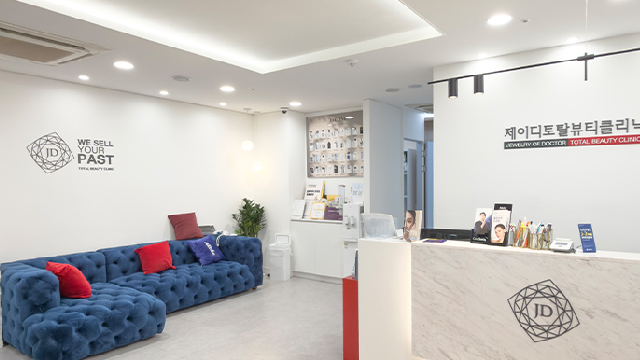
If your concern is skin quality and contour together — texture and pores as well as a softening jaw — radiofrequency microneedling is one of the options a consultation will weigh, along with the recovery it asks for. JD Clinic is located at B2, 616 Gangnam-daero, Gangnam-gu, Seoul, Republic of Korea, and can be reached on +82-2-523-7581 or through the clinic's contact page. Consultations run Monday to Thursday from 09:30 to 19:00, Friday until 21:00 and Saturday until 16:00, with a lunch break on weekdays from 13:00 to 14:00.
International patients can begin with an online enquiry through the JD Clinic contact page, and an English-speaking coordinator will follow up.
Disclaimer
This page is for general information only and is not medical advice, a diagnosis, or a treatment recommendation. Outcomes differ from person to person, and whether any treatment is appropriate for you can only be decided in a consultation with a qualified doctor.
Sources & Further Reading
Potential Risks with Certain Uses of Radiofrequency (RF) Microneedling — HSA Safety Guidance — Health Sciences Authority, Singapore
Microneedling Devices: Understanding the Benefits, Risks and Safety Considerations — Health Sciences Authority, Singapore
Microneedling Devices — Health Sciences Authority, Singapore
Non-invasive Skin Tightening Treatments — College of Dermatologists, Singapore / regional dermatological society guidance
Radiofrequency-Based Treatments for Facial Rejuvenation: A Systematic Review of Efficacy, Safety, and Patient-Centred Outcomes — Aesthetic Surgery Journal Open Forum
Other Services
Explore additional treatments offered at JD Clinic.