Physician-Led Non-Surgical Lifting & Aesthetic Medicine in Gangnam, Seoul
4.8 Google Rating (56 Reviews)
en-US


Filler & Botox · Needs Clinic Confirmation
Babyko Nose Filler
Babyko Nose Filler is a minimally invasive injectable treatment in which dermal filler is placed at selected areas of the nose to temporarily improve its contour and profile.
Schedule a ConsultationBabyko Nose Filler

Medically reviewed by Dr. Jin-Woo Doh, Representative Director, JD Clinic, Gangnam, Seoul, and Dr. Hyunseon Kee, Director, JD Clinic
Babyko Nose Filler is a minimally invasive injectable treatment in which dermal filler is placed at selected areas of the nose to temporarily improve its contour and profile. At JD Clinic in Gangnam, Seoul it is a short outpatient treatment — ten to twenty minutes, with recovery described as same-day to one day. One thing belongs near the top of this page rather than buried at the bottom of it: the nose is the injection site where the recognised risks of filler are at their highest, and the regulators and professional bodies quoted further down say so in plain terms. That does not make the treatment unreasonable. It makes the conversation before it the part that matters.
JD Clinic's doctor mapping is recorded at the specialty level, so this page names the doctors who direct care for this treatment area rather than claiming that one named doctor personally carries out every individual session.
What Is Babyko Nose Filler?
Filler is placed at chosen points along the nose, and the contour that results comes from added volume rather than from altered structure.
What it can do. Depending on the patient's anatomy, filler may create the appearance of a straighter or more defined nasal bridge, or improve selected contour irregularities.
What it cannot do. Filler adds volume rather than removing or reducing nasal tissue, so it cannot produce the structural changes of surgical rhinoplasty.
How long it takes. About ten to twenty minutes as an outpatient visit.
Numbing. General anaesthesia is not required; the product may contain lidocaine, or topical or local numbing may be used.
How long it lasts. The clinic describes results as lasting around six to twelve months, varying by individual.
The distinction in the first two points is the one that decides whether this treatment suits a particular patient. The American Society of Plastic Surgeons states that non-surgical nasal augmentation with dermal filler can only add volume and cannot reduce the nose or improve breathing, and that the nose is a high-risk injection site for adverse events including skin necrosis and irreversible blindness, with risk raised further when the nose has previously been operated on. A patient who wants a smaller nose, or who is having trouble breathing through it, is asking for something filler does not do.
Who Performs Babyko Nose Filler Treatment at JD Clinic
|
|
Dr. Jin-Woo Doh | Dr. Hyunseon Kee |

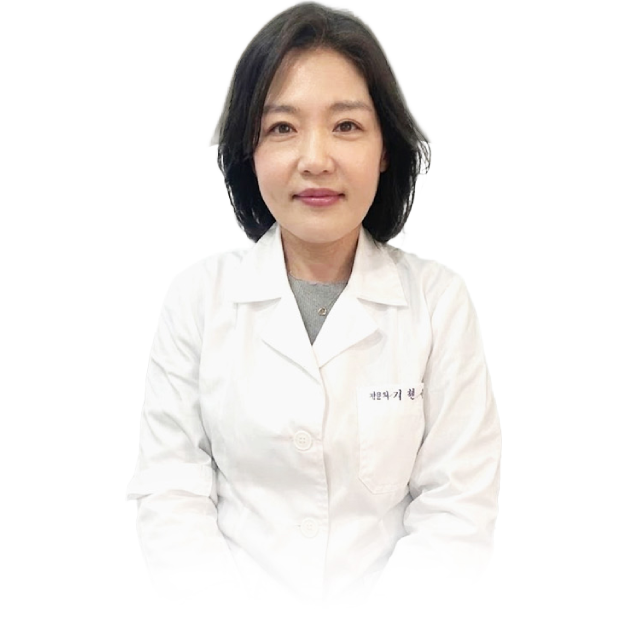
Care in this treatment area is directed by Dr. Jin-Woo Doh, Representative Director of JD Clinic, and Dr. Hyunseon Kee, Director.
Dr. Doh graduated from Seoul National University College of Medicine and serves as a Guest Professor at Seoul National University Hospital. Fillers and Botox are named among his listed core specializations.
Dr. Hyunseon Kee is a Director at JD Clinic whose listed areas are aesthetic plastic surgery, aesthetic procedures and laser-based aesthetic treatments. She is a full member of the Korean Society of Aesthetic Plastic Surgery, the International Society of Aesthetic Surgery, and the Korean Society of Aesthetic Plastic Surgery and Laser. Dr. Doh is additionally a full member of the Korean Society of Aesthetic Surgery and the Korean Society for Obesity Treatment.
JD Clinic has not provided licence or board-status records for either doctor, so none is claimed here, and no educational institution is attributed to Dr. Hyunseon Kee because the clinic's records do not state one.
Consultation reviews medical history, previous nasal procedures or fillers, allergies, medications and aesthetic goals. The nose is then examined from multiple angles to assess its shape, proportions, skin and soft-tissue characteristics, and the areas that may be safely treated. That last clause is not a formality. A previous rhinoplasty, a previous filler that is still present, or scarring from either changes the anatomy the injector is working through, and it is the reason the history matters as much as the examination.
The clinic's records leave the specific filler product, the injection points, the volume used and the safety protocol unstated, noting that because the nose contains important blood vessels, only verified clinician-specific techniques and safety claims should be published. This page therefore does not name a product or describe a proprietary technique. What it can say is that both are fair questions to put directly, and that a clear answer to them is itself informative.
Who Is a Good Candidate for Babyko Nose Filler?
Adults seeking subtle, temporary improvement in selected nasal contour concerns
People who want to enhance the appearance of the nose line or dimension without surgery
Patients with realistic expectations and nasal anatomy a clinician judges suitable
Those content with a result that is temporary and will need repeating
Treatment may not be suitable for:
Anyone with an active infection, inflammation or significant irritation at the treatment site
People with allergies or sensitivities to the filler ingredients
Patients whose nasal anatomy cannot be safely treated with filler
Anyone seeking substantial reduction in nasal size or major structural correction, who generally requires assessment for surgical options instead
The fourth exclusion is worth separating from the others because it is not a medical contraindication at all — it is a mismatch between what the patient wants and what the treatment does. A consultation that ends with a recommendation against filler on those grounds has worked, not failed.
There is also an age boundary that international patients sometimes encounter for the first time in the clinic. England has made it a criminal offence to administer botulinum toxin or cosmetic filler for cosmetic purposes to anyone under eighteen, with age verification required before treating adults — a measure its Department of Health and Social Care attributes to the health risks of these treatments. Korean requirements are set by Korean law rather than by that measure, but the reasoning behind it travels with the treatment.
What to Expect: Procedure, Recovery, and Results Timeline
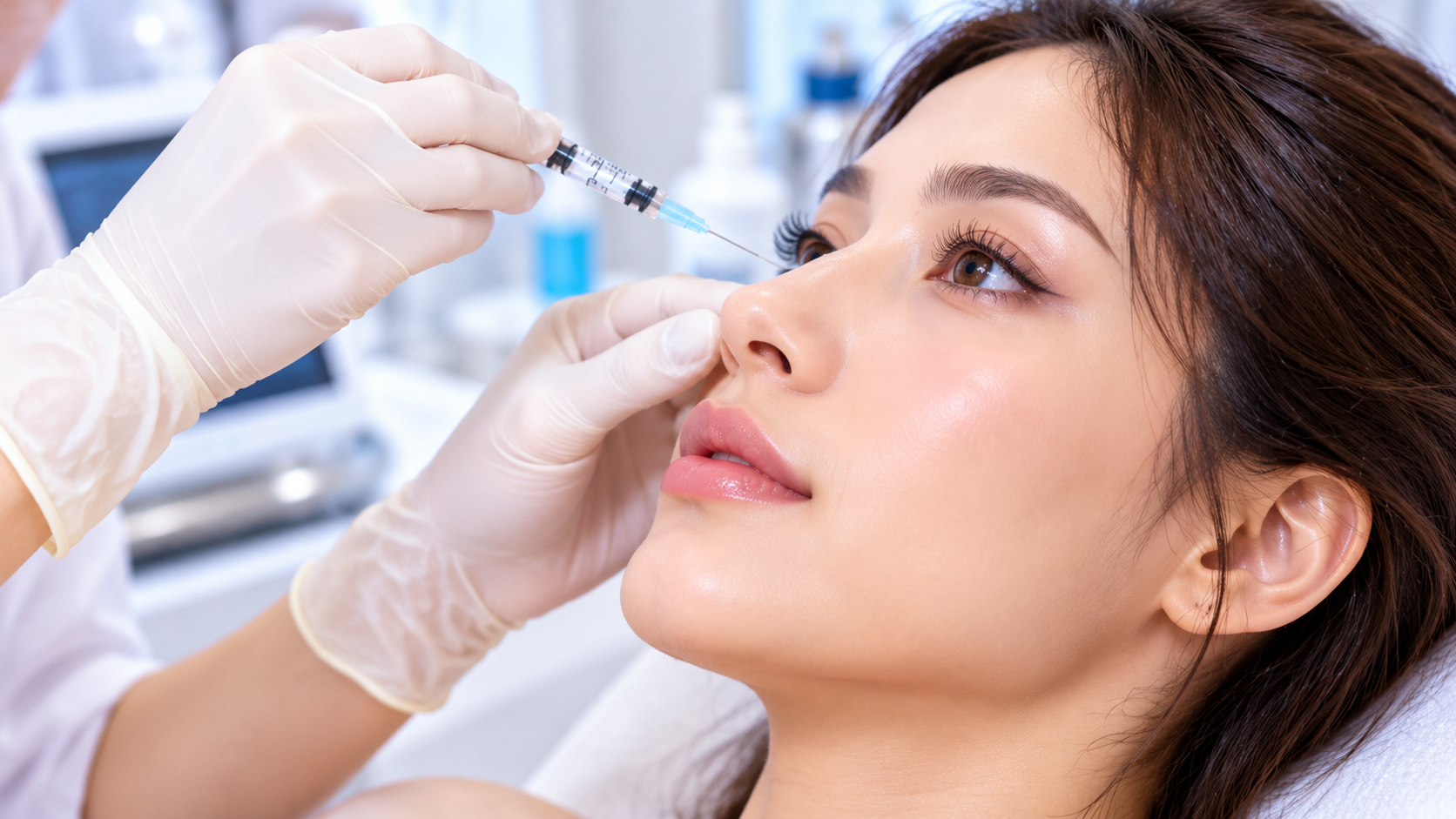
The nose and surrounding area are assessed and marked, the skin is cleansed and prepared, and a small amount of filler is carefully placed at selected points using a fine needle or cannula depending on the clinician's technique. The contour and symmetry are evaluated during treatment, and post-treatment instructions are given afterwards.
Stage | What happens | Timing |
|---|---|---|
Consultation | History, previous fillers or nasal surgery, multi-angle examination | Before treatment |
Numbing | Filler containing lidocaine, or topical or local anaesthesia | Before the injection |
Treatment | Filler placed at selected points; contour assessed during | Approximately 10–20 minutes |
Recovery | Mild swelling or bruising possible | Same day to 1 day |
Early appearance | Some contour improvement visible, swelling affecting it | Immediately |
Settled result | Appearance becomes clearer as swelling resolves | Days to weeks |
Longevity | As the clinic describes it | Approximately 6–12 months |
Temporary swelling, bruising, redness, tenderness or asymmetry may occur. Discomfort during the injection is described as brief pinching, stinging or pressure.
Before treatment, tell the clinician about allergies, medications, previous fillers or nasal surgery, bleeding or clotting problems, and any active skin infection, and follow the clinic's instructions on medications or supplements that may increase bruising. Prescribed medication should not be stopped without medical advice. Afterwards, avoid unnecessary pressure on or manipulation of the nose, and expect to be advised to hold off temporarily on strenuous exercise, excessive heat, alcohol and other facial treatments.
One instruction on this page is different in kind from the others. Severe pain, unusual skin colour change, or any visual symptom after nasal filler requires urgent medical attention — not a wait-and-see, and not a message left for the morning. That is the clinic's own aftercare instruction, and it reflects the specific risk set out in the safety section below.
With recovery described as same-day to one day, an extended stay is generally not required, and the clinic suggests one to two days in Seoul for a typical single session. Patients can generally travel once they are comfortable and any initial swelling or bruising is manageable; the clinic should confirm the appropriate timing based on the treatment and individual recovery. Given that the serious complications of nasal filler present early, there is a practical argument for not flying out within hours of the injection. The clinic operates a 24-hour post-treatment feedback system, and English-language aftercare is available through remote follow-up consultation and ongoing channels such as email and messaging once a patient has returned home.
Combining Babyko Nose Filler with Other Treatments
Nose filler may sometimes be performed alongside other facial aesthetic treatments when clinically appropriate. The clinic adds a caution that belongs in the text rather than in a footnote: combination treatments should be planned carefully, because additional injections around the nose can increase procedural complexity and risk.
The principal alternative is surgical rhinoplasty, which can change nasal bone, cartilage and soft tissue, where filler provides temporary volume-based contour modification only. They are not competing versions of the same treatment; they answer different questions, and the right one follows from what the patient actually wants changed. Other non-surgical options may be considered depending on the specific concern, with suitability determined by the treating clinician. More about the clinic and its team is on the JD Clinic about page.
Safety, Precision, and Clinic Standards
JD Clinic has been registered since 2023 as a Registered Medical Institution for Attracting Foreign Patients, certified by the Ministry of Health and Welfare in compliance with the Medical Overseas Expansion and Foreign Patients Attraction Act. The clinic's business registration number is 530-11-00701.
The clinic's stated quality-control process is individualised medical assessment rather than device-led selection, with treatment that is not needed avoided rather than added. Consultation and treatment are physician-led. For this treatment it asks patients to follow its injection and aftercare instructions, avoid rubbing or putting unnecessary pressure on the treated area, and attend recommended follow-up appointments.
The regulatory position on this injection site should be read before deciding. The U.S. Food and Drug Administration regulates dermal fillers as medical device implants approved only for specific sites, names unintentional injection into a blood vessel as the most serious risk — capable of causing tissue necrosis, vision loss including blindness, or stroke — and lists the nose, glabella, periorbital area, forehead and neck among the sites for which filler injection is not approved. The same regulator advises that filler injection be treated as a medical procedure performed by a licensed, trained health care provider using properly labelled, sealed, approved product, and that fillers sold directly to the public or injected with needle-free devices are not approved and may be fake or contaminated.
That approval position describes United States regulation, which differs from Korean regulation; nose filler is widely and lawfully practised in Korea. What the regulator's language does establish is that this site is not an ordinary one, and that the clinic's own risk warning — immediate assessment for unusual severe pain, skin discoloration or vision changes — is describing a real mechanism rather than a legal formality.
The American Society for Dermatologic Surgery's multidisciplinary task force records that injection-site reactions usually settle within one to two weeks, while rarer serious adverse events include vascular occlusion leading to skin necrosis or blindness, delayed inflammatory events and nodule formation. The Centers for Disease Control and Prevention notes that cosmetic procedures are among the settings where unsafe injection practices occur, and that reusing needles or syringes or mishandling medication vials can transmit hepatitis B, hepatitis C, bacterial and fungal infections and possibly HIV.
The American Academy of Dermatology advises anyone considering a cosmetic treatment to establish who will perform it, ask about their experience with that specific procedure, and discuss the risks and the realistic expected result before agreeing to anything. For this treatment, one question can be added to that list: what the clinic does, and how quickly, if a vascular complication is suspected.
English-language support is provided by a dedicated international patient coordinator, Cheon Seung-yeon, Team Manager, on weekdays from 09:30 to 19:00, with Korean and Japanese coordination also available.
The Bottom Line
Filler placed at selected nasal points to temporarily improve contour and profile.
Ten to twenty minutes, same-day to one-day recovery, results described as six to twelve months.
It adds volume; it cannot reduce the nose or improve breathing.
The nose is a high-risk injection site, and severe pain, colour change or visual symptoms need urgent assessment.
Ask what product is used, who is injecting, and what happens if something goes wrong after you fly home.
Frequently Asked Questions
Who is a good candidate for Babyko Nose Filler?
Adults who want to enhance the appearance of the nose line or dimension with a non-surgical filler treatment, and whose expectations match what added volume can do. Suitability depends on individual nasal anatomy and aesthetic goals, which is what the multi-angle examination at consultation is for.
Who should avoid or postpone treatment?
Anyone with active infection, inflammation or significant irritation around the treatment area should generally postpone. Allergies to filler ingredients, nasal anatomy that cannot be safely treated, and a goal that requires reducing nasal size rather than adding volume are the clinic's other exclusions.
How long does it take, and is it painful?
About ten to twenty minutes. Mild pinching, stinging or pressure may occur during injection, and anaesthetic cream or local anaesthesia may be used depending on the treatment plan.
How long should I stay in Korea, and when can I fly home?
Recovery is described as same-day to one day, and the clinic suggests one to two days in Seoul for a typical single session. Patients can generally travel once comfortable and any swelling or bruising is manageable, but confirm your timing with the clinic rather than booking a flight for the same evening.
When will I see results, and how long do they last?
Improvement may be noticeable straight after treatment, although swelling can temporarily affect the appearance, and the result settles over the following days to weeks. The clinic describes results as lasting around six to twelve months depending on the individual.
What are the common side effects?
Temporary bruising, swelling, redness, tenderness or mild discomfort around the injection area. Prolonged swelling, lumps, asymmetry and inflammatory reactions are also possible, and rare but serious vascular complications can occur with nasal filler.
What should I ask before agreeing to treatment?
What the product is and whether it comes sealed and labelled; who is injecting and how much nasal work they do; whether a needle or cannula is being used; and what the clinic's protocol is if a vascular complication is suspected. A clinic comfortable with all four is a better sign than any description of the result.
Does JD Clinic publish a price for this treatment?
JD Clinic does not publish treatment prices for this market; a quotation is given after an individual consultation. Because the result is temporary, the cost of maintaining it over time is the more useful figure to ask about.
Book a Consultation at JD Clinic
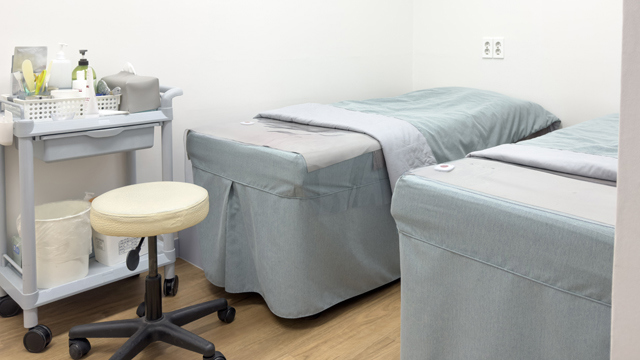
If the goal is a subtle change to the nasal line and you are comfortable with a result that fades, nose filler is a reasonable thing to discuss — and the discussion should cover the risks set out above. JD Clinic is located at B2, 616 Gangnam-daero, Gangnam-gu, Seoul, Republic of Korea, and can be reached on +82-2-523-7581 or through the clinic's contact page. Consultations run Monday to Thursday from 09:30 to 19:00, Friday until 21:00 and Saturday until 16:00, with a lunch break on weekdays from 13:00 to 14:00.
International patients can start with an online enquiry through the JD Clinic contact page, and an English-speaking coordinator will follow up.
Disclaimer
This page is for general information only and is not medical advice, a diagnosis, or a treatment recommendation. Outcomes differ from person to person, and whether any treatment is appropriate for you can only be decided in a consultation with a qualified doctor.
Sources & Further Reading
Dermal Fillers (Soft Tissue Fillers) — U.S. Food and Drug Administration
Dermal Filler Do's and Don'ts for Wrinkles, Lips and More — U.S. Food and Drug Administration
The nonsurgical nose job: An in-depth examination of liquid rhinoplasty — American Society of Plastic Surgeons
Preventing and Treating Adverse Events of Injectable Fillers — American Society for Dermatologic Surgery
Botulinum toxin and cosmetic fillers for under 18s — Department of Health and Social Care
Safe Injection Practices and Your Health — Centers for Disease Control and Prevention
Best questions to ask when considering a cosmetic treatment — American Academy of Dermatology
Other Services
Explore additional treatments offered at JD Clinic.