Physician-Led Non-Surgical Lifting & Aesthetic Medicine in Gangnam, Seoul
4.8 Google Rating (56 Reviews)
en-US


Skin Boosters · Needs Clinic Confirmation
JD Stem Cell Therapy
JD Stem Cell Therapy is described by JD Clinic in Gangnam, Seoul as a regenerative treatment using proprietary cultured stem cell extracts to support deep recovery and improve skin texture.
Schedule a ConsultationJD Stem Cell Therapy

Medically reviewed by Dr. Jin-Woo Doh, Representative Director, JD Clinic, Gangnam, Seoul, and Dr. Hyunseon Kee, Director, JD Clinic
JD Stem Cell Therapy is described by JD Clinic in Gangnam, Seoul as a regenerative treatment using proprietary cultured stem cell extracts to support deep recovery and improve skin texture. As with the clinic's exosome treatment, one thing belongs at the top of this page rather than at the bottom of it: stem cell products sit in a specific and closely-regulated category, and the regulatory position is something a patient should read before anything else on this page. It is set out in full below, in the regulator's own terms.
JD Clinic's doctor mapping is recorded at the specialty level, so this page names the doctors who direct care for this treatment area rather than claiming that one named doctor personally carries out every individual session.
What Is JD Stem Cell Therapy?
A cultured extract solution is infused evenly across target skin zones after cleansing and numbing.
What the clinic describes. Proprietary cultured stem cell extracts, used to support deep recovery and improve skin texture.
Who it is aimed at. Damaged skin barriers, uneven texture, persistent dryness, loss of elasticity, and intensive post-treatment skin recovery.
Anaesthetic cream is used, and treatment takes approximately thirty minutes.
Recovery is approximately two to three days.
It is planned as a course. Retreatment once a month, at least three treatments, with maintenance stated at approximately two to three months.
This page does not state that the treatment works. The clinic's claims record describes it as indicated for accelerating skin recovery and rebuilding dermal texture; because that is an efficacy statement with no supporting documentation supplied, this page reports it as the clinic's description rather than as an established fact. What a treatment is offered for and what it has been shown to do are different claims.
Who Performs JD Stem Cell Therapy at JD Clinic
|
|
Dr. Jin-Woo Doh | Dr. Hyunseon Kee |
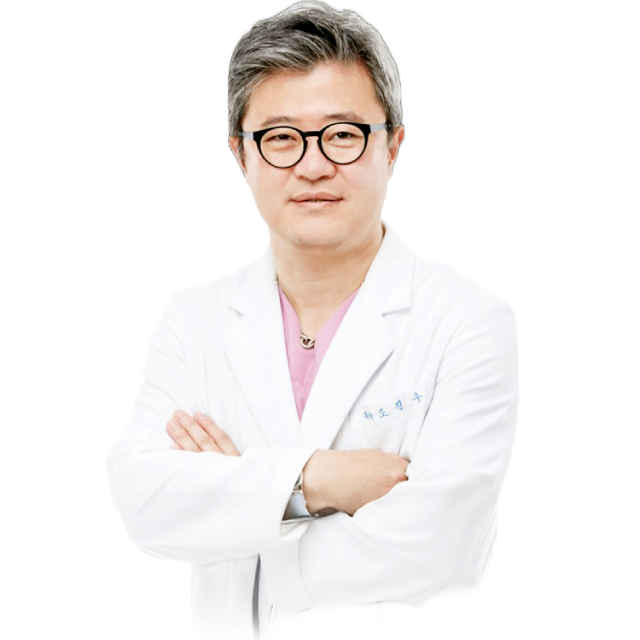
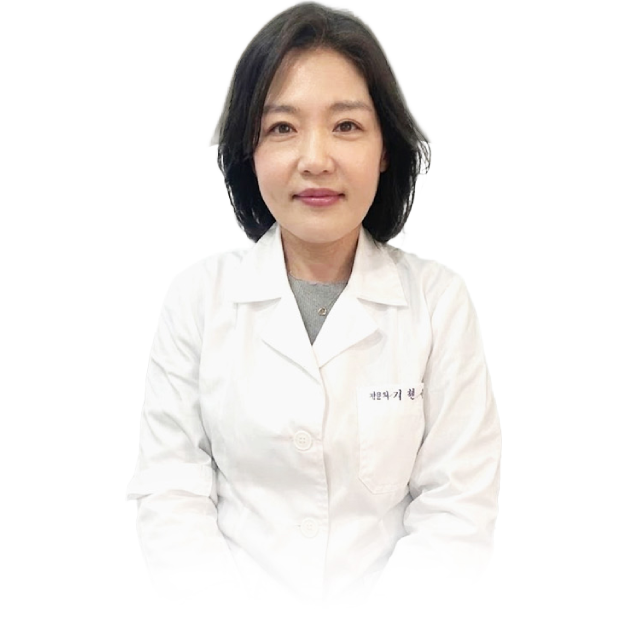
Care in this treatment area is directed by Dr. Jin-Woo Doh, Representative Director of JD Clinic, and Dr. Hyunseon Kee, Director.
Dr. Doh graduated from Seoul National University College of Medicine and serves as a Guest Professor at Seoul National University Hospital. Skin boosters are named among his listed core specializations.
Dr. Hyunseon Kee is a Director at JD Clinic whose listed areas are aesthetic plastic surgery, aesthetic procedures and laser-based aesthetic treatments. She is a full member of the Korean Society of Aesthetic Plastic Surgery, the International Society of Aesthetic Surgery, and the Korean Society of Aesthetic Plastic Surgery and Laser. Dr. Doh is additionally a full member of the Korean Society of Aesthetic Surgery and the Korean Society for Obesity Treatment.
JD Clinic has not provided licence or board-status records for either doctor, so none is claimed here, and no educational institution is attributed to Dr. Hyunseon Kee because the clinic's records do not state one.
The doctor assesses skin condition, damage level and texture to determine the delivery technique and the protocol. The clinic's records mark the technology and the clinic-specific technique as requiring confirmation, so this page does not describe a device or method — and for a treatment described as using a proprietary preparation, what the preparation actually is remains the central question to put in person.
JD Clinic describes its approach as assessing skin thickness, the degree of laxity and facial structure before selecting a device, then targeting the intended tissue layer with the minimum number of passes needed rather than applying one fixed setting to every patient.
Who Is a Good Candidate for JD Stem Cell Therapy?
The clinic's stated candidate profile is people with damaged skin barriers, uneven texture, persistent dryness, loss of elasticity, or a need for intensive recovery after other treatment.
Treatment should be avoided by:
Anyone with an active skin infection or open facial wounds
People with severe inflammation in the treatment area
Patients with blood clotting disorders
Anyone with known allergies to stem cell or growth factor derivatives
The clotting-disorder exclusion is worth noting alongside the others: the preparation is infused into the skin, which means many small punctures, and a bleeding tendency changes both the experience and the risk. Any medication affecting bleeding belongs in that conversation too.
Two of those exclusions are worth settling before booking an international trip rather than on the day. A clotting disorder and a known allergy to stem cell or growth factor derivatives are both absolute on the clinic's list, and neither is something a same-day consultation can design around. The allergy exclusion is the harder of the two to check, because it depends on what the preparation contains — which the clinic's records describe only as proprietary. If you have reacted to a regenerative or growth-factor preparation before, establishing what was in it is more useful than recording that something happened.
As with the clinic's other regenerative option, it is also worth asking what a patient is hoping to fix. A damaged skin barrier often has an identifiable cause — over-exfoliation, an unsuitable routine, an aggressive previous treatment, or an undiagnosed skin condition — and where the cause is still present, a course of infusions is working against an ongoing insult rather than resolving one. Time spent on that at consultation is better spent than time spent on the product.
What to Expect: Procedure, Recovery, and Results Timeline
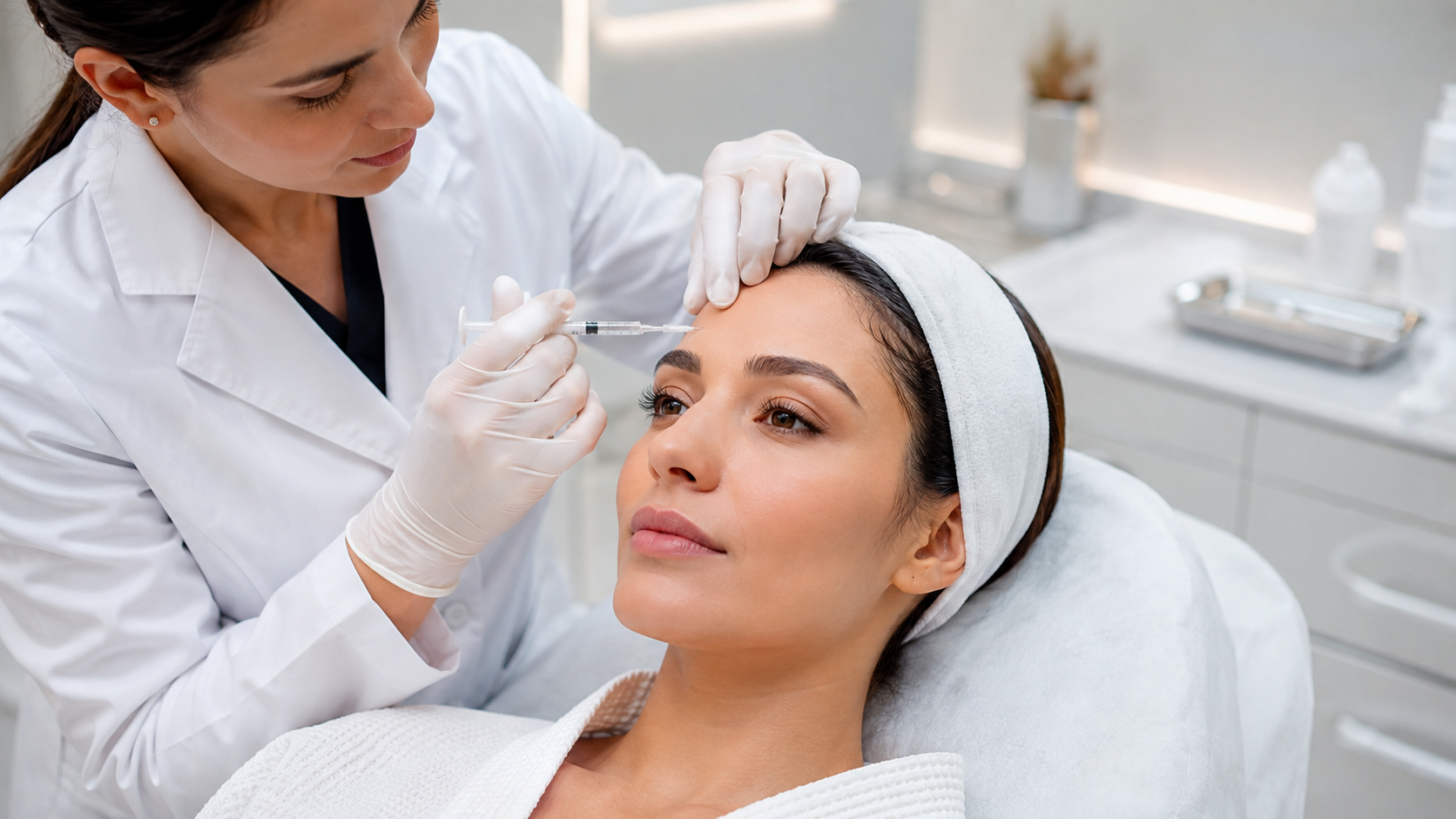
The skin is cleansed, topical anaesthetic cream is applied, and the extract solution is evenly infused across the target zones.
Stage | What happens | Timing |
|---|---|---|
Assessment | Skin condition, damage level, texture | Before treatment |
Numbing | Anaesthetic cream | Before the session |
Treatment | Even infusion across target zones | Approximately 30 minutes |
Recovery | Stated period | Approximately 2–3 days |
Early effects | Skin redness and tightness | Temporary |
Course | Recommended | Monthly, at least 3 treatments |
Results | As the clinic describes them | Over 2–3 months following the course |
Discomfort is described as minimal and controlled with the topical numbing cream applied before the procedure. Skin redness and tightness may follow; minor risks include slight localised swelling, temporary sensitivity, or persistent redness in the treated areas.
Before treatment, clean the face thoroughly and avoid aggressive physical or chemical exfoliants — including facial scrubs, retinol products and chemical peels — directly before the appointment. Afterwards, thorough soothing care is recommended, with a cold compress. The clinic's records do not set out a sun-protection instruction specific to this treatment, but redness and tightness in freshly treated skin make ordinary daily sun protection the sensible default while it settles.
On travel, the clinic's records contain two figures that do not agree: its procedure profile gives a recovery period of approximately two to three days and suggests a stay of two to three days, while its FAQ says patients can travel home on the same day or within one to two days. Plan around the longer figure and confirm your own timing with the clinic. The clinic operates a 24-hour post-treatment feedback system, and English-language aftercare is available through remote follow-up consultation and ongoing channels such as email and messaging once a patient has returned home.
Combining JD Stem Cell Therapy with Other Treatments
The clinic describes this treatment as able to be paired with high-frequency lifting or micro-needle injection devices. As with any regenerative preparation delivered into skin that has been deliberately injured, the pairing increases how deeply and widely the preparation reaches — which is a reason to ask more questions about what is being delivered, not fewer.
Alternatives include polynucleotide skin boosters and hyaluronic acid hydration injections, which are better-characterised product classes, and exosome therapies, which sit in the same unsettled regulatory territory as this treatment rather than outside it. For a patient whose skin barrier is the concern, a medical skincare plan and the removal of whatever is irritating it remain legitimate parts of the options. More about the clinic and its team is on the JD Clinic about page.
Safety, Precision, and Clinic Standards
JD Clinic has been registered since 2023 as a Registered Medical Institution for Attracting Foreign Patients, certified by the Ministry of Health and Welfare in compliance with the Medical Overseas Expansion and Foreign Patients Attraction Act. The clinic's business registration number is 530-11-00701.
The clinic's stated quality-control process is individualised medical assessment rather than device-led selection, with treatment that is not needed avoided rather than added. Consultation and treatment are physician-led. Its records mark a specific risk-reduction process for this treatment as requiring confirmation, so this page does not describe one.
The regulatory position is the most important thing on this page. The U.S. Food and Drug Administration states that stem cell products and exosome products are regulated by it and generally require approval, and that the only approved stem cell products are blood-forming stem cells derived from umbilical cord blood for blood-production disorders. Its patient information on regenerative medicine therapies records that unapproved regenerative products — including stem cells, stromal vascular fraction, amniotic fluid, Wharton's jelly and exosomes — carry documented safety concerns reported to it including blindness, tumour formation, bacterial infections, unwanted immune responses and cross-contamination during processing. Its warning on products derived from human cells or tissues adds that injectable products lacking approval have been the subject of adverse event reports including patient death, and that it has not reviewed or verified their quality, safety, purity or potency.
The International Society for Stem Cell Research publishes patient guidance for exactly this situation — covering how science becomes medicine, how clinical trials and ethical review work, and how to weigh a stem cell treatment offered directly to patients. It is worth reading before a consultation rather than after one.
None of that describes this clinic or Korean regulation, which differs from United States regulation. It describes the category, and it is the honest context for an American patient deciding whether to have a treatment of this kind abroad. The practical questions that follow are the same four as for any product in this class: what exactly is the preparation, who manufactures it, what is its regulatory status in Korea, and what would the clinic do if a reaction developed after you had flown home.
The ordinary injectable precautions apply too. The Centers for Disease Control and Prevention notes that cosmetic procedures are among the settings where unsafe injection practices occur, and that reusing needles or syringes or mishandling medication vials can transmit hepatitis B, hepatitis C, bacterial and fungal infections and possibly HIV. The American Academy of Dermatology advises anyone considering a cosmetic treatment to establish who will perform it, ask about their experience with that specific procedure, and discuss the risks and the realistic expected result before agreeing to anything.
English-language support is provided by a dedicated international patient coordinator, Cheon Seung-yeon, Team Manager, on weekdays from 09:30 to 19:00, with Korean and Japanese coordination also available.
The Bottom Line
The clinic offers this for damaged skin barriers, uneven texture and intensive recovery, as a monthly course.
Anaesthetic cream, about thirty minutes, and a stated two-to-three-day recovery.
The only approved stem cell products in the United States are blood-forming stem cells from cord blood for blood disorders.
Unapproved regenerative products carry documented reports of serious harm, including tumour formation and infection.
Ask what the preparation is, who makes it, its regulatory status, and what happens if something goes wrong after you leave.
Frequently Asked Questions
Who is a good candidate for this treatment?
The clinic describes candidates as individuals seeking deep regenerative skin repair, improved texture, stronger barrier function and overall skin recovery. Matching that profile is the easy half. The harder half is deciding what to do about a category whose approval status is set out above, and that decision belongs to a consultation where the preparation itself can be named.
Who should avoid or postpone treatment?
Anyone with an active skin infection, open facial wounds, severe inflammation, a blood clotting disorder, or known allergies to stem cell or growth factor derivatives. Medication affecting bleeding should also be raised, since the preparation is infused through many small punctures.
How long does it take, and is it painful?
Approximately thirty minutes. Discomfort is described as minimal and controlled with topical numbing cream applied before the procedure begins.
How long should I stay in Korea, and when can I fly home?
The clinic's records give two different answers — a two-to-three-day recovery and stay in one place, and travel on the same day or within one to two days in another. Plan around the longer figure and confirm your own timing with the clinic before booking.
What is recovery like?
Approximately two to three days. Skin redness and tightness may occur, with slight localised swelling, temporary sensitivity or persistent redness among the minor risks. Thorough soothing care is recommended, with a cold compress.
When will I see results?
The clinic describes skin texture and recovery improvements appearing gradually over two to three months following the treatment course, with retreatment monthly for at least three sessions. This page reports that description rather than stating that the treatment produces those changes.
What is the regulatory position on stem cell products?
In the United States, stem cell products generally require approval, and the only approved ones are blood-forming stem cells derived from umbilical cord blood for blood-production disorders. Unapproved regenerative products have been linked in adverse event reports to blindness, tumour formation, infections, unwanted immune responses and cross-contamination during processing.
Does JD Clinic publish a price for this treatment?
JD Clinic does not publish treatment prices for this market; a quotation is given after an individual consultation. With at least three monthly treatments described, the course rather than the session is the useful unit to discuss.
Book a Consultation at JD Clinic
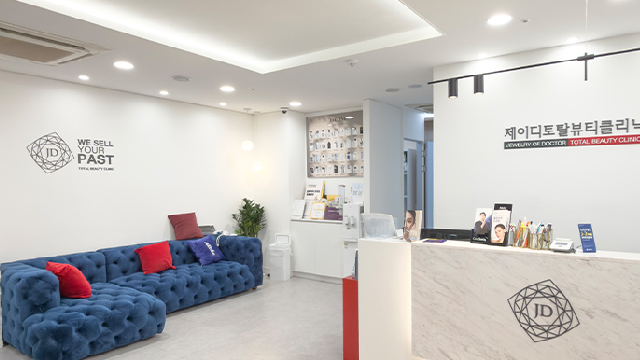
If a damaged or reactive skin barrier is what brought you here, a consultation is the right next step — and the four questions above are reasonable ones to bring to it. JD Clinic is located at B2, 616 Gangnam-daero, Gangnam-gu, Seoul, Republic of Korea, and can be reached on +82-2-523-7581 or through the clinic's contact page. Consultations run Monday to Thursday from 09:30 to 19:00, Friday until 21:00 and Saturday until 16:00, with a lunch break on weekdays from 13:00 to 14:00.
International patients can start with an online enquiry through the JD Clinic contact page, and an English-speaking coordinator will follow up.
Disclaimer
This page is for general information only and is not medical advice, a diagnosis, or a treatment recommendation. Outcomes differ from person to person, and whether any treatment is appropriate for you can only be decided in a consultation with a qualified doctor.
Sources & Further Reading
Consumer Alert on Regenerative Medicine Products Including Stem Cells and Exosomes — U.S. Food and Drug Administration
Important Patient and Consumer Information About Regenerative Medicine Therapies — U.S. Food and Drug Administration
Patient and Consumer Warning about Potential Serious Risks of Harm following Use of Unapproved Products from Human Cells or Tissues — U.S. Food and Drug Administration
The ISSCR Guide to Stem Cell Treatments — International Society for Stem Cell Research
Safe Injection Practices and Your Health — Centers for Disease Control and Prevention
Best questions to ask when considering a cosmetic treatment — American Academy of Dermatology
Other Services
Explore additional treatments offered at JD Clinic.