Physician-Led Non-Surgical Lifting & Aesthetic Medicine in Gangnam, Seoul
4.8 Google Rating (56 Reviews)
en-US

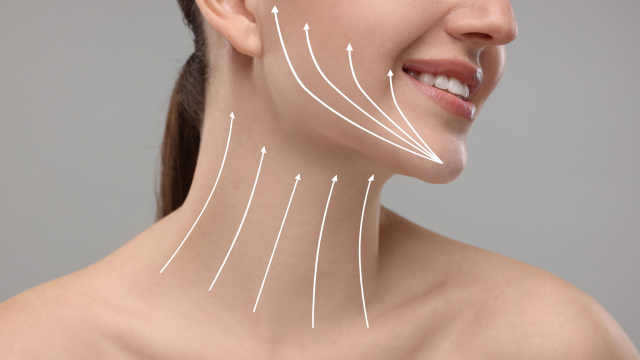
Facial Lifting & Skin Tightening · Needs Clinic Confirmation
N-Core HIFU Lifting
N-Core is a non-invasive lifting treatment that JD Clinic in Gangnam, Seoul describes as using near-infrared energy with a peak wavelength of 1300 nm, delivering thermal energy to a target dermal depth of approximately two to four millimetres to support collagen regeneration and...
Schedule a ConsultationN-Core HIFU Lifting
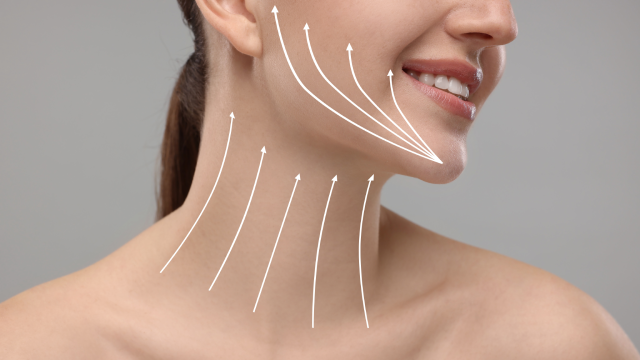
Medically reviewed by Dr. Jin-Woo Doh, Representative Director, JD Clinic, Gangnam, Seoul
N-Core is a non-invasive lifting treatment that JD Clinic in Gangnam, Seoul describes as using near-infrared energy with a peak wavelength of 1300 nm, delivering thermal energy to a target dermal depth of approximately two to four millimetres to support collagen regeneration and improve skin elasticity, lifting and tone. Patients from the United States consider it for mild to moderate skin laxity, jawline or lower-face definition, and firmness, when they want to avoid surgery and extended downtime — and when a treatment has to fit into a short visit.
JD Clinic's doctor mapping is recorded at the specialty level, so this page names the doctors who direct care for this treatment area rather than claiming that one named doctor personally carries out every individual session.
What Is N-Core Lifting?
N-Core delivers near-infrared thermal energy into the upper part of the dermis, at a shallower depth than the deep-layer ultrasound treatments on this menu.
The stated wavelength is 1300 nm. Near-infrared rather than focused ultrasound in the conventional sense.
The stated target depth is 2–4 mm. That is dermis, not the structural layer beneath it.
The delivery has two named elements. A Face & Body handpiece, and a Contact & Motion mode.
There is no anaesthesia. The clinic lists none for this treatment.
The session is about thirty minutes, with daily activities resumed the same day.
The clinic lists a maintenance period of two to three months and a retreatment cycle of three to four weeks — the shape of a treatment planned as a short series rather than a once-a-year appointment.
Who Performs N-Core Lifting at JD Clinic

Dr. Jin-Woo Doh
Representative Director of JD Clinic
Care in this treatment area is directed by Dr. Jin-Woo Doh, Representative Director of JD Clinic, who graduated from Seoul National University College of Medicine and serves as a Guest Professor at Seoul National University Hospital. Non-surgical facial lifting and anti-aging is the first of his listed core specializations.
The clinic's stated technique for this treatment is a list of parameters rather than a philosophy: the 1300 nm wavelength, the Face & Body handpiece, Contact & Motion mode, the 2–4 mm target dermal depth, facial and body application, and a roughly thirty-minute treatment without anaesthesia. Consultation assesses skin laxity, facial or body anatomy, treatment goals, medical history, medications, previous aesthetic procedures and the area to be treated.
He is a full member of the Korean Society of Aesthetic Surgery, the Korean Society of Aesthetic Plastic Surgery, the International Society of Aesthetic Surgery, the Korean Society for Obesity Treatment, and the Korean Society of Aesthetic Plastic Surgery and Laser. JD Clinic has not provided licence or board-status records for this page, so none is claimed here.
JD Clinic describes its approach as assessing skin thickness, the degree of laxity and facial structure before selecting a device, then targeting the intended tissue layer with the minimum number of passes needed rather than applying one fixed setting to every patient.
Who Is a Good Candidate for N-Core Lifting?
Adults with mild to moderate skin laxity
People wanting non-surgical tightening with realistic expectations of gradual improvement
Those whose concern is the lower face, jawline or neck
Patients interested in selected body areas as well as the face
Anyone whose schedule cannot absorb recovery time
Treatment may need to be avoided or postponed where the area has:
Open wounds, lesions or otherwise compromised skin
Active infection
Certain implanted devices or metal, depending on the device and the area treated
Individual candidacy depends on skin condition, anatomy, the treatment area and medical history. Disclose medical conditions, medications, implants and previous procedures so the clinician can assess suitability rather than infer it.
What to Expect: Procedure, Recovery, and Results Timeline

The sequence is consultation and treatment-area assessment; skin cleansing and preparation; application of the Face & Body handpiece; energy delivery in Contact & Motion mode; treatment of the selected area; post-treatment moisturising care; and a same-day return to normal activities.
Stage | What happens | Timing |
|---|---|---|
Consultation | Laxity, anatomy, goals, history, medications | Before treatment |
Treatment | 1300 nm NIR energy to a 2–4 mm dermal depth | Approximately 30 minutes |
Anaesthesia | None listed | — |
Same day | Return to normal activities | Immediately |
Following days | Any tenderness, redness, swelling monitored | As needed |
Maintenance | Stated period | 2–3 months |
Retreatment | Stated cycle | Every 3–4 weeks |
Energy-based tightening can cause warmth, tingling, pressure or discomfort while energy is delivered, varying by area, device, settings and individual sensitivity. Temporary redness, swelling, tenderness, bruising and discomfort are the reported effects; uncommon complications can include sensory changes or burns.
The clinic's specific aftercare advice is to apply moisturising cream to maintain hydration. Its records do not set out a dressing, medication, scheduled follow-up or international-patient emergency protocol for this treatment, so this page does not describe one.
Since patients resume daily activities the same day, travel can usually follow soon after — but the timing should account for any temporary redness, swelling or tenderness, and international patients should confirm the flight schedule with the treating provider rather than assume it. The clinic operates a 24-hour post-treatment feedback system, and English-language aftercare is available through remote follow-up consultation and ongoing channels such as email and messaging once a patient has returned home.
Combining N-Core Lifting with Other Treatments
The clinic's records do not state a combination protocol for this treatment, so this page does not describe one — what to combine, and in what order, is a decision for the treating clinician after assessment. The scheduling point worth raising is the three-to-four-week retreatment cycle: a second treatment planned in that window has to be considered against it.
Non-surgical alternatives include radiofrequency skin tightening in its monopolar and bipolar or multipolar forms, laser-based tightening, and other ultrasound-based treatments. A surgical facelift or neck lift may be considered where laxity is more advanced and a stronger structural correction is what the patient actually wants. More about the clinic and its team is on the JD Clinic about page.
Safety, Precision, and Clinic Standards
JD Clinic has been registered since 2023 as a Registered Medical Institution for Attracting Foreign Patients, certified by the Ministry of Health and Welfare in compliance with the Medical Overseas Expansion and Foreign Patients Attraction Act. The clinic's business registration number is 530-11-00701.
The clinic's stated quality-control process is individualised medical assessment rather than device-led selection, with treatment that is not needed avoided rather than added. Consultation and treatment are physician-led.
Energy-based skin tightening is a medical procedure even where no anaesthesia is used and no downtime follows. The clinic's own records acknowledge that although this class of treatment is non-surgical, energy can cause tissue injury if improperly delivered, with burns, pain, swelling, nerve-related symptoms and other tissue injury among the recognised risks, and that rare serious complications have been reported with some microfocused-ultrasound treatments — so treatment should be performed by an appropriately trained medical professional.
The American Society for Dermatologic Surgery describes non-invasive skin tightening as the use of laser, radiofrequency or ultrasound energy to heat deeper skin layers and stimulate collagen, with swelling, bruising and redness as common effects and burns, infection, numbness or contour change as uncommon ones. The UK Department of Health and Social Care, consulting on licensing non-surgical cosmetic procedures in England, describes high-intensity focused ultrasound as directing energy to layers deep underneath the skin to encourage contraction and lifting, and radiofrequency as using heat from radio waves to cause controlled tissue damage — the reason both sit inside a proposed licensing regime. The American Academy of Dermatology describes non-invasive skin tightening as producing gradual, modest lifting rather than surgical results, with ultrasound and radiofrequency changes typically developing over roughly two to six months.
English-language support is provided by a dedicated international patient coordinator, Cheon Seung-yeon, Team Manager, on weekdays from 09:30 to 19:00, with Korean and Japanese coordination also available.
The Bottom Line
N-Core uses 1300 nm near-infrared energy aimed at a stated 2–4 mm dermal depth.
About thirty minutes, no anaesthesia, and daily activities resumed the same day.
The clinic plans it as a series: retreatment every three to four weeks, maintenance over two to three months.
Aftercare is moisturising; no dressing or scheduled follow-up protocol is documented for it.
No downtime does not mean no risk — energy delivered into skin can injure tissue if delivered badly.
Frequently Asked Questions
Who is a good candidate for N-Core lifting?
Adults with mild to moderate skin laxity who want non-surgical tightening and expect gradual improvement in firmness or contour. The clinic describes it as applicable to areas including the lower face, jawline and neck, and to selected body areas. Individual candidacy still depends on skin condition, anatomy and medical history.
Who should avoid or postpone treatment?
Postpone where the treatment area has open wounds, lesions, compromised skin or active infection. Certain active implanted devices or metal in the treatment area may also be relevant. Disclose medical conditions, medications, implants and previous procedures so suitability is assessed rather than assumed.
How long does it take, and is anaesthesia used?
The clinic lists approximately thirty minutes for the treatment, and no anaesthesia is specified or used for it. You may feel warmth, tingling, pressure or discomfort while the energy is delivered, and how much varies with the area, the settings and individual sensitivity.
How long should I stay in Korea, and when can I fly?
Patients resume daily activities on the same day, so a short stay generally works. Travel timing should still account for any temporary redness, swelling or tenderness, and international patients should confirm the flight schedule with the treating provider before booking around it.
When will I see results, and how often is it repeated?
The clinic describes expected effects including improved facial elasticity, skin texture and body-line tightening, and lists a maintenance period of two to three months with a retreatment cycle of three to four weeks. That is a series, and the number of sessions being proposed is a reasonable thing to establish at consultation.
What are the common side effects and the risks?
Temporary redness, swelling, tenderness, discomfort or bruising are the usual effects, and how often and how long depend on the device and protocol. Uncommonly there can be sensory changes or burns. Energy-based ultrasound and near-infrared treatment can cause tissue injury if improperly delivered, which is why who performs it matters.
What should I avoid before treatment?
Do not have treatment over open wounds, lesions or compromised skin. Tell the provider about implants, metal in the treatment area, medications and relevant medical conditions, and follow any clinic-specific skincare or medication instructions given for your plan.
Does JD Clinic publish a price for N-Core lifting?
JD Clinic does not publish treatment prices for this market; a quotation is given after an individual consultation. Because this treatment is planned as a series, the number of sessions is part of what the assessment decides.
Book a Consultation at JD Clinic
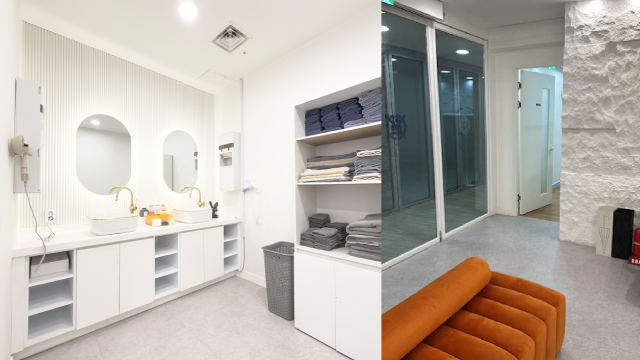
If you want tightening that does not cost you a day, and you are comfortable with a short series rather than one long session, N-Core is worth raising at consultation. JD Clinic is located at B2, 616 Gangnam-daero, Gangnam-gu, Seoul, Republic of Korea, and can be reached on +82-2-523-7581 or through the clinic's contact page. Consultations run Monday to Thursday from 09:30 to 19:00, Friday until 21:00 and Saturday until 16:00, with a lunch break on weekdays from 13:00 to 14:00.
International patients can start with an online enquiry through the JD Clinic contact page, and an English-speaking coordinator will follow up.
Disclaimer
This page is for general information only and is not medical advice, a diagnosis, or a treatment recommendation. Outcomes differ from person to person, and whether any treatment is appropriate for you can only be decided in a consultation with a qualified doctor.
Sources & Further Reading
Non-invasive Skin Tightening Treatments — American Society for Dermatologic Surgery
Ultrasound Therapy for Sagging Skin — American Society for Dermatologic Surgery
Many ways to firm sagging skin — American Academy of Dermatology
The licensing of non-surgical cosmetic procedures in England: consultation document — UK Department of Health and Social Care
Other Services
Explore additional treatments offered at JD Clinic.