Physician-Led Non-Surgical Lifting & Aesthetic Medicine in Gangnam, Seoul
4.8 Google Rating (56 Reviews)
en-US


Facial Lifting & Skin Tightening · Needs Clinic Confirmation
Oligio Monopolar RF Lifting
Oligio is a radiofrequency lifting treatment that delivers energy deep into the skin, using dermal heating in the range of 40–60°C to support collagen remodelling and firmer-looking skin.
Schedule a ConsultationOligio Monopolar RF Lifting

Medically reviewed by Dr. Jin-Woo Doh, Representative Director, JD Clinic, Gangnam, Seoul
Oligio is a radiofrequency lifting treatment that delivers energy deep into the skin, using dermal heating in the range of 40–60°C to support collagen remodelling and firmer-looking skin. At JD Clinic in Gangnam, Seoul it is the option patients choose for mild skin laxity, a loss of firmness and fine lines when they want a relatively quick treatment with limited downtime and no interruption to normal activity. It is a treatment about gradual improvement in firmness and facial contour, not about a visible change on the day.
JD Clinic's doctor mapping is recorded at the specialty level, so this page names the doctors who direct care for this treatment area rather than claiming that one named doctor personally carries out every individual session.
What Is Oligio Monopolar RF Lifting?
Oligio is monopolar radiofrequency: energy is delivered into the dermis and raises its temperature into a controlled band so that collagen responds.
The working range is stated. Dermal heating at 40–60°C is what the treatment is built around.
The aim is collagen remodelling. The clinic describes it as stimulating collagen production and supporting skin tightening and remodelling.
Settings are adjusted, not fixed. Temperature and energy are set according to the individual's skin condition.
The session is short. Treatment takes approximately forty to fifty minutes, with numbing cream beforehand.
Maintenance has a rhythm. The clinic records maintenance at roughly every six to nine months, with a recommended retreatment interval of one year.
The clinic's approved description is an RF lifting treatment supporting collagen production, skin tightening and remodelling, with expected effects of improved skin firmness, smoother facial contours, improved skin texture and tone, and more natural-looking facial definition.
Who Performs Oligio Monopolar RF Lifting at JD Clinic

Dr. Jin-Woo Doh
Representative Director of JD Clinic
Care in this treatment area is directed by Dr. Jin-Woo Doh, Representative Director of JD Clinic, who graduated from Seoul National University College of Medicine and serves as a Guest Professor at Seoul National University Hospital. Non-surgical facial lifting and anti-aging is the first of his listed core specializations.
The clinic's stated emphasis for this treatment is a personalised approach: temperature and energy adjusted to each patient's skin condition, with the goal described as natural-looking facial definition rather than a single protocol applied to everyone. On a monopolar device with a defined thermal window, that adjustment is not a refinement — it is the whole of the technique.
He is a full member of the Korean Society of Aesthetic Surgery, the Korean Society of Aesthetic Plastic Surgery, the International Society of Aesthetic Surgery, the Korean Society for Obesity Treatment, and the Korean Society of Aesthetic Plastic Surgery and Laser. JD Clinic has not provided licence or board-status records for this page, so none is claimed here.
JD Clinic describes its approach as assessing skin thickness, the degree of laxity and facial structure before selecting a device, then targeting the intended tissue layer with the minimum number of passes needed rather than applying one fixed setting to every patient.
Who Is a Good Candidate for Oligio Monopolar RF Lifting?
Adults with mild to moderate skin laxity
People with fine lines or reduced elasticity who want a non-surgical option
Those wanting to improve overall firmness, facial contour, skin texture or tone without a surgical lift
Patients with realistic expectations of gradual change
Anyone who needs a treatment that fits around normal daily activity
Oligio may not be suitable, or should be postponed, for:
People with implanted electronic devices, or metal implants in the treatment area
Patients who are pregnant
Anyone with active skin infection, severe skin inflammation or significant wounds in the treatment area
Those with certain medical conditions
Anyone who has recently had a procedure that irritated the skin in the same area
Implanted devices and metal implants deserve to be raised early rather than at the door. They are the most common reason a patient who is otherwise well suited to radiofrequency ends up being offered a different treatment entirely.
It is also worth being honest with yourself about the degree of laxity you are bringing. This treatment sits at the milder end of the lifting menu: it is chosen when skin has softened rather than descended, and when a patient wants that addressed without recovery time. Where a contour has genuinely dropped, a deeper-acting treatment — or, past a certain point, a surgical assessment — is the more useful conversation, and a consultation that redirects you is more valuable than one that books you in.
What to Expect: Procedure, Recovery, and Results Timeline
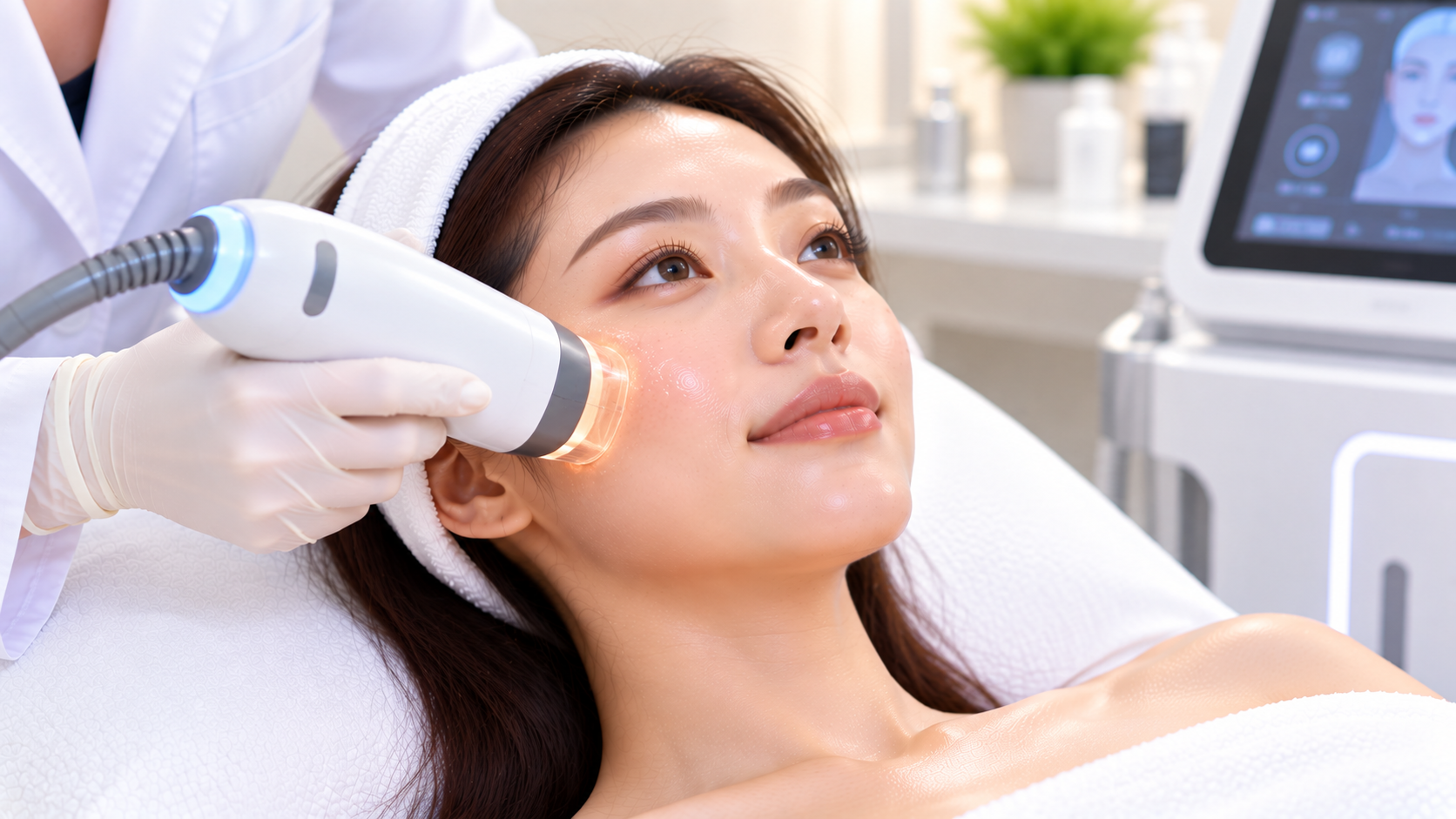
Consultation reviews skin condition, medical history, medications and previous treatments. The clinic's records do not set out a step-by-step sequence for this device beyond that, so this page does not invent one; what is documented is that numbing cream is used, that treatment takes approximately forty to fifty minutes, and that the temperature and energy settings are chosen from the skin assessment.
Stage | What happens | Timing |
|---|---|---|
Consultation | Skin condition, history, medications, previous treatments | Before treatment |
Numbing | Cream anaesthesia | Before the session |
Treatment | Monopolar RF at 40–60°C dermal heating | Approximately 40–50 minutes |
Immediately after | Temporary redness | Usually settles in 1–2 days |
Return to activity | Minimal downtime | Same day |
Results | Develop gradually as collagen remodels | Varies by individual |
Maintenance | Stated interval | Approximately every 6–9 months |
Retreatment | Recommended cycle | One year |
Recovery is minimal. Temporary redness may occur and generally subsides within one to two days; warmth, mild swelling, tenderness or sensitivity in the treated area are also possible and usually improve within a few days. Rarely, excessive heat can cause burns — which is the reason a controlled thermal window and an adjusted setting matter rather than being a detail.
Aftercare is short: avoid excessive heat and irritation immediately after treatment, and apply sunscreen. Before treatment, do not proceed over irritated or infected skin, disclose recent aesthetic procedures and medications, and follow the clinic's preparation instructions.
Because downtime is minimal, international patients may be able to complete treatment during a short stay — one to two days is a reasonable plan for consultation, treatment and initial observation, confirmed against the individual plan. For flying, the clinic's guidance is to allow at least one to two days after treatment and confirm the timing rather than booking around an assumption. The clinic operates a 24-hour post-treatment feedback system, and English-language aftercare is available through remote follow-up consultation and ongoing channels such as email and messaging once a patient has returned home.
Combining Oligio Monopolar RF Lifting with Other Treatments
Oligio may be combined with other non-surgical aesthetic treatments, such as focused ultrasound or other skin-tightening procedures, when clinically appropriate — with the doctor deciding on the basis of skin condition, treatment goals and recovery needs.
The clinic's own framing of the alternatives is useful because it is a decision rule rather than a list. Oligio is considered when the patient wants non-surgical tightening with minimal downtime. Focused ultrasound is used when deeper tissue tightening is the main concern. A surgical facelift may be more appropriate where laxity is significant. Which applies depends on skin condition, the degree of laxity, and what the patient is actually trying to change. More about the clinic and its team is on the JD Clinic about page.
Safety, Precision, and Clinic Standards
JD Clinic has been registered since 2023 as a Registered Medical Institution for Attracting Foreign Patients, certified by the Ministry of Health and Welfare in compliance with the Medical Overseas Expansion and Foreign Patients Attraction Act. The clinic's business registration number is 530-11-00701.
The clinic's stated quality-control process is individualised medical assessment rather than device-led selection, with treatment that is not needed avoided rather than added. Consultation and treatment are physician-led. For this treatment specifically, the clinic states that it customises the settings to each patient's skin condition, adjusting temperature and energy to keep the radiofrequency lifting comfortable.
Radiofrequency skin treatment is a medical category rather than a cosmetic one. The UK Department of Health and Social Care, consulting on licensing non-surgical cosmetic procedures in England, describes high-intensity focused ultrasound as directing energy to layers deep underneath the skin to encourage contraction and lifting, and radiofrequency as using heat from radio waves to cause controlled tissue damage — the reason both sit inside a proposed licensing regime. The U.S. Food and Drug Administration has issued a safety communication stating that radiofrequency microneedling is a medical procedure rather than a cosmetic treatment and has been associated with reports of serious complications including burns, scarring, fat loss, disfigurement and nerve damage, so it should be performed only by a trained, licensed practitioner.
The American Society for Dermatologic Surgery describes non-invasive skin tightening as the use of laser, radiofrequency or ultrasound energy to heat deeper skin layers and stimulate collagen, with swelling, bruising and redness as common effects and burns, infection, numbness or contour change as uncommon ones. The American Academy of Dermatology describes non-invasive skin tightening as producing gradual, modest lifting rather than surgical results, with ultrasound and radiofrequency changes typically developing over roughly two to six months. A systematic review of radiofrequency-based facial treatments published in Aesthetic Surgery Journal Open Forum reports that, across pooled studies, adverse events were mild and transient — redness and swelling most common — with no serious complications reported and low mean pain scores.
English-language support is provided by a dedicated international patient coordinator, Cheon Seung-yeon, Team Manager, on weekdays from 09:30 to 19:00, with Korean and Japanese coordination also available.
The Bottom Line
Oligio is monopolar radiofrequency working in a stated 40–60°C dermal range.
A session runs about forty to fifty minutes after numbing cream, with minimal downtime.
Temporary redness usually settles within one to two days.
Maintenance is recorded at roughly every six to nine months, with retreatment at a year.
Implanted electronic devices or metal in the treatment area are a genuine exclusion, not a formality.
Frequently Asked Questions
Who is a good candidate for Oligio?
Adults with mild to moderate skin laxity, fine lines or reduced elasticity who want a non-surgical option and hold realistic expectations. The clinic frames it as improving overall firmness, facial contour, texture and tone rather than producing a lift, and customises the settings to the individual's skin.
Who should avoid or postpone treatment?
Anyone with active skin infection, open wounds or significant irritation in the treatment area, and anyone with certain implanted electronic devices or metal implants there. Treatment may also need postponing after a recent procedure that irritated the skin. Patients who are pregnant or who have relevant medical conditions should speak to their doctor first.
How long does it take, and what anaesthesia is used?
Treatment takes approximately forty to fifty minutes, varying with the plan and the areas treated. The clinic uses cream anaesthesia before the session, and states that the temperature and energy settings can be adjusted to the patient's skin condition to keep the treatment comfortable.
How long should I stay in Korea, and when can I fly?
Because downtime is minimal, a one to two day stay is a reasonable plan for consultation, treatment and initial observation, confirmed against your own treatment plan. For flying, the clinic advises allowing at least one to two days after treatment and confirming the timing rather than assuming.
What is recovery like?
Minimal. Temporary redness may occur and generally subsides within one to two days. Warmth, mild swelling, tenderness or sensitivity in the treated area are also possible and usually improve within a few days. Avoid excessive heat and irritation immediately afterwards, and use sunscreen.
When will I see results, and how often is this repeated?
Improvement becomes noticeable gradually as the skin responds and collagen remodels, and the exact timing varies by individual and plan. The clinic records a maintenance interval of approximately six to nine months and a recommended retreatment interval of one year.
What risks should I know about?
Beyond the temporary redness, swelling, discomfort and irritation that are common, excessive heat can rarely cause burns. That risk is the reason the settings are adjusted rather than standardised, and it is worth discussing your individual risk with the treating doctor rather than reading it off a page.
Does JD Clinic publish a price for Oligio?
JD Clinic does not publish treatment prices for this market; a quotation is given after an individual consultation. Since the areas treated and the settings are decided at assessment, the quotation follows the plan rather than preceding it.
Book a Consultation at JD Clinic
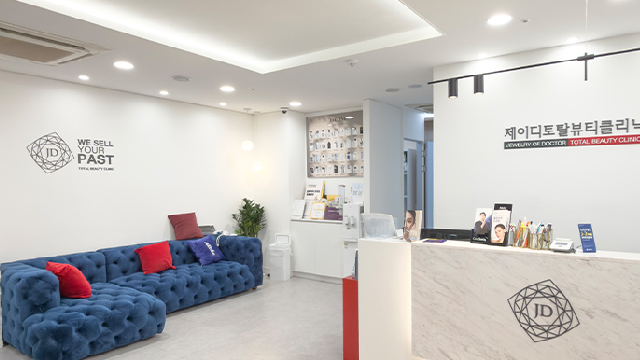
If mild laxity and a loss of firmness are what you have noticed, and a long recovery is not something your schedule allows, Oligio is one of the options a consultation will weigh. JD Clinic is located at B2, 616 Gangnam-daero, Gangnam-gu, Seoul, Republic of Korea, and can be reached on +82-2-523-7581 or through the clinic's contact page. Consultations run Monday to Thursday from 09:30 to 19:00, Friday until 21:00 and Saturday until 16:00, with a lunch break on weekdays from 13:00 to 14:00.
International patients can start with an online enquiry through the JD Clinic contact page, and an English-speaking coordinator will follow up.
Disclaimer
This page is for general information only and is not medical advice, a diagnosis, or a treatment recommendation. Outcomes differ from person to person, and whether any treatment is appropriate for you can only be decided in a consultation with a qualified doctor.
Sources & Further Reading
Non-invasive Skin Tightening Treatments — American Society for Dermatologic Surgery
Many ways to firm sagging skin — American Academy of Dermatology
Potential Risks with Certain Uses of Radiofrequency (RF) Microneedling — FDA Safety Communication — U.S. Food and Drug Administration
The licensing of non-surgical cosmetic procedures in England: consultation document — UK Department of Health and Social Care
Radiofrequency-Based Treatments for Facial Rejuvenation: A Systematic Review of Efficacy, Safety, and Patient-Centered Outcomes — Aesthetic Surgery Journal Open Forum
Other Services
Explore additional treatments offered at JD Clinic.