Physician-Led Non-Surgical Lifting & Aesthetic Medicine in Gangnam, Seoul
4.8 Google Rating (56 Reviews)
en-US


Skin Boosters · Needs Clinic Confirmation
Rejuran Healer
Rejuran Healer is a skin-regeneration injection that JD Clinic in Gangnam, Seoul uses to support damaged skin and improve the appearance of fine wrinkles.
Schedule a ConsultationRejuran Healer

Medically reviewed by Dr. Jin-Woo Doh, Representative Director, JD Clinic, Gangnam, Seoul, and Dr. Hyunseon Kee, Director, JD Clinic
Rejuran Healer is a skin-regeneration injection that JD Clinic in Gangnam, Seoul uses to support damaged skin and improve the appearance of fine wrinkles. It is the most straightforward of the skin boosters on this menu — about fifteen minutes under topical anaesthetic cream — and also the one most clearly planned as a course rather than a single treatment: monthly, with at least three sessions recommended.
JD Clinic's doctor mapping is recorded at the specialty level, so this page names the doctors who direct care for this treatment area rather than claiming that one named doctor personally carries out every individual session.
What Is Rejuran Healer?
An injectable treatment aimed at the condition of the skin, delivered into the treatment area after numbing.
The stated purpose is skin regeneration, supporting damaged skin and improving the appearance of fine wrinkles.
The target is skin quality, not volume or contour.
Anaesthetic cream is used, and the procedure takes approximately fifteen minutes.
Recovery is stated at one to two days.
It is a course. Retreatment once a month, with at least three treatments recommended and maintenance at approximately two to three months.
The clinic's supported description is exactly that: a skin-regeneration injection that restores damaged skin and improves fine wrinkles, with the stated procedure time, anaesthetic cream, recovery period, maintenance period, retreatment cycle and aftercare cautions.
Who Performs Rejuran Healer Treatment at JD Clinic
|
|
Dr. Jin-Woo Doh | Dr. Hyunseon Kee |


Care in this treatment area is directed by Dr. Jin-Woo Doh, Representative Director of JD Clinic, and Dr. Hyunseon Kee, Director.
Dr. Doh graduated from Seoul National University College of Medicine and serves as a Guest Professor at Seoul National University Hospital. Skin boosters are named among his listed core specializations.
Dr. Hyunseon Kee is a Director at JD Clinic whose listed areas are aesthetic plastic surgery, aesthetic procedures and laser-based aesthetic treatments. She is a full member of the Korean Society of Aesthetic Plastic Surgery, the International Society of Aesthetic Surgery, and the Korean Society of Aesthetic Plastic Surgery and Laser. Dr. Doh is additionally a full member of the Korean Society of Aesthetic Surgery and the Korean Society for Obesity Treatment.
JD Clinic has not provided licence or board-status records for either doctor, so none is claimed here, and no educational institution is attributed to Dr. Hyunseon Kee because the clinic's records do not state one.
The physician evaluates the skin condition and the patient's concerns, confirms suitability, and discusses the plan before the procedure. The clinic's records mark the technology and the clinic-specific technique for this treatment as requiring confirmation, so this page does not describe an injection technique or a device.
JD Clinic describes its approach as assessing skin thickness, the degree of laxity and facial structure before selecting a device, then targeting the intended tissue layer with the minimum number of passes needed rather than applying one fixed setting to every patient.
Who Is a Good Candidate for Rejuran Healer?
Adults concerned about fine wrinkles
People whose skin looks damaged or tired in quality rather than in shape
Those with skin-texture concerns who want a minimally invasive approach
Patients able to complete a course of at least three monthly sessions
Treatment should be avoided or postponed by anyone who is not considered medically suitable for injectable treatment, based on the physician's assessment. That is the clinic's stated exclusion, and it is deliberately a judgement rather than a list — which is another way of saying the assessment is the gate.
For an international patient the course structure is the practical filter. Monthly treatment with at least three sessions is designed for someone who can return, and a single session during one trip is a reasonable introduction rather than the treatment as intended. Establishing which you are having, before rather than after, is what keeps expectations and outcomes aligned.
There is a useful question to put at consultation that most patients do not think to ask: what would the clinic expect to see after one session, and what after three? A clinic that answers both specifically is describing a plan; one that answers only the second is describing a hope. The difference matters most for someone flying in, because a single session is what they are actually buying.
Two more points belong in the pre-treatment conversation. First, anything that increases bruising — certain medications and supplements among them — is worth raising even where it seems unrelated to skin, because bruising is the most common thing that makes patients regret the timing of an injectable treatment rather than the treatment itself. Second, any previous injectable treatment in the same area, and roughly when it was, since the interval between procedures in the same tissue is a clinical judgement rather than a preference.
What to Expect: Procedure, Recovery, and Results Timeline
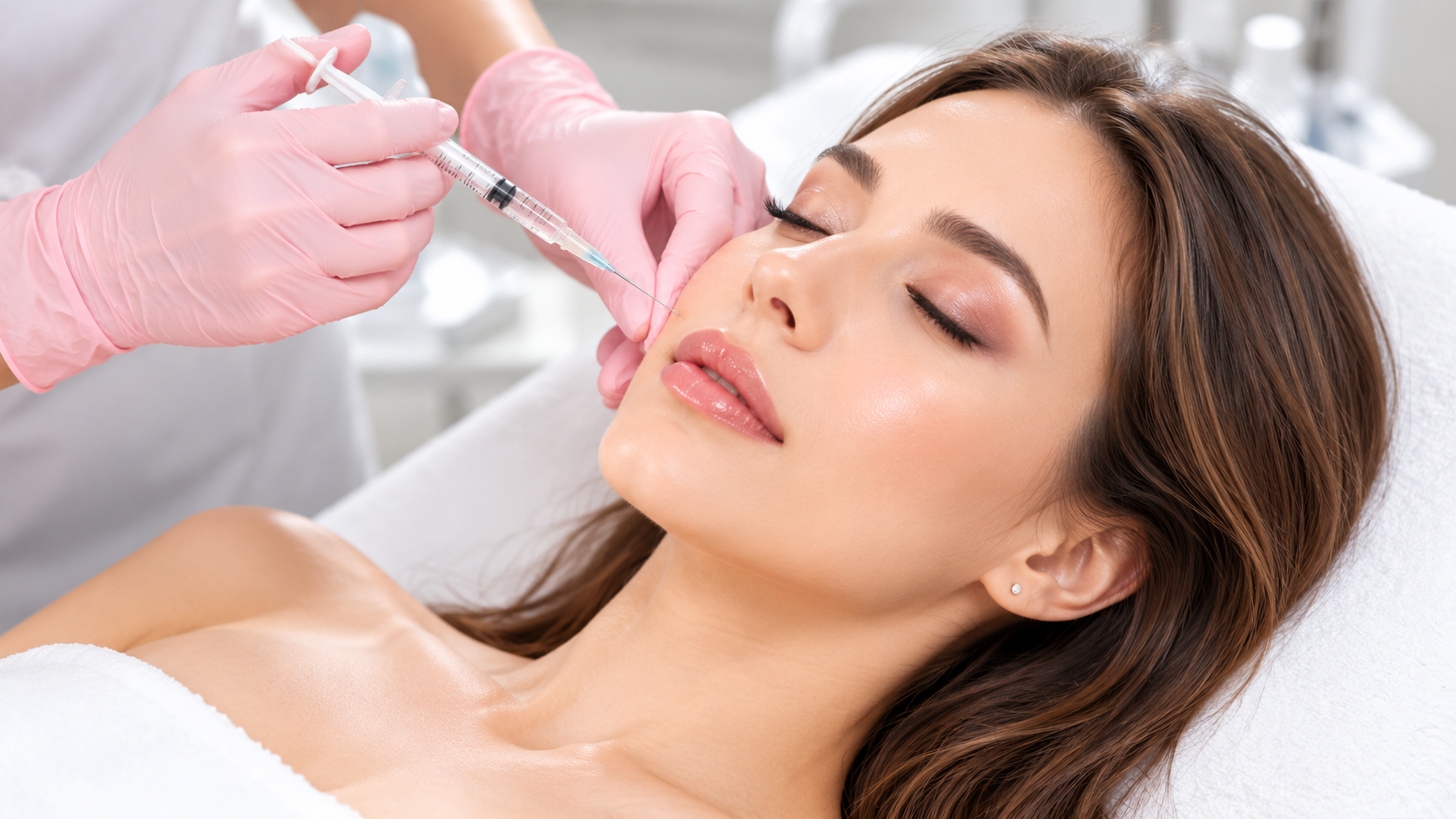
The sequence is short: the skin condition and concerns are assessed; anaesthetic cream is applied; the product is injected into the treatment area; and post-treatment care instructions are given.
Stage | What happens | Timing |
|---|---|---|
Assessment | Skin condition, concerns, suitability, plan | Before treatment |
Numbing | Topical anaesthetic cream | Before the injections |
Treatment | Injection into the treatment area | Approximately 15 minutes |
Recovery | Stated period | 1–2 days |
Early effects | Small raised areas, redness, swelling or bruising | Settle over days |
Early results | Some improvement | Within a few days |
Fuller results | Develop as the skin regenerates | Over the following weeks |
Course | Recommended | Monthly, at least 3 treatments |
Maintenance | Stated period | Approximately 2–3 months |
Anaesthetic cream is used to improve comfort during the procedure. Bruising may occur afterwards, and the clinic's specific instruction is not to apply pressure to the treatment site — which is a more particular aftercare instruction than most, and worth following rather than generalising.
Aftercare otherwise is to focus on hydration and skin-regeneration care. Before treatment, follow the clinic's pre-treatment instructions and tell the physician about relevant medical conditions, medications, allergies or previous injectable treatments, along with anything about your current skincare or recent treatments.
The small raised areas at injection sites deserve a word, because patients who have not had a skin booster before are often surprised by them. They are a normal consequence of placing small volumes of fluid into the skin and they settle as the product disperses, usually within the stated recovery period. What is not expected is a lump that persists beyond that, grows, becomes tender, or appears days after everything else has settled — any of those is worth reporting rather than waiting out.
For travel: the treatment itself is short, but allow enough time for consultation and recovery before flying. Most patients can travel once they feel comfortable and any initial swelling or bruising is manageable, with the timing confirmed against individual recovery rather than the fifteen-minute procedure time. The clinic operates a 24-hour post-treatment feedback system, and English-language aftercare is available through remote follow-up consultation and ongoing channels such as email and messaging once a patient has returned home.
Combining Rejuran Healer with Other Treatments
The clinic's records mark the combination question for this treatment as requiring confirmation, so this page does not describe a combination protocol. The monthly rhythm is the practical scheduling constraint, and anything else planned for the same skin has to sit around it.
The clinic's records also mark alternatives for this treatment as requiring confirmation. What can be said is the shape of the decision rather than a list: skin boosters address skin quality, energy treatments address firmness and texture through the tissue, injectable fillers address volume, and botulinum toxin addresses movement. A treatment aimed at the wrong one of those will disappoint regardless of how well it is performed. More about the clinic and its team is on the JD Clinic about page.
Safety, Precision, and Clinic Standards
JD Clinic has been registered since 2023 as a Registered Medical Institution for Attracting Foreign Patients, certified by the Ministry of Health and Welfare in compliance with the Medical Overseas Expansion and Foreign Patients Attraction Act. The clinic's business registration number is 530-11-00701.
The clinic's stated quality-control process is individualised medical assessment rather than device-led selection, with treatment that is not needed avoided rather than added. Consultation and treatment are physician-led.
The clinic's records mark its specific risk-reduction process for this treatment as requiring confirmation, so this page does not describe one. What it can set out is the category position, which is well documented and applies regardless of product.
The Centers for Disease Control and Prevention notes that cosmetic procedures are among the settings where unsafe injection practices occur, and that reusing needles or syringes or mishandling medication vials can transmit hepatitis B, hepatitis C, bacterial and fungal infections and possibly HIV. The American Society for Dermatologic Surgery treats injectables as a category of medical procedure and has issued a patient safety alert warning that needleless hyaluron pens used to force product into the lips, neck and face can be highly dangerous. The American Academy of Dermatology advises anyone considering a cosmetic treatment to establish who will perform it, ask about their experience with that specific procedure, and discuss the risks and the realistic expected result before agreeing to anything — and, separately, warns that injecting with pressure-driven needle-free devices rather than by a trained medical injector can cause permanent damage to skin, lips or eyes, blocked blood vessels with tissue necrosis, and in some cases stroke.
For a patient travelling to have an injectable treatment, one further question is worth asking anywhere: what exactly is being injected, by name. Regulators including the Therapeutic Goods Administration in Australia and the Medicines and Healthcare products Regulatory Agency in the UK have both linked adverse events to products that were not approved for supply in the market where they were used — a reminder that the product's identity is part of the safety picture rather than a commercial detail.
English-language support is provided by a dedicated international patient coordinator, Cheon Seung-yeon, Team Manager, on weekdays from 09:30 to 19:00, with Korean and Japanese coordination also available.
The Bottom Line
A skin-regeneration injection for damaged-looking skin and fine wrinkles.
Topical anaesthetic cream, about fifteen minutes, and a stated one-to-two-day recovery.
Planned monthly, with at least three treatments recommended and maintenance at two to three months.
Do not apply pressure to the treatment site afterwards — that is the clinic's specific instruction.
A single session is an introduction to the treatment rather than the treatment.
Frequently Asked Questions
Who is a good candidate for Rejuran Healer?
Adults concerned about damaged-looking skin or fine wrinkles, considered suitable after a physician consultation. The treatment addresses the condition of the skin rather than the shape of the face, which is the distinction worth making before booking.
Who should avoid or postpone treatment?
Anyone who is not considered medically suitable for injectable treatment, based on the physician's assessment. That is a judgement made in person, which is why disclosing medical conditions, medications, allergies and previous injectable treatments matters more than checking yourself against a list.
How long does it take, and is it painful?
The procedure takes approximately fifteen minutes. Topical anaesthetic cream is used to improve comfort. Most of the appointment is consultation, preparation and numbing rather than the injections themselves.
How long should I stay in Korea, and when can I fly home?
The treatment itself is short, but allow enough time for consultation and recovery before travel. Most patients can fly once they feel comfortable and any initial swelling or bruising is manageable — confirmed with the treating physician against your own recovery.
What is recovery like?
One to two days. Small raised areas at the injection sites, redness, swelling or bruising may occur and usually settle over the following days. Do not apply pressure to the treated area, and focus on hydration and skin-regeneration care.
When will I see results, and how many sessions will I need?
Early improvement may appear within a few days, with more noticeable results developing gradually over the following weeks as the skin regenerates. The clinic recommends retreatment once a month with at least three treatments, and states a maintenance period of approximately two to three months.
What risks should I know about?
Bruising is the effect the clinic names specifically. As an injectable treatment more generally, infection, prolonged swelling or bruising, inflammatory or allergic reactions and other product-related complications are possible, which is why a medical assessment precedes treatment.
Does JD Clinic publish a price for Rejuran Healer?
JD Clinic does not publish treatment prices for this market; a quotation is given after an individual consultation. Since at least three monthly treatments are recommended, ask about the course rather than the single appointment.
Book a Consultation at JD Clinic
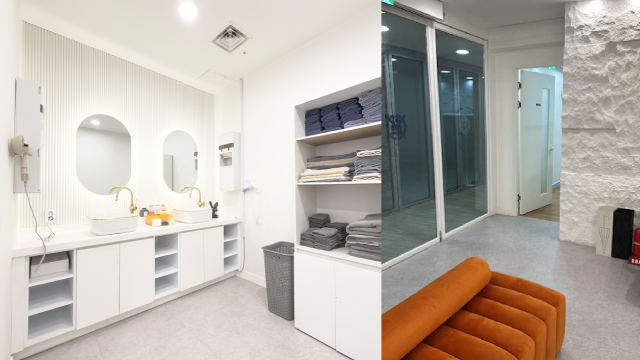
If fine wrinkles and tired-looking skin are the concern and you can plan a course rather than a single visit, a skin-regeneration injection is worth discussing. JD Clinic is located at B2, 616 Gangnam-daero, Gangnam-gu, Seoul, Republic of Korea, and can be reached on +82-2-523-7581 or through the clinic's contact page. Consultations run Monday to Thursday from 09:30 to 19:00, Friday until 21:00 and Saturday until 16:00, with a lunch break on weekdays from 13:00 to 14:00.
International patients can start with an online enquiry through the JD Clinic contact page, and an English-speaking coordinator will follow up.
Disclaimer
This page is for general information only and is not medical advice, a diagnosis, or a treatment recommendation. Outcomes differ from person to person, and whether any treatment is appropriate for you can only be decided in a consultation with a qualified doctor.
Sources & Further Reading
Safe Injection Practices and Your Health — Centers for Disease Control and Prevention
Injectables — American Society for Dermatologic Surgery
Best questions to ask when considering a cosmetic treatment — American Academy of Dermatology
Needle-free fillers: The risks you need to know about — American Academy of Dermatology
Cosmetic injectables: import and supply in Australia — Therapeutic Goods Administration
Other Services
Explore additional treatments offered at JD Clinic.