Physician-Led Non-Surgical Lifting & Aesthetic Medicine in Gangnam, Seoul
4.8 Google Rating (56 Reviews)
en-US


Filler & Botox · Needs Clinic Confirmation
Skin Botox
Skin Botox is a minimally invasive injectable treatment in which diluted botulinum toxin is administered superficially within the skin to help improve the appearance of pores, fine lines and excess sebum.
Schedule a ConsultationSkin Botox

Medically reviewed by Dr. Jin-Woo Doh, Representative Director, JD Clinic, Gangnam, Seoul, and Dr. Hyunseon Kee, Director, JD Clinic
Skin Botox is a minimally invasive injectable treatment in which diluted botulinum toxin is administered superficially within the skin to help improve the appearance of pores, fine lines and excess sebum. At JD Clinic in Gangnam, Seoul it takes approximately fifteen minutes, with a stated recovery period of about one day. The name is misleading in a way worth correcting at the start: this is not conventional Botox applied lightly. It is a different placement — shallow, dilute and spread across an area — aimed at skin quality rather than at the muscles that fold it.
JD Clinic's doctor mapping is recorded at the specialty level, so this page names the doctors who direct care for this treatment area rather than claiming that one named doctor personally carries out every individual session.
What Is Skin Botox?
Many small, shallow injections place diluted product in the skin itself rather than in the muscle beneath it.
The placement. Superficial, within the skin, rather than into a targeted muscle.
The dilution. The product is diluted, which is what makes the superficial approach possible.
What it addresses. The appearance of pores, fine lines, skin texture and excess sebum.
The time. Approximately fifteen minutes, as an outpatient treatment.
The duration. Effects are temporary and generally last around two to four months, with retreatment considered at two-to-three-month intervals after consultation.
Improvement develops progressively after treatment rather than appearing at once, and the degree of it varies between individuals. The clinic's own limit on claims is explicit and this page keeps it: treatment does not guarantee permanent pore reduction, wrinkle removal, or control of sebum production.
Who Performs Skin Botox Treatment at JD Clinic
|
|
Dr. Jin-Woo Doh | Dr. Hyunseon Kee |


Care in this treatment area is directed by Dr. Jin-Woo Doh, Representative Director of JD Clinic, and Dr. Hyunseon Kee, Director.
Dr. Doh graduated from Seoul National University College of Medicine and serves as a Guest Professor at Seoul National University Hospital. Fillers and Botox are named among his listed core specializations.
Dr. Hyunseon Kee is a Director at JD Clinic whose listed areas are aesthetic plastic surgery, aesthetic procedures and laser-based aesthetic treatments. She is a full member of the Korean Society of Aesthetic Plastic Surgery, the International Society of Aesthetic Surgery, and the Korean Society of Aesthetic Plastic Surgery and Laser. Dr. Doh is additionally a full member of the Korean Society of Aesthetic Surgery and the Korean Society for Obesity Treatment.
JD Clinic has not provided licence or board-status records for either doctor, so none is claimed here, and no educational institution is attributed to Dr. Hyunseon Kee because the clinic's records do not state one.
At consultation the clinician evaluates skin condition, pore visibility, fine lines, sebum production, medical history, medications, allergies and aesthetic goals before deciding on the approach. Because this treatment targets skin quality, that assessment is looking at different things from the one before conventional Botox: how oily the skin is, how visible the pores are, and how the texture behaves across an area rather than how a particular muscle moves.
The clinic's records state that it specifies the botulinum toxin product, the dilution, the injection depth, the dosage, the treatment areas and its individualised injection technique. The dilution and depth are the two that distinguish this treatment from conventional Botox, and they are reasonable things to ask about — not because a patient can evaluate the numbers, but because a clinic that can state them is describing a protocol rather than a marketing name.
Who Is a Good Candidate for Skin Botox?
Adults concerned about enlarged pores or uneven skin texture
People with fine lines they would like softened
Those bothered by excess sebum and oiliness
Patients with realistic expectations about a temporary result
Treatment may be unsuitable for:
Anyone with an active skin infection or inflammation at the treatment site
People with certain neuromuscular conditions
Anyone with known hypersensitivity to the product
Patients with other medical factors identified during consultation
The neuromuscular exclusion applies here just as it does to conventional Botox, and it is easy to assume otherwise because this treatment is described as being for the skin. The product is the same product; the placement is what differs.
For a patient travelling from abroad, it is worth separating the exclusions that move an appointment from the ones that rule the treatment out. Active infection, inflammation or significant irritation in the treatment area is usually temporary, and skin that flares easily can often be settled before the trip. A neuromuscular condition or a known hypersensitivity to the product is not a scheduling problem, and finding out about it in the consultation room after a long flight helps nobody. Both belong in an email before the booking rather than a form on the day.
There is also an age boundary international patients sometimes encounter for the first time in a clinic. England has made it a criminal offence to administer botulinum toxin or cosmetic filler for cosmetic purposes to anyone under eighteen, with age verification required before treating adults — a measure its Department of Health and Social Care attributes to the health risks of these treatments.
What to Expect: Procedure, Recovery, and Results Timeline
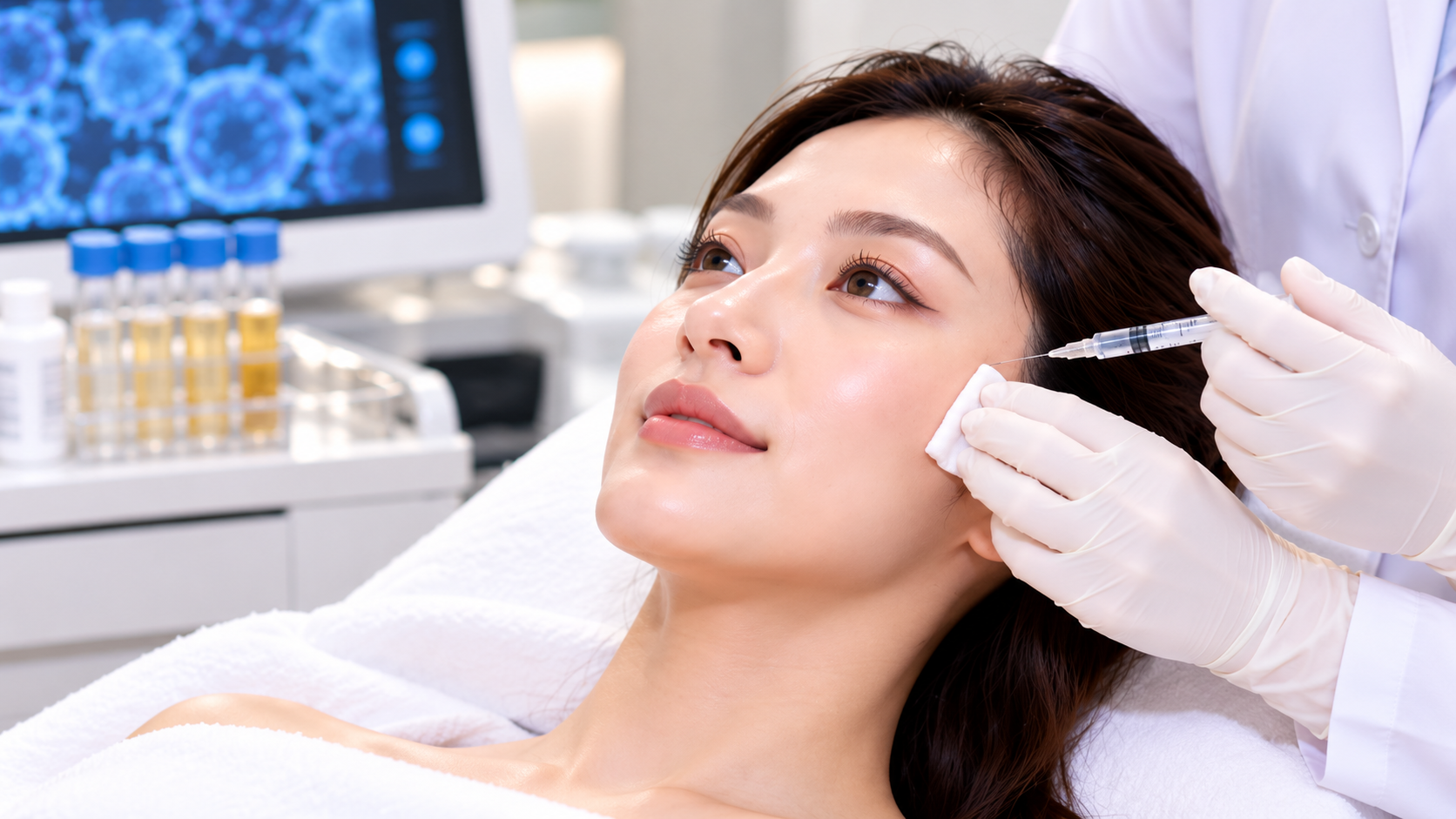
The skin is cleansed and assessed, topical anaesthetic cream is applied, and small amounts of botulinum toxin are injected superficially into selected areas using a fine needle.
Stage | What happens | Timing |
|---|---|---|
Consultation | Skin condition, pores, fine lines, sebum, history | Before treatment |
Numbing | Topical anaesthetic cream | Before the session |
Treatment | Multiple superficial injections across selected areas | Approximately 15 minutes |
Recovery | Stated period | Approximately 1 day |
Early effects | Redness and stinging; sensitivity or mild swelling | Temporary |
Results | Develop progressively | Gradual |
Maintenance | As the clinic states it | Approximately 2–4 months |
Redness and stinging are the two effects the clinic names specifically. Temporary swelling, tenderness or bruising may also occur, and rarely there can be unintended effects from diffusion into nearby muscles.
One point in the clinic's records is inconsistent and worth raising at consultation. Its procedure description and its patient FAQ both state that anaesthetic cream is used, while its anaesthesia field is left blank. This page follows the two that are documented, but confirm the arrangement for your own session rather than assuming it.
Before treatment, tell the clinician about allergies, medications, medical conditions, previous botulinum toxin treatments and any active skin problems, and follow the clinic's skincare instructions. Treatment should not be carried out over skin that is actively infected, inflamed or significantly irritated. Afterwards, do not rub or apply excessive pressure when washing the face, and avoid irritating skincare products until the skin has settled.
With a stated one-day recovery, an extended stay is generally not needed for this treatment alone, though enough time should be allowed for consultation and any recommended follow-up. Travel home is generally possible once you are comfortable and the initial redness or stinging has settled; confirm the schedule with the clinic. Because the improvement develops gradually, it will not be visible before you leave — a treatment booked with a particular date in mind should be timed well ahead of it. The clinic operates a 24-hour post-treatment feedback system, and English-language aftercare is available through remote follow-up consultation and ongoing channels such as email and messaging once a patient has returned home.
Combining Skin Botox with Other Treatments
Skin Botox may be combined with other aesthetic treatments when clinically appropriate and after individual assessment. Because it works on skin quality rather than on movement or volume, it sits alongside rather than in place of the treatments aimed at those.
Depending on the underlying concern, alternatives may include conventional Botox, dermal fillers, chemical peels, laser or energy-based skin treatments, and other skin-texture procedures. Conventional Botox heads that list for a reason: if the lines in question appear when the face moves, the deeper placement is the one aimed at them, and a superficial treatment will disappoint. Deciding which concern actually dominates is most of the value of the consultation. More about the clinic and its team is on the JD Clinic about page.
Safety, Precision, and Clinic Standards
JD Clinic has been registered since 2023 as a Registered Medical Institution for Attracting Foreign Patients, certified by the Ministry of Health and Welfare in compliance with the Medical Overseas Expansion and Foreign Patients Attraction Act. The clinic's business registration number is 530-11-00701.
The clinic's stated quality-control process is individualised medical assessment rather than device-led selection, with treatment that is not needed avoided rather than added. Consultation and treatment are physician-led. Its records mark a specific risk-reduction process for this treatment as requiring confirmation, so this page does not describe one.
The product is botulinum toxin, so the guidance that governs it is the same guidance. The U.S. Food and Drug Administration treats botulinum toxin injections for cosmetic use as prescription drugs carrying its most serious boxed warning, because the product may cause botulism symptoms including muscle weakness and difficulty breathing that can be fatal, and says patients should receive them only from a licensed, trained provider using product from an authorised source. The Centers for Disease Control and Prevention records that injections of counterfeit or mishandled botulinum toxin, including injections given by people not meeting licensing requirements, have made people seriously ill and led to hospitalisation, and advises anyone considering a botulinum toxin injection to confirm the injector's licence and training and the product's source.
The American Academy of Dermatology describes botulinum toxin therapy as injecting very small amounts of purified toxin into targeted muscles, with side effects that are usually mild and temporary, and states that it should never be obtained without a medical licence or received in non-medical settings such as spas, parties, salons or homes, because serious complications including long-term muscle paralysis and permanent eye damage have followed. A treatment framed as a skin-quality procedure can sound as though it sits outside all of that. It does not, and the dilution does not change what the product is.
The Centers for Disease Control and Prevention notes that cosmetic procedures are among the settings where unsafe injection practices occur, and that reusing needles or syringes or mishandling medication vials can transmit hepatitis B, hepatitis C, bacterial and fungal infections and possibly HIV. That guidance is relevant in proportion to the number of punctures, and this is a many-puncture treatment.
The American Academy of Dermatology advises anyone considering a cosmetic treatment to establish who will perform it, ask about their experience with that specific procedure, and discuss the risks and the realistic expected result before agreeing to anything.
English-language support is provided by a dedicated international patient coordinator, Cheon Seung-yeon, Team Manager, on weekdays from 09:30 to 19:00, with Korean and Japanese coordination also available.
The Bottom Line
Diluted botulinum toxin placed superficially in the skin, not into muscle.
Aimed at pores, fine lines, texture and sebum rather than at expression lines.
Approximately fifteen minutes, with a stated one-day recovery.
Effects develop gradually and generally last around two to four months.
It is the same product as conventional Botox, and the same product questions apply.
Sebum and pore appearance can have other causes, so a diagnosis is worth having before a treatment.
Frequently Asked Questions
Who is a good candidate for Skin Botox?
Adults concerned about visible pores, fine lines, uneven skin texture or excess sebum. It is intended to improve skin quality by delivering the product into the superficial layer of the skin, which is a different aim from softening the lines a moving face makes.
Who should avoid or postpone treatment?
Treatment may need to be postponed where there is an active skin infection, significant inflammation or irritation in the treatment area. Relevant allergies, certain neuromuscular conditions and other medical concerns should be discussed with the clinician beforehand.
How long does it take, and is it painful?
Approximately fifteen minutes. Mild stinging, pinching or discomfort may occur during the multiple superficial injections, and the clinic's procedure description and FAQ both state that anaesthetic cream is used to improve comfort.
How long should I stay in Korea, and when can I fly home?
The stated recovery period is one day, so an extended stay is not generally needed for this treatment alone. Travel is usually possible once you are comfortable and the initial redness or stinging has settled — confirm your schedule with the clinic.
When will I see results, and how long do they last?
Improvement in texture, pores, fine lines and sebum develops gradually rather than immediately. The clinic lists a two-to-four-month maintenance period, with retreatment generally performed at two-to-three-month intervals.
What are the common side effects?
Redness and stinging after treatment are the two the clinic names. Temporary sensitivity, mild swelling, tenderness or bruising at injection sites may also occur, and rarely there can be unwanted effects from diffusion into nearby muscles.
How is this different from ordinary Botox?
The placement and the dilution. Conventional Botox is injected into selected muscles to reduce their movement; here a diluted product is placed superficially across an area to act on skin quality. If your concern is a line that appears when you move, the conventional approach is the one aimed at it.
Does JD Clinic publish a price for Skin Botox?
JD Clinic does not publish treatment prices for this market; a quotation is given after an individual consultation. With retreatment suggested every two to three months, the cost over a year is the more informative figure to discuss.
Book a Consultation at JD Clinic
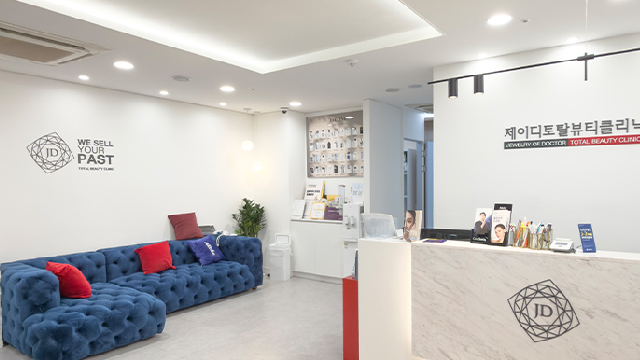
If the complaint is about pores, oiliness and texture rather than about movement lines, this is the treatment aimed at that — and a consultation is where the two get told apart. JD Clinic is located at B2, 616 Gangnam-daero, Gangnam-gu, Seoul, Republic of Korea, and can be reached on +82-2-523-7581 or through the clinic's contact page. Consultations run Monday to Thursday from 09:30 to 19:00, Friday until 21:00 and Saturday until 16:00, with a lunch break on weekdays from 13:00 to 14:00.
International patients can start with an online enquiry through the JD Clinic contact page, and an English-speaking coordinator will follow up.
Disclaimer
This page is for general information only and is not medical advice, a diagnosis, or a treatment recommendation. Outcomes differ from person to person, and whether any treatment is appropriate for you can only be decided in a consultation with a qualified doctor.
Sources & Further Reading
FDA Warns Companies Over Illegal Marketing of Botox and Related Products — U.S. Food and Drug Administration
Harmful Reactions Linked to Counterfeit "Botox" or Mishandled Botulinum Toxin Injections — Centers for Disease Control and Prevention
Botulinum toxin therapy: FAQs — American Academy of Dermatology
Botulinum toxin and cosmetic fillers for under 18s — Department of Health and Social Care
Safe Injection Practices and Your Health — Centers for Disease Control and Prevention
Best questions to ask when considering a cosmetic treatment — American Academy of Dermatology
Other Services
Explore additional treatments offered at JD Clinic.