Physician-Led Non-Surgical Lifting & Aesthetic Medicine in Gangnam, Seoul
4.8 Google Rating (56 Reviews)
en-US


Skin Care · Needs Clinic Confirmation
Tenor Muscle Stimulation Care
Tenor Muscle Stimulation Care is a non-invasive radiofrequency treatment that delivers controlled heat into deeper skin and subcutaneous tissue, used at JD Clinic in Gangnam, Seoul for skin tightening, elasticity and facial contour, in a session of approximately thirty minutes.
Schedule a ConsultationTenor Muscle Stimulation Care

Medically reviewed by Dr. Jin-Woo Doh, Representative Director, JD Clinic, Gangnam, Seoul, and Dr. Hyunseon Kee, Director, JD Clinic
Tenor Muscle Stimulation Care is a non-invasive radiofrequency treatment that delivers controlled heat into deeper skin and subcutaneous tissue, used at JD Clinic in Gangnam, Seoul for skin tightening, elasticity and facial contour, in a session of approximately thirty minutes. The name and the technology do not describe the same thing, and the clinic's own records say so: this should not be described as electrical muscle stimulation unless the clinic confirms that a specific muscle-stimulation protocol is being used. Radiofrequency heats tissue; muscle stimulation contracts muscle. A patient choosing between them on the strength of a menu name is choosing blind, so this page treats the discrepancy as the first thing to settle.
JD Clinic's doctor mapping is recorded at the specialty level, so this page names the doctors who direct care for this treatment area rather than claiming that one named doctor personally carries out every individual session.
What Is Tenor Muscle Stimulation Care?
Controlled radiofrequency heat is delivered into the deeper layers of the skin and the tissue below it.
The mechanism. Non-invasive radiofrequency delivering controlled heat into deeper skin and subcutaneous tissue.
What it is used for. Skin tightening, elasticity improvement and facial contour management.
The time. Approximately thirty minutes.
The sensation. Generally well tolerated; patients may feel warmth or mild discomfort. Radiofrequency treatment generally does not require anaesthesia.
The claim limits. The clinic's records allow non-invasive radiofrequency skin tightening, support for firmness and elasticity, and improvement in the appearance of mild facial laxity and contours — and rule out guaranteed fat reduction, permanent lifting, muscle building and permanent collagen regeneration unless the specific device and clinical evidence support them.
Two of the four things ruled out — muscle building and fat reduction — are precisely what the word "muscle" in the treatment name might suggest to a reader. That is the clearest reason to ask what the device is doing before assuming what it is for.
Who Performs Tenor Treatment at JD Clinic
|
|
Dr. Jin-Woo Doh | Dr. Hyunseon Kee |

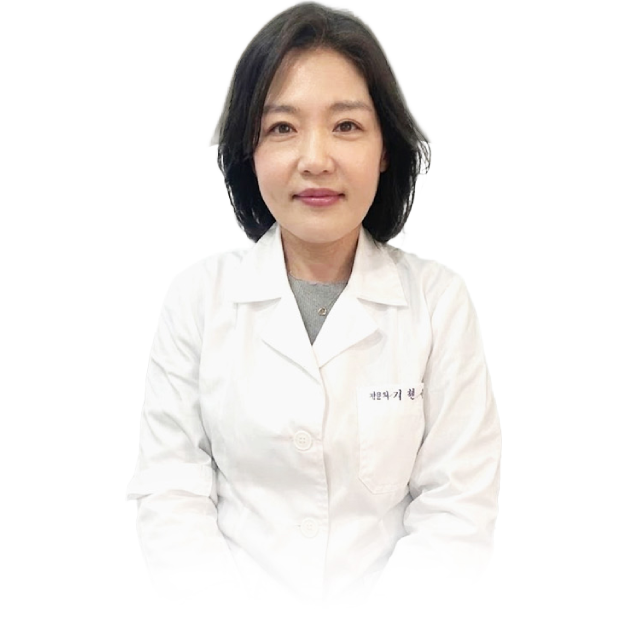
Care in this treatment area is directed by Dr. Jin-Woo Doh, Representative Director of JD Clinic, and Dr. Hyunseon Kee, Director.
Dr. Doh graduated from Seoul National University College of Medicine and serves as a Guest Professor at Seoul National University Hospital. Skin rejuvenation is among his listed core specializations.
Dr. Hyunseon Kee is a Director at JD Clinic whose listed areas are aesthetic plastic surgery, aesthetic procedures and laser-based aesthetic treatments. She is a full member of the Korean Society of Aesthetic Plastic Surgery, the International Society of Aesthetic Surgery, and the Korean Society of Aesthetic Plastic Surgery and Laser. Dr. Doh is additionally a full member of the Korean Society of Aesthetic Surgery and the Korean Society for Obesity Treatment.
JD Clinic has not provided licence or board-status records for either doctor, so none is claimed here, and no educational institution is attributed to Dr. Hyunseon Kee because the clinic's records do not state one.
The provider should assess skin laxity, elasticity, facial contour, treatment goals and medical history, then select the treatment area and the radiofrequency parameters according to the patient's condition. Energy selection and temperature control are not a technical footnote here: the clinic's own risk note states that excessive radiofrequency heating can potentially cause burns or other thermal injury, and that proper energy selection and temperature control are important.
The clinic's records mark the technology and the clinic-specific technique as requiring confirmation, so this page does not name a device or describe a protocol.
Who Is a Good Candidate for Tenor Treatment?
Adults with mild to moderate skin laxity or reduced firmness
People with fine lines or less-defined facial contours
Those concerned about sagging cheeks, a blurred jawline or the area under the chin
Patients who want a non-surgical option without incisions or injections
Treatment may be unsuitable or need postponing for:
Anyone with an active skin infection, open wounds or significant inflammation
People with impaired sensation
Anyone with a condition that increases sensitivity to heat
Patients with implanted electronic devices or other relevant medical conditions, which should be disclosed before treatment
Impaired sensation deserves its own line in a heat-based treatment. Sensation is part of how excessive heating is detected before it causes injury, so anything that dulls it — a nerve condition, diabetes affecting the skin, or a recent procedure that numbed an area — changes the margin the clinician is working with.
What to Expect: Procedure, Recovery, and Results Timeline
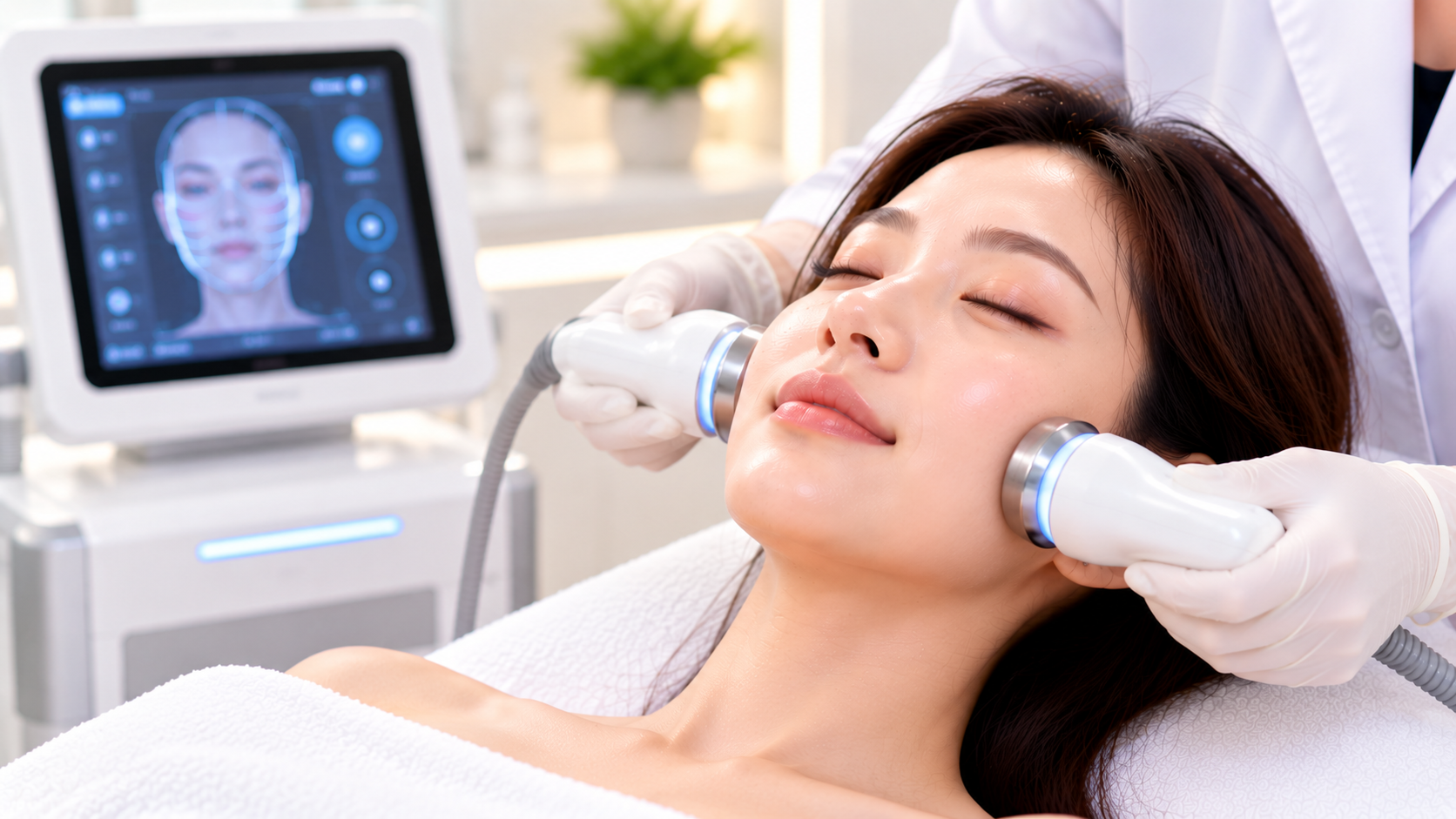
The clinic's records leave the step-by-step sequence blank for this treatment, so this page does not invent one. What is documented is the assessment, the duration, the sensation and what follows.
Stage | What happens | Timing |
|---|---|---|
Assessment | Laxity, elasticity, contour, goals, medical history; parameters set | Before treatment |
Treatment | Controlled radiofrequency heat to the selected area | Approximately 30 minutes |
Sensation | Warmth or mild discomfort; generally well tolerated | During |
Recovery | Immediate return to activity | Redness or swelling resolving within hours to about a day |
Early effects | Temporary redness, warmth, tenderness or mild swelling | Temporary |
First results | Early changes in firmness or contour | Soon after |
Further results | Continued improvement | Over the following weeks |
Several fields in the clinic's procedure profile for this treatment are blank — the recovery timeline, the aftercare protocol, the results timeline and the visit requirements. The table above is built from the patient FAQ, which does answer them, rather than from assumptions. Where the two sources of clinic information disagree or one is silent, this page says so instead of filling the gap.
Radiofrequency treatment involves controlled heating of tissue, so excessive or improperly delivered energy can potentially cause thermal injury. Other temporary reactions may include redness, swelling, tenderness or altered sensation, and proper patient selection with appropriate energy settings is what reduces those risks.
Before treatment, give a complete medical and treatment history including implanted devices, medications, recent aesthetic procedures, skin conditions and pregnancy status where relevant, and tell the provider about skin sensitivity and any active skin problems. Avoid treatment over irritated or infected skin, and avoid high-temperature environments beforehand. The clinic's aftercare protocol for this treatment is not set out in its records, so ask for the instructions at the end of the session.
For a non-invasive radiofrequency treatment alone, a prolonged medical stay is generally not expected, though the appropriate stay depends on the treatment plan and on whether other procedures are combined with it. Flying may be possible after treatment if you feel well and there are no significant skin reactions; confirm the timing with the clinic, particularly where several procedures are done in one visit. The clinic operates a 24-hour post-treatment feedback system, and English-language aftercare is available through remote follow-up consultation and ongoing channels such as email and messaging once a patient has returned home.
Combining Tenor Treatment with Other Treatments
The clinic's records mark combination procedures for this treatment as requiring confirmation, so this page does not describe a pairing. What the records do note is that where other procedures are performed in the same visit, the travel and recovery guidance follows those rather than this one.
Alternatives may include high-intensity focused ultrasound, other radiofrequency treatments, ultrasound-based lifting, laser-based tightening, injectables or surgical lifting, depending on the degree of laxity. The clinic's records draw one distinction explicitly: this is a non-invasive radiofrequency approach and differs from focused ultrasound, which uses a different energy delivered to a different depth. Which suits depends on how much laxity there is, and a treatment aimed at mild laxity will not satisfy someone whose concern is structural. More about the clinic and its team is on the JD Clinic about page.
Safety, Precision, and Clinic Standards
JD Clinic has been registered since 2023 as a Registered Medical Institution for Attracting Foreign Patients, certified by the Ministry of Health and Welfare in compliance with the Medical Overseas Expansion and Foreign Patients Attraction Act. The clinic's business registration number is 530-11-00701.
The clinic's stated quality-control process is individualised medical assessment rather than device-led selection, with treatment that is not needed avoided rather than added. Consultation and treatment are physician-led. Its records mark a specific risk-reduction process for this treatment as requiring confirmation, so this page does not describe one.
The regulator's position on the technology the name suggests is worth reading precisely because of that name. The U.S. Food and Drug Administration treats electrical muscle stimulation as a regulated device category: stimulation may temporarily strengthen, tone or firm a muscle, but the regulator has not accepted claims such as wrinkle removal, cellulite removal or body slimming, and reports shocks, burns, bruising and skin irritation associated with some devices. If what is being offered is in fact radiofrequency, that guidance is not the relevant one — which is the practical consequence of getting the name question answered.
On radiofrequency itself, the UK Department of Health and Social Care, consulting on licensing non-surgical cosmetic procedures in England, describes high-intensity focused ultrasound as directing energy to layers deep underneath the skin to encourage contraction and lifting, and radiofrequency as using heat from radio waves to cause controlled tissue damage — the reason both sit inside a proposed licensing regime. And on what to expect, the American Academy of Dermatology describes non-invasive skin tightening as producing gradual, modest lifting rather than surgical results, with ultrasound and radiofrequency changes typically developing over roughly two to six months.
The American Academy of Dermatology advises anyone considering a cosmetic treatment to establish who will perform it, ask about their experience with that specific procedure, and discuss the risks and the realistic expected result before agreeing to anything.
English-language support is provided by a dedicated international patient coordinator, Cheon Seung-yeon, Team Manager, on weekdays from 09:30 to 19:00, with Korean and Japanese coordination also available.
The Bottom Line
Non-invasive radiofrequency delivering controlled heat for firmness, elasticity and contour.
Approximately thirty minutes, generally no anaesthesia, with redness settling within about a day.
The name says muscle stimulation; the clinic's records say radiofrequency. Ask which it is.
Excessive heating can cause burns, so energy selection and temperature control matter.
Expect gradual, modest change rather than anything comparable to surgical lifting.
Frequently Asked Questions
Who is a good candidate for this treatment?
People with mild-to-moderate facial skin laxity, reduced firmness, fine lines, or concerns about facial contour — including sagging cheeks, a blurred jawline or the area under the chin. A consultation is needed to determine whether radiofrequency treatment is appropriate.
Who should avoid or postpone treatment?
Treatment may need to be postponed for people with active skin infections, open wounds or significant inflammation. Impaired sensation, conditions that increase heat sensitivity, and implanted electronic devices should all be disclosed and assessed before treatment.
How long does it take, and is it painful?
Approximately thirty minutes. The treatment is generally reported as well tolerated, with warmth or mild discomfort during the session, and radiofrequency treatment generally does not require anaesthesia.
How long should I stay in Korea, and when can I fly home?
A prolonged medical stay is generally not expected for a non-invasive radiofrequency treatment alone. Flying may be possible afterwards if you feel well and there are no significant skin reactions — confirm the timing with the clinic, particularly if other procedures are done at the same visit.
When will I see results, and how long do they last?
Some patients notice early changes in firmness or contour, with further improvement developing over the following weeks. The clinic's records do not state how long the effect lasts, so ask — and expect gradual, modest change rather than a surgical result.
What are the common side effects?
Temporary redness, warmth, tenderness or mild swelling, usually resolving within hours to about a day. Altered sensation is also listed among the possible temporary reactions.
Is this a muscle-building treatment?
The clinic's records describe a radiofrequency treatment and say it should not be described as electrical muscle stimulation unless a specific muscle-stimulation protocol is confirmed. Muscle building is among the claims its own records rule out. Ask what the device does before assuming from the name.
Does JD Clinic publish a price for this treatment?
JD Clinic does not publish treatment prices for this market; a quotation is given after an individual consultation. Because improvement is described as developing over weeks, ask whether a course is being proposed rather than a single session.
Book a Consultation at JD Clinic
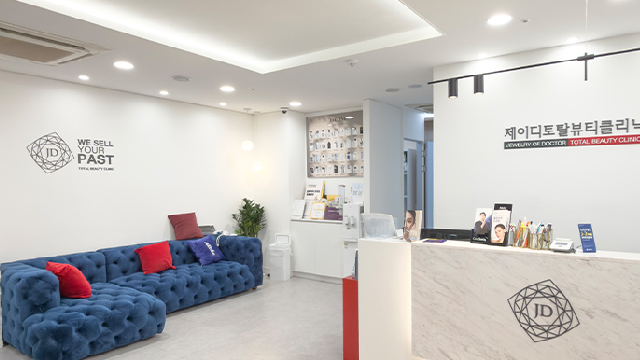
If mild laxity and a softening jawline are the concern and surgery is not on the table, a non-invasive energy treatment is the category to discuss — starting with what the device actually is. JD Clinic is located at B2, 616 Gangnam-daero, Gangnam-gu, Seoul, Republic of Korea, and can be reached on +82-2-523-7581 or through the clinic's contact page. Consultations run Monday to Thursday from 09:30 to 19:00, Friday until 21:00 and Saturday until 16:00, with a lunch break on weekdays from 13:00 to 14:00.
International patients can start with an online enquiry through the JD Clinic contact page, and an English-speaking coordinator will follow up.
Disclaimer
This page is for general information only and is not medical advice, a diagnosis, or a treatment recommendation. Outcomes differ from person to person, and whether any treatment is appropriate for you can only be decided in a consultation with a qualified doctor.
Sources & Further Reading
Electronic Muscle Stimulators — U.S. Food and Drug Administration
The licensing of non-surgical cosmetic procedures in England — UK Department of Health and Social Care
Many ways to firm sagging skin — American Academy of Dermatology
Best questions to ask when considering a cosmetic treatment — American Academy of Dermatology
Other Services
Explore additional treatments offered at JD Clinic.