Physician-Led Non-Surgical Lifting & Aesthetic Medicine in Gangnam, Seoul
4.8 Google Rating (56 Reviews)
en-US


Facial Lifting & Skin Tightening · Needs Clinic Confirmation
Thread Lifting
Thread lifting uses special threads placed beneath the skin to tighten and lift the facial contours.
Schedule a ConsultationThread Lifting

Medically reviewed by Dr. Jin-Woo Doh, Representative Director, JD Clinic, Gangnam, Seoul
Thread lifting uses special threads placed beneath the skin to tighten and lift the facial contours. It is the one treatment in JD Clinic's facial lifting and skin tightening menu in Gangnam, Seoul that repositions tissue mechanically rather than heating it — which is why the clinic describes an immediate lifting effect, and why it is the option people ask about when energy-based treatments have not produced the change they wanted.
JD Clinic's doctor mapping is recorded at the specialty level, so this page names the doctors who direct care for this treatment area rather than claiming that one named doctor personally carries out every individual session.
What Is Thread Lifting?
Threads are placed into the tissue so that the contour is physically drawn into a different position.
The mechanism is mechanical, not thermal. Nothing is heated; tissue is repositioned.
The effect is described as immediate, which distinguishes it from every energy treatment on this menu.
Local anaesthesia is used, not topical numbing cream.
The procedure takes about thirty minutes.
Recovery is stated at one to two days, with bruising and swelling possible.
The clinic records a maintenance period of six to nine months and a retreatment cycle of the same length. Threads are a temporary measure by design — which is a feature rather than a shortcoming, but it is the number to hold in mind when comparing this against a surgical option.
Who Performs Thread Lifting at JD Clinic

Dr. Jin-Woo Doh
Representative Director of JD Clinic
Care in this treatment area is directed by Dr. Jin-Woo Doh, Representative Director of JD Clinic, who graduated from Seoul National University College of Medicine and serves as a Guest Professor at Seoul National University Hospital. Non-surgical facial lifting and anti-aging is the first of his listed core specializations.
Consultation involves assessing facial laxity, skin condition, facial contours and treatment goals; the practitioner determines whether thread lifting is appropriate and discusses expected results and possible risks. The clinic's records mark the technology and the clinic-specific technique for this procedure as requiring confirmation, so this page does not describe a thread type, a placement pattern or a proprietary method. Those are exactly the things worth asking about in person, because in thread lifting the technique is the treatment.
He is a full member of the Korean Society of Aesthetic Surgery, the Korean Society of Aesthetic Plastic Surgery, the International Society of Aesthetic Surgery, the Korean Society for Obesity Treatment, and the Korean Society of Aesthetic Plastic Surgery and Laser. JD Clinic has not provided licence or board-status records for this page, so none is claimed here.
JD Clinic describes its approach as assessing skin thickness, the degree of laxity and facial structure before selecting a device, then targeting the intended tissue layer with the minimum number of passes needed rather than applying one fixed setting to every patient.
Who Is a Good Candidate for Thread Lifting?
Adults with mild to moderate facial laxity
People wanting improvement in sagging or in facial contour
Those looking for facial contour tightening with an immediate effect
Patients who want a minimally invasive route with a relatively short procedure and recovery
Anyone seeking visible contour improvement without surgery
Thread lifting may need to be postponed or avoided for:
People with certain skin infections in the treatment area
Anyone with significant inflammation there
Patients with bleeding problems
Those with a medical condition affecting healing
A medical assessment determines individual suitability, and it depends on skin condition, the degree of laxity and what the patient expects. Expectation is doing real work in that list: threads reposition tissue that is there, and where laxity has gone beyond what repositioning can hold, the honest answer is a surgical assessment rather than more threads.
The comparison most people actually want is between threads and the energy treatments, so it is worth setting out plainly. An energy treatment heats tissue so that collagen contracts and rebuilds; the change is gradual, usually modest, and it improves the quality of the support that is already there. A thread lift moves tissue and holds it in a new position; the change is visible at once, and it depends on the placement rather than on how the skin responds over months. Neither is a better version of the other. A patient whose skin has lost firmness but whose contour is broadly intact is often better served by energy. A patient who can see where the tissue should sit and can see that it is not there is the one for whom repositioning makes sense.
The second question worth bringing is what happens at the end. Because threads absorb, the contour returns towards where it started as they do — the clinic's six-to-nine-month figure is describing that arc, not a point at which a result disappears overnight. Planning for that from the beginning, rather than discovering it, is the difference between a treatment that suits someone and one that frustrates them.
What to Expect: Procedure, Recovery, and Results Timeline
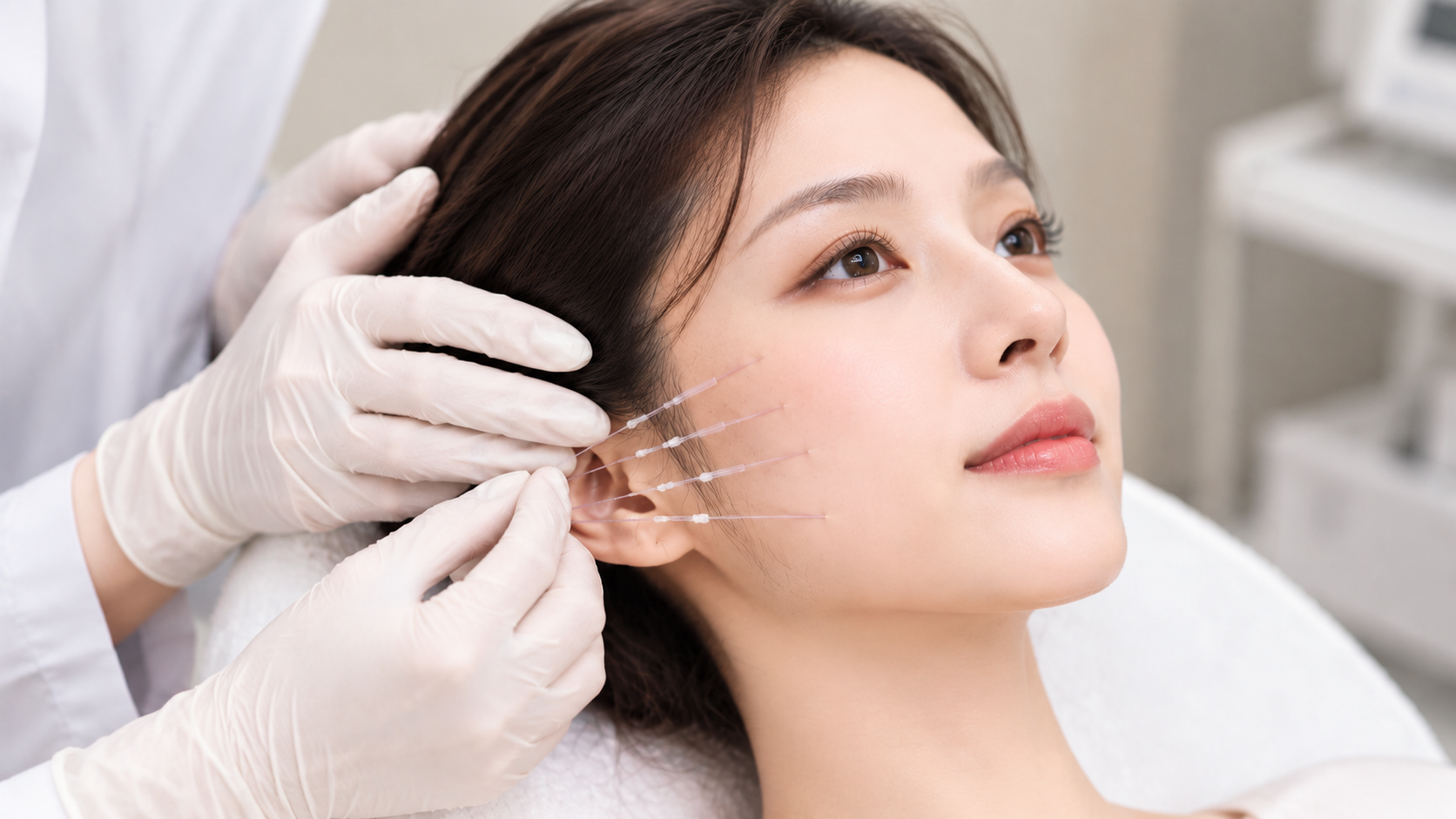
Special threads are placed to tighten and lift the facial contours, under local anaesthesia, with the procedure itself taking about thirty minutes.
Stage | What happens | Timing |
|---|---|---|
Consultation | Laxity, skin condition, contours, goals, risks discussed | Before the procedure |
Anaesthesia | Local anaesthesia | Before placement |
Procedure | Threads placed to tighten and lift the contour | Approximately 30 minutes |
Immediately after | An immediate lifting effect is described | Same day |
Recovery | Stated period | 1–2 days |
Early effects | Bruising and swelling may occur | During recovery |
Maintenance | Stated period | 6–9 months |
Retreatment | Stated cycle | 6–9 months |
Some discomfort, pressure or a pulling sensation may be felt during thread placement; local anaesthesia is used to make that manageable. Individual recovery varies, particularly where bruising or swelling occurs.
Aftercare here is more specific than for the energy treatments, and both instructions matter for the same underlying reason: something has been placed in the tissue and it needs to stay where it was put. Pressure, friction and traction on the treated area are what threaten that in the first days, which is why the clinic asks for care when washing the face and asks patients not to sleep on their stomach. Neither instruction is about comfort — both are about position. Before the procedure, follow the practitioner's instructions and disclose relevant medications, medical conditions, allergies and previous procedures — and expect to be asked to avoid alcohol and any medication or supplement that increases bruising, unless it is prescribed.
The clinic's records do not state a recommended length of stay or a flight interval for this treatment. Given a stated one-to-two-day recovery with possible bruising and swelling, the sensible approach is to settle travel timing with the clinic rather than to book around the procedure length. The clinic operates a 24-hour post-treatment feedback system, and English-language aftercare is available through remote follow-up consultation and ongoing channels such as email and messaging once a patient has returned home.
Combining Thread Lifting with Other Treatments
The clinic's records do not state a combination protocol for this treatment, so this page does not describe one. The structural point is that threads and energy do different jobs — one repositions tissue, the other changes its quality — and clinics commonly sequence them rather than performing both at once, because each needs its own recovery and because a result that has not settled is hard to judge.
Depending on the degree and cause of facial laxity, alternatives include energy-based lifting treatments, injectable treatments, or surgical facial lifting. Which is appropriate is an individual assessment rather than a ranking.
Injectables belong on that list for a reason worth spelling out. Some of what reads as sagging is volume that has gone rather than tissue that has dropped, and a face that has lost support in the mid-cheek can look lifted when that volume is restored without anything being repositioned at all. A consultation that examines the face at rest and in movement is what separates the two, and where both are present, the sequence between them is a clinical judgement — restoring volume first can change how much repositioning is actually needed. More about the clinic and its team is on the JD Clinic about page.
Safety, Precision, and Clinic Standards
JD Clinic has been registered since 2023 as a Registered Medical Institution for Attracting Foreign Patients, certified by the Ministry of Health and Welfare in compliance with the Medical Overseas Expansion and Foreign Patients Attraction Act. The clinic's business registration number is 530-11-00701.
The clinic's stated quality-control process is individualised medical assessment rather than device-led selection, with treatment that is not needed avoided rather than added. Consultation and treatment are physician-led.
Thread lifting has its own risk profile, distinct from the energy treatments on this menu, and it is documented rather than theoretical. The American Society of Plastic Surgeons sets out the recognised risks of absorbable suture (thread) lifting of the face: infection, extrusion of a thread, persisting pain, swelling and bruising, temporary difficulty opening the mouth, and an unfavourable result, all of which should be discussed and consented before treatment. The clinic's own list adds temporary asymmetry and changes in sensation to bruising, swelling, tenderness and infection.
Two points follow from that. First, "minimally invasive" here means something is placed inside the tissue and stays there until it absorbs — which is why thread extrusion and persisting pain appear on a risk list where they would not for a heat-based treatment. Second, because the clinic's records do not document the thread type or placement technique, those are things to establish in person: what is being placed, where, how many, and what happens if the result is asymmetric.
That last question deserves an answer before the procedure rather than after it. Temporary asymmetry is on the clinic's own list of possible effects, and some asymmetry in the first days is expected as swelling resolves unevenly. What a patient should know in advance is how the clinic distinguishes that from an asymmetry that will persist, how long it waits before judging, and what it does then. A clinic that has a clear answer has thought about the situation; one that has not is a clinic where the question will be asked for the first time while you are sitting in it.
The same applies to travel. A patient who flies home two days after placement and then develops a problem is relying entirely on remote support — and while the clinic operates aftercare channels for exactly that, a thread problem is one of the few in this treatment area where being seen in person matters. It is worth asking, before booking, what the clinic would do if something needed attention after you had left the country.
The NHS makes the general point that applies to any non-surgical facial procedure, and it applies with particular force to one involving placement under anaesthesia: book a consultation first, check the practitioner's qualifications, training, professional registration and insurance, and avoid anyone whose training was a short course. The UK Department of Health and Social Care, consulting on licensing non-surgical cosmetic procedures in England, sets out why procedures of this kind are moving towards statutory oversight at all.
English-language support is provided by a dedicated international patient coordinator, Cheon Seung-yeon, Team Manager, on weekdays from 09:30 to 19:00, with Korean and Japanese coordination also available.
The Bottom Line
Thread lifting repositions tissue mechanically rather than heating it, which is why the effect is immediate.
Local anaesthesia, about thirty minutes, and a stated one-to-two-day recovery with bruising and swelling possible.
Maintenance and retreatment are both stated at six to nine months — this is temporary by design.
Aftercare includes two specific instructions: care when washing the face, and not sleeping on your stomach.
Thread extrusion, persisting pain and an unfavourable result are documented risks of this procedure class.
Frequently Asked Questions
Who is a good candidate for thread lifting?
People looking for facial contour tightening and an immediate lifting effect, with mild to moderate facial laxity. Suitability depends on skin condition, the degree of laxity and what the patient expects — and expectation matters here, because threads reposition tissue rather than replacing what has gone.
Who should postpone treatment?
Anyone with an active skin infection or significant inflammation in the treatment area, anyone with bleeding problems, and anyone with a condition affecting healing. A medical assessment is needed to determine individual suitability rather than a general screen.
How long does it take, and what anaesthesia is used?
The procedure takes about thirty minutes, under local anaesthesia. Some discomfort, pressure or a pulling sensation may be felt during thread placement; the local anaesthetic is what makes that manageable rather than absent.
What is recovery like?
The clinic states one to two days, with bruising and swelling possible during that period. Individual recovery varies. The clinic's specific aftercare instructions are to take care when washing the face and not to sleep on your stomach after treatment.
How long should I stay in Korea, and when can I fly home?
The clinic's records do not state a recommended length of stay or a flight interval for this treatment. With a one-to-two-day recovery and possible bruising, settle the timing with the clinic before booking a return flight rather than after.
When will I see results, and how long do they last?
An immediate lifting effect is described, which is the distinguishing feature of this procedure compared with the energy treatments on this menu. The clinic states a maintenance period of six to nine months and a retreatment cycle of the same length.
What risks should I know about?
Bruising, swelling, tenderness, temporary asymmetry, infection and changes in sensation. The procedure class also carries documented risks of thread extrusion, persisting pain, temporary difficulty opening the mouth, and an unfavourable result — all of which should be discussed and consented before treatment rather than mentioned afterwards.
Does JD Clinic publish a price for thread lifting?
JD Clinic does not publish treatment prices for this market; a quotation is given after an individual consultation. What is placed and how much of it are decided at assessment, so the quotation follows that.
Book a Consultation at JD Clinic
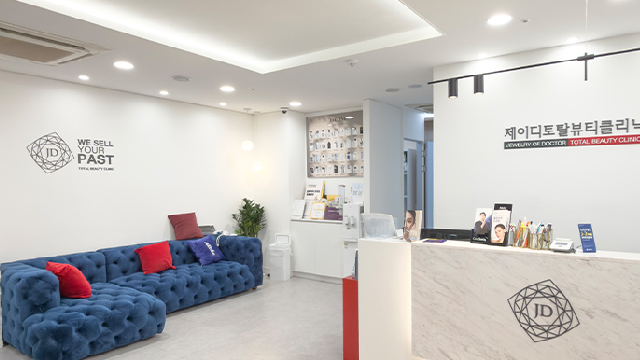
If energy-based treatments have not produced the contour change you were after, repositioning rather than tightening is the next conversation — and it is one worth having in person. JD Clinic is located at B2, 616 Gangnam-daero, Gangnam-gu, Seoul, Republic of Korea, and can be reached on +82-2-523-7581 or through the clinic's contact page. Consultations run Monday to Thursday from 09:30 to 19:00, Friday until 21:00 and Saturday until 16:00, with a lunch break on weekdays from 13:00 to 14:00.
International patients can start with an online enquiry through the JD Clinic contact page, and an English-speaking coordinator will follow up.
Disclaimer
This page is for general information only and is not medical advice, a diagnosis, or a treatment recommendation. Outcomes differ from person to person, and whether any treatment is appropriate for you can only be decided in a consultation with a qualified doctor.
Sources & Further Reading
Thread Lift Risks and Safety — American Society of Plastic Surgeons
The licensing of non-surgical cosmetic procedures in England: consultation document — UK Department of Health and Social Care
Many ways to firm sagging skin — American Academy of Dermatology
Other Services
Explore additional treatments offered at JD Clinic.