Physician-Led Non-Surgical Lifting & Aesthetic Medicine in Gangnam, Seoul
4.8 Google Rating (56 Reviews)
en-US


Body Contouring & Obesity Treatment · Needs Clinic Confirmation
truSculpt iD Body Contouring
truSculpt iD is a non-invasive body-contouring treatment that uses radiofrequency energy to heat targeted areas of the body, designed to reduce localised fat and improve body contour without surgery.
Schedule a ConsultationtruSculpt iD Body Contouring

Medically reviewed by Dr. Jin-Woo Doh, Representative Director, JD Clinic, Gangnam, Seoul, and Dr. Hyunseon Kee, Director, JD Clinic
truSculpt iD is a non-invasive body-contouring treatment that uses radiofrequency energy to heat targeted areas of the body, designed to reduce localised fat and improve body contour without surgery. At JD Clinic in Gangnam, Seoul it requires no surgical anaesthesia and is described as having little to no downtime. One item on the clinic's candidate list is worth reading before the rest: suitable candidates are adults who are near a stable weight. That single phrase frames what this treatment is for better than any description of the technology.
JD Clinic's doctor mapping is recorded at the specialty level, so this page names the doctors who direct care for this treatment area rather than claiming that one named doctor personally carries out every individual session.
What Is truSculpt iD Body Contouring?
Applicators are placed on an area of the body and radiofrequency energy heats the tissue beneath them.
The technology. Radiofrequency energy used for non-invasive body contouring.
The stated purpose. Addressing excess fat, improving elasticity, and addressing cellulite in treated areas.
Anaesthesia. No surgical anaesthesia is typically required, as the treatment is non-invasive. Patients may feel warmth or a heating sensation during energy delivery.
Downtime. Little to none, with normal activities generally resumed afterwards.
The schedule. Treatment time depends on the number and size of areas treated, and the number of sessions varies with the plan, so the clinic should confirm the expected schedule.
The category framing. The U.S. Food and Drug Administration describes non-invasive body contouring as a medical procedure that changes the shape of a treated area, states that it is not intended to treat obesity or improve health, that it will not result in weight loss, and that its effects may be temporary and may require repeat treatment. That is the same message as the clinic's "near a stable weight" criterion, approached from the other direction.
Who Performs truSculpt iD Treatment at JD Clinic
|
|
Dr. Jin-Woo Doh | Dr. Hyunseon Kee |

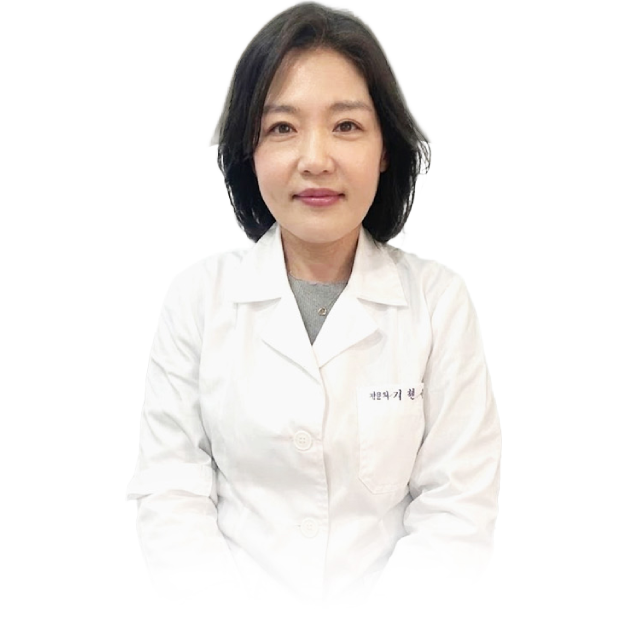
Care in this treatment area is directed by Dr. Jin-Woo Doh, Representative Director of JD Clinic, and Dr. Hyunseon Kee, Director.
Dr. Doh graduated from Seoul National University College of Medicine and serves as a Guest Professor at Seoul National University Hospital. Body and obesity treatments are named among his listed core specializations.
Dr. Hyunseon Kee is a Director at JD Clinic whose listed areas are aesthetic plastic surgery, aesthetic procedures and laser-based aesthetic treatments. She is a full member of the Korean Society of Aesthetic Plastic Surgery, the International Society of Aesthetic Surgery, and the Korean Society of Aesthetic Plastic Surgery and Laser. Dr. Doh is additionally a full member of the Korean Society of Aesthetic Surgery and the Korean Society for Obesity Treatment.
JD Clinic has not provided licence or board-status records for either doctor, so none is claimed here, and no educational institution is attributed to Dr. Hyunseon Kee because the clinic's records do not state one.
Consultation assesses the treatment area, skin condition, fat distribution and treatment goals to determine whether the procedure is appropriate. Skin condition sits alongside fat distribution for a practical reason: reducing volume where the skin has already lost firmness can leave the looseness more visible, and that trade-off is a judgement made before treatment rather than discovered after it.
The clinic's records mark the clinic-specific technique as requiring confirmation, so this page does not describe a proprietary protocol or state settings.
Who Is a Good Candidate for truSculpt iD Body Contouring?
Adults with localised areas of unwanted fat
People near a stable weight, which the clinic names specifically
Those with realistic expectations about the degree of change
Patients who want a non-surgical option and can attend the sessions a plan requires
It may not be suitable for:
People with certain medical conditions, assessed individually
Anyone with implanted electronic devices
Patients with active skin problems in the treatment area
Anyone whose expectations are unrealistic, which the clinic names as a contraindication
The implanted-device exclusion is the one to raise before booking travel. It is not something a provider can detect, and it is not resolved by waiting — unlike an active skin problem, which usually just moves the appointment.
What to Expect: Procedure, Recovery, and Results Timeline
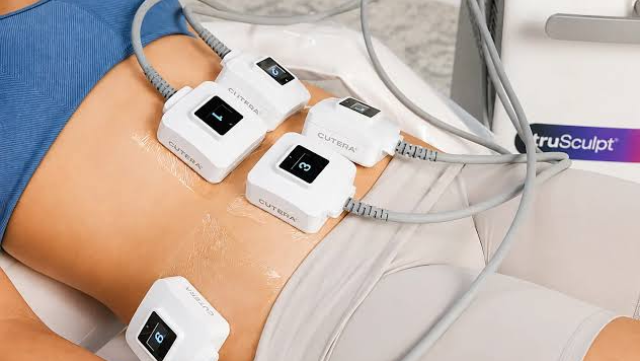
The treatment area is assessed and marked, the applicators are positioned on the targeted area, radiofrequency energy is delivered to heat the underlying tissue, and the applicators are removed, after which normal activities can generally be resumed.
Stage | What happens | Timing |
|---|---|---|
Consultation | Area, skin condition, fat distribution, goals; suitability decided | Before treatment |
Treatment | Applicators positioned; radiofrequency energy delivered | Depends on number and size of areas |
Sensation | Warmth or a heating sensation during energy delivery | During |
Recovery | Little to no downtime | Normal activities afterwards |
Early effects | Redness, warmth, swelling, tenderness or sensitivity | Settling as the area recovers |
Results | Developing gradually as the body responds | Varies by person |
Temporary pain, redness, swelling, tenderness or sensitivity can occur in the treated area, and these generally improve after treatment. As with energy-based body contouring generally, temporary skin or sensory changes may occur, with individual risks depending on the treatment area and the patient's condition.
Before treatment, follow the provider's preparation instructions and tell them about relevant medications, skin conditions or previous procedures affecting the area, avoid irritating the treatment area beforehand, and disclose anything that may affect skin sensitivity or healing. Afterwards, follow the clinic's instructions and monitor the treated area for unusual or persistent symptoms; the provider can advise when normal activities, exercise or other treatments can resume.
Because the treatment is non-invasive and involves no surgical recovery, an extended stay is generally not required, and patients can typically resume normal activities afterwards — international travellers should still follow the clinic's individual advice. The planning question is the number of sessions rather than the recovery from one: the clinic states that the number required varies according to the treatment plan, so ask what is being proposed before assuming a single visit completes it. The clinic operates a 24-hour post-treatment feedback system, and English-language aftercare is available through remote follow-up consultation and ongoing channels such as email and messaging once a patient has returned home.
Combining truSculpt iD with Other Treatments
The clinic's records mark combination procedures for this treatment as requiring confirmation, so this page does not describe a pairing. Its aftercare note does say that the provider can advise when other treatments may be resumed, which is the relevant point: sequencing around an energy treatment is a clinical judgement about tissue that has recently been heated.
Alternatives may include other non-invasive body-contouring technologies or surgical liposuction, and the appropriate option depends on the amount and location of fat, skin condition, the degree of contour change wanted, tolerance for downtime, and medical suitability. Tolerance for downtime is the variable patients most often underweight: the non-surgical options ask for very little of it and deliver correspondingly less change. More about the clinic and its team is on the JD Clinic about page.
Safety, Precision, and Clinic Standards
JD Clinic has been registered since 2023 as a Registered Medical Institution for Attracting Foreign Patients, certified by the Ministry of Health and Welfare in compliance with the Medical Overseas Expansion and Foreign Patients Attraction Act. The clinic's business registration number is 530-11-00701.
The clinic's stated quality-control process is individualised medical assessment rather than device-led selection, with treatment that is not needed avoided rather than added. Consultation and treatment are physician-led. Its records mark a specific risk-reduction process for this treatment as requiring confirmation, so this page does not describe one.
Radiofrequency delivered into tissue is regulated as a medical technology. The U.S. Food and Drug Administration has issued a safety communication stating that radiofrequency microneedling is a medical procedure rather than a cosmetic treatment and has been associated with reports of serious complications including burns, scarring, fat loss, disfigurement and nerve damage, so it should be performed only by a trained, licensed practitioner. That communication concerns a device that delivers energy through needles, which this treatment does not; what carries across is the regulator's underlying position that radiofrequency energy in tissue is a medical act and the operator's training is part of the safety case.
The UK Department of Health and Social Care, consulting on licensing non-surgical cosmetic procedures in England, describes high-intensity focused ultrasound as directing energy to layers deep underneath the skin to encourage contraction and lifting, and radiofrequency as using heat from radio waves to cause controlled tissue damage — the reason both sit inside a proposed licensing regime.
The American Society of Plastic Surgeons places non-surgical fat reduction — a group of modalities including ultrasound, radiofrequency, infrared light, vacuum massage and injectable medication — as an option for people unwilling or unable to have surgery rather than as a replacement for surgical fat removal, and notes that it is not advised during pregnancy or breastfeeding.
The American Academy of Dermatology advises anyone considering a cosmetic treatment to establish who will perform it, ask about their experience with that specific procedure, and discuss the risks and the realistic expected result before agreeing to anything.
English-language support is provided by a dedicated international patient coordinator, Cheon Seung-yeon, Team Manager, on weekdays from 09:30 to 19:00, with Korean and Japanese coordination also available.
The Bottom Line
Radiofrequency applicators heating tissue in a targeted area, non-invasively.
No surgical anaesthesia, little to no downtime, normal activities afterwards.
Results develop gradually, and the number of sessions depends on the plan.
Best suited to people already near a stable weight — it is not a weight-loss treatment.
Implanted electronic devices and active skin problems need raising before booking.
Frequently Asked Questions
Who is a good candidate for truSculpt iD?
Adults with localised areas of unwanted fat who are near a stable weight and hold realistic expectations. Suitability depends on the treatment area, body condition and individual goals, and is settled at consultation.
Who should avoid or postpone treatment?
People with certain medical conditions, implanted electronic devices, active skin problems in the treatment area, or other contraindications. Individual contraindications should be assessed by the treating provider.
How long does it take, and is it painful?
Treatment time depends on the number and size of areas being treated, so the duration should be confirmed at consultation. No anaesthesia is generally required, and patients may experience warmth or a heating sensation during energy delivery.
How long should I stay in Korea, and when can I fly home?
There is no surgical recovery period, so an extended stay is generally not required and normal activities can typically be resumed after treatment. International travellers should follow the clinic's individual advice, and should ask how many sessions the plan involves.
When will I see results, and how long do they last?
Changes are not necessarily immediate, because the body takes time to process the effects of treatment. Duration varies and is influenced by weight stability, lifestyle and individual response.
What are the common side effects?
Temporary redness, swelling, tenderness, warmth or sensitivity in the treated area, generally improving after treatment.
Will this help me lose weight?
No. Non-invasive body contouring changes the shape of a treated area; regulators state that it is not intended to treat obesity or improve health and will not result in weight loss. The clinic's own criterion of being near a stable weight says the same thing.
Does JD Clinic publish a price for this treatment?
JD Clinic does not publish treatment prices for this market; a quotation is given after an individual consultation. Because both session length and session count depend on the areas treated, ask what the quotation covers.
Book a Consultation at JD Clinic
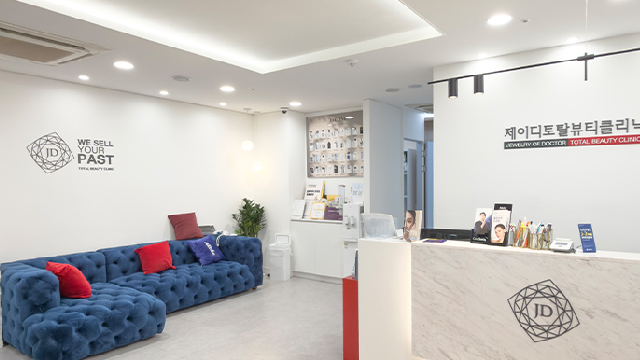
If your weight is settled and one or two areas are what you would change, non-invasive contouring is the category to discuss — with the number of sessions established up front. JD Clinic is located at B2, 616 Gangnam-daero, Gangnam-gu, Seoul, Republic of Korea, and can be reached on +82-2-523-7581 or through the clinic's contact page. Consultations run Monday to Thursday from 09:30 to 19:00, Friday until 21:00 and Saturday until 16:00, with a lunch break on weekdays from 13:00 to 14:00.
International patients can start with an online enquiry through the JD Clinic contact page, and an English-speaking coordinator will follow up.
Disclaimer
This page is for general information only and is not medical advice, a diagnosis, or a treatment recommendation. Outcomes differ from person to person, and whether any treatment is appropriate for you can only be decided in a consultation with a qualified doctor.
Sources & Further Reading
Non-Invasive Body Contouring Technologies — U.S. Food and Drug Administration
Potential Risks with Certain Uses of Radiofrequency (RF) Microneedling — U.S. Food and Drug Administration
The licensing of non-surgical cosmetic procedures in England — UK Department of Health and Social Care
Nonsurgical Fat Reduction — American Society of Plastic Surgeons
Best questions to ask when considering a cosmetic treatment — American Academy of Dermatology
Other Services
Explore additional treatments offered at JD Clinic.