Physician-Led Non-Surgical Lifting & Aesthetic Medicine in Gangnam, Seoul
4.8 Google Rating (56 Reviews)
en-SG

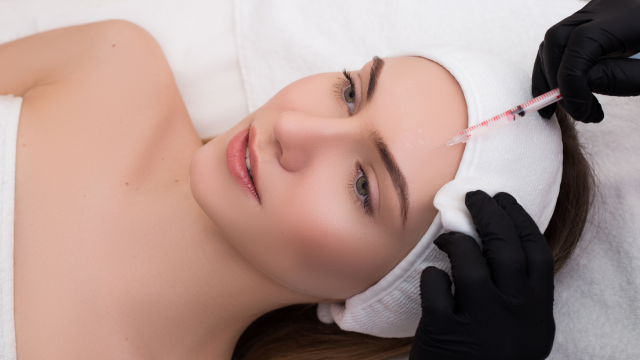
Medical Guide
Botox at JD Clinic: A Ten-Minute Treatment, Explained
The shortest appointment on the menu, with a published caution attached. What the treatment reduces, how long that lasts, and what it does not promise.
Schedule a ConsultationBotox at JD Clinic: A Ten-Minute Treatment, Explained
Medically reviewed by Dr Jin-Woo Doh, Representative Director, JD Clinic
Ten minutes. That is the published procedure time, and it makes this the shortest treatment on a menu that runs to roughly thirty devices and seventy-six services.
It also carries a caution the clinic writes into its own statement of what may be claimed, and the caution is more useful than anything the ten minutes will tell you:
Treatment does not guarantee permanent wrinkle reduction or prevention of future facial lines.
A clinic that writes down what its own treatment will not do has narrowed its market on purpose. It is also the sentence that sets the right expectation, so this article starts there and works outward.
What the treatment does
Botox is described as a minimally invasive injectable treatment that temporarily reduces targeted muscle activity. It may help soften dynamic wrinkles and refine selected facial lines.
Three words in that sentence carry the whole mechanism.
Temporarily. The effect has a duration, stated below, and then it ends.
Reduces. Activity is turned down, not switched off, and nothing is added to the face that later has to leave.
Targeted. Selected muscles, chosen after an assessment — not a region treated uniformly.
The result of turning muscle activity down is that lines produced by that movement have less produced. Which is why the candidacy language points at movement rather than at lines in general.
Who it is described for
Adults concerned about dynamic wrinkles or facial lines caused by repeated muscle movement, who have realistic expectations about temporary results.
"Caused by repeated muscle movement" is the qualifier that decides candidacy, and it is worth testing against your own face before you book anything.
Photograph yourself with a completely relaxed expression, in ordinary light, and look at the image later rather than in a mirror — people unconsciously hold an expression while looking at themselves. A line that is invisible in that photograph is being produced by movement. A line clearly visible there is at least partly something else, and something else is a different part of this clinic's menu.
Most adult faces show both. That is the ordinary finding, and it is why the clinic's consultation is described as evaluating facial movement, wrinkle patterns, treatment areas, medical history, medications, previous Botox treatments, and the patient's aesthetic goals before determining whether treatment is appropriate.
Note that previous Botox treatments appear in that list. Bring dates and, if you have them, amounts — approximate is better than nothing, and it is the input a clinician cannot obtain any other way.
Who should not have it
Treatment may be unsuitable for people with an active infection at the injection site, certain neuromuscular conditions, known hypersensitivity to the product, or other medical factors identified during consultation.
The neuromuscular item is the one to raise without waiting to be asked. A treatment that works by reducing nerve signals to muscle interacts with conditions that already affect that system, and it is a disclosure rather than a judgment call on your part. General background is at the US National Library of Medicine's page on neuromuscular disorders, and on the treatment class at Botox.
Before treatment, tell the clinician about medications, allergies, medical conditions, previous botulinum toxin treatments and any planned procedures.
The appointment
The published sequence is short: the treatment area is assessed and cleansed, injection points are identified, and small amounts of botulinum toxin are injected into selected muscles using a fine needle.
Anaesthesia is generally not required. The injections may cause brief stinging or pinching, but discomfort is usually short-lived.
The procedure takes about 10 minutes.
That combination — no numbing wait, ten minutes of work — is what makes this the easiest treatment on the clinic's menu to fit into a day. It is also why it is worth pairing with something else if you have travelled for it, since the appointment alone is a poor use of a trip.
Afterwards
Recovery: patients can generally resume their usual daily activities on the same day. Mild redness, swelling or bruising may occur temporarily. Background on the last of those at bruises.
Possible effects: temporary redness, swelling, tenderness, bruising, headache, or localised discomfort. Temporary weakness or unintended effects in nearby muscles can also occur. Rare complications require medical evaluation.
Aftercare, and this list is specific:
- Do not apply pressure to or massage the treated areas.
- Avoid excessive alcohol consumption.
- Avoid high-temperature environments.
- Follow the clinic's instructions regarding lying down after treatment.
That last instruction is unusual enough to notice. Most aftercare lists talk about what to avoid doing; this one talks about a posture. It is worth asking for the specifics at your appointment — how long, and in what position — because "follow the clinic's instructions" is only useful if you have them.
The high-temperature instruction has a travel consequence in Seoul specifically. A bathhouse and a fresh injectable treatment are in direct conflict, and the fix costs nothing: the bathhouse goes before the appointment.
The timeline
Effects develop progressively rather than immediately.
Results commonly last around 3 to 6 months, although duration varies individually.
Retreatment may be considered from approximately 3 months later, following consultation.
Two things follow that are worth holding onto.
You will not see the result before you fly home. A treatment that develops progressively does not finish in the days a trip allows. That is normal and it is the reason the useful pre-departure question is about week two rather than about the flight.
The end is a slope, not a cliff. Muscle activity returns gradually, so the last weeks of an interval feel like a drift rather than a switch — and your own interval within that 3-to-6-month band is something you learn from your first treatment rather than something anyone can predict for you.
Because the result arrives after you leave, settle the follow-up channel before you go. The clinic states that it operates a 24-hour post-procedure feedback system for communication and progress checking after treatment, with English-language aftercare and remote follow-up consultations. Its contact page is the route it names, and confirming which channel applies to you is a one-line message.
What it will not do
Back to the caution this article opened with, now that the mechanism is in place.
No permanent wrinkle reduction. The effect is temporary by construction, and a treatment that turns muscle activity down cannot turn it down forever.
No prevention of future facial lines. The clinic does not claim it, and this article will not either.
And two further boundaries that follow from what the treatment acts on:
Lines visible at complete rest are not, or not only, a movement problem. Volume, skin quality and laxity are separate concerns with separate services on this clinic's menu.
Surface texture and pigment are a different category again.
The clinic's own strengths language describes individualised assessment rather than device-only selection and the avoidance of unnecessary treatment. Applied here, that means a good consultation may well tell you that part of what bothers you is outside what an injection reaches — and being told that is more valuable than being treated for it anyway. The clinic's about page shows what the alternatives would be.
Where it sits on this clinic's menu
Botox is one entry in a category the clinic lists as Filler & Botox, and it runs several distinct botulinum toxin services alongside this one.
Two of them are worth knowing about because patients often arrive asking for "Botox" when the service they want is a different entry.
Skin Botox is listed as its own service rather than as a variation of this one. If your concern is the surface — texture rather than a crease — that is a separate conversation with separate expectations.
The functional services. The clinic also lists botulinum toxin treatments aimed at excessive sweating, at the salivary glands, and at muscle contour in the shoulders, calves, thighs and upper arms. Those are not facial-line treatments at all, and several of them are medical rather than cosmetic in purpose.
Which means that arriving with the word "Botox" tells a clinician very little. Arriving with the concern — the line that appears when you frown, the sweating that soaks a shirt, the shoulder line you dislike — tells them which of the services is actually being discussed.
Questions worth asking in the room
Four, all short, none requiring any clinical knowledge.
Which muscles are you treating, and what is each one for? A plan with an answer is a plan; one without is a region.
How much, and of what? The product and the amount. Write the answer down — a clinician seeing you in a year, anywhere, will want exactly that.
What should this look like at two weeks? A prediction you can check is worth more than a reassurance you cannot.
What are you not treating, and why? The single most informative question available to you, and the one most likely to reveal whether the recommendation came from an examination.
If you are combining it with something else
Worth a note, because a ten-minute appointment is rarely the whole reason anyone flies to Seoul.
The aftercare instructions stack. If Botox is one item on a longer plan, the restrictions that apply to your week are the union of every treatment's instructions rather than this one's — and some of the others here run longer. The clinic's skin boosters ask for no rubbing, intense exercise, alcohol or excessive heat for the first day; its energy-based lifting asks for no saunas, alcohol or exercise on the day; its focused-ultrasound treatment asks for no extreme temperature exposure.
Two practical consequences.
Ask about the combination, not the component. What you can and cannot do afterwards depends on the whole plan.
Ask about the order. Whether treatments happen on the same day or on different ones is a clinical judgment, and the clinic's published approach is to assess before selecting rather than to fit a list into an afternoon.
The Bottom Line
- The clinic writes its own limit into its claims: the treatment does not guarantee permanent wrinkle reduction or prevention of future facial lines.
- It is described as temporarily reducing targeted muscle activity to soften dynamic wrinkles and refine selected facial lines.
- Candidacy turns on lines caused by repeated muscle movement; a photograph of your face fully relaxed is the simplest test.
- The procedure takes about 10 minutes and generally requires no anaesthesia, with same-day return to usual activities.
- Effects develop progressively and commonly last around 3 to 6 months, with retreatment considered from approximately 3 months.
Frequently Asked Questions
What does Botox treat here?
It is described as temporarily reducing targeted muscle activity, which may soften dynamic wrinkles and refine selected facial lines.
How long does the appointment take?
About 10 minutes, and anaesthesia is generally not required.
How soon will I see a result?
Effects develop progressively rather than immediately, so the change is not complete within the days a short trip allows.
How long does it last?
Commonly around 3 to 6 months, varying individually, with retreatment considered from approximately 3 months later following consultation.
What should I avoid afterwards?
Pressure or massage on the treated areas, excessive alcohol, high-temperature environments, and whatever the clinic advises about lying down after treatment.
Who should not have it?
People with an active infection at the injection site, certain neuromuscular conditions, known hypersensitivity to the product, or other factors identified at consultation.
Will it prevent new lines?
The clinic does not claim that. Its own statement is that treatment does not guarantee permanent wrinkle reduction or prevention of future facial lines.
This article is for general informational purposes and does not constitute individualised medical advice. It is not a self-diagnosis tool. Treatment results may vary depending on individual conditions, skin characteristics, and treatment plans, and whether this procedure is appropriate for you can only be determined through a consultation with a qualified dermatologist or other appropriately qualified clinician who has examined you in person.
More Articles
Continue reading our clinical guides.
Botox at JD Clinic: A Ten-Minute Treatment, Explained
The shortest appointment on the menu, with a published caution attached. What the treatment reduces, how long that lasts, and what it does not promise.
Learn More
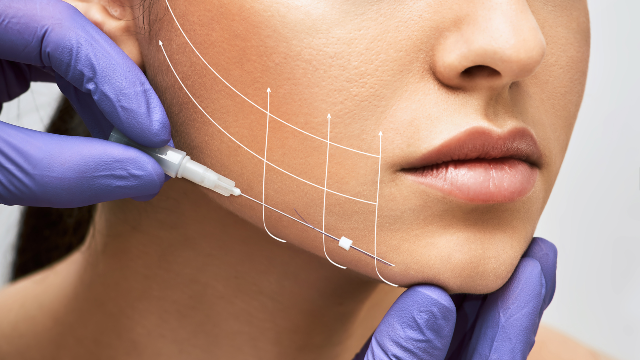
Thread Lifting vs Energy Lifting: When Do You Need It?
One category shows you something the same day; the other shows you something in six weeks. That timing difference decides more than any mechanism argument.
Learn More
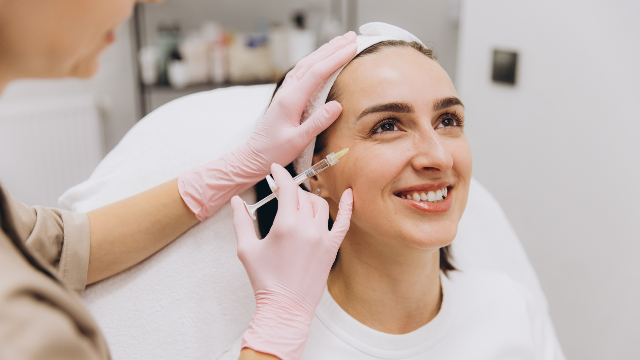
Botox vs Dermal Fillers: One Test in Front of a Mirror
Stop moving your face and look. A line that disappears and a line that stays are two different findings, and each one leads to a different injectable.
Learn More