Physician-Led Non-Surgical Lifting & Aesthetic Medicine in Gangnam, Seoul
4.8 Google Rating (56 Reviews)
en-SG

Medical Guide
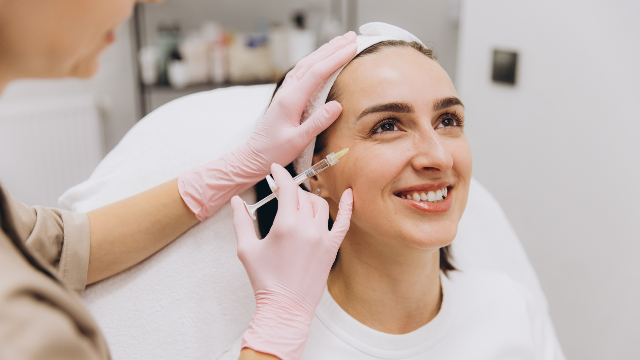
Botox vs Dermal Fillers: One Test in Front of a Mirror
Stop moving your face and look. A line that disappears and a line that stays are two different findings, and each one leads to a different injectable.
Schedule a ConsultationBotox vs Dermal Fillers: One Test in Front of a Mirror
Medically reviewed by Dr Jin-Woo Doh, Representative Director, JD Clinic
You can do most of this comparison yourself, right now, without knowing anything about either product.
Go to a mirror. Make the expression that shows the line that bothers you — frown, smile, raise your eyebrows. Look at it.
Now relax your face completely and look again.
If the line mostly disappears when your face is still, it is a movement line.
If it is still there, it is a resting line.
JD Clinic's two published records map onto that distinction almost exactly, and it is the most useful thirty seconds you can spend before a consultation.
What each record says it is for
Botox. A minimally invasive injectable that temporarily reduces targeted muscle activity, described as helping soften dynamic wrinkles and refine selected facial lines. Its candidate description is adults concerned about dynamic wrinkles or facial lines caused by repeated muscle movement.
Dermal fillers. A minimally invasive injectable using filler material, commonly hyaluronic acid, to add volume to selected areas that appear sunken or lack fullness, helping create a more balanced appearance and improve selected facial contours. Its candidate description is adults with localised volume loss, sunken areas or facial contour concerns.
One acts on muscle. One adds material. Those are not two versions of the same idea; they are answers to different findings, and the mirror test is the plain-language version of the difference.
The appointments are not alike
Worth knowing before you plan a day around either.
Botox: about ten minutes. Anaesthesia generally not required. Injections may cause brief stinging or pinching. Usual daily activities generally resume the same day, with mild redness, swelling or bruising possible.
Fillers: about ten to twenty minutes. Anaesthetic cream or local anaesthesia may be used depending on the area, the product and individual comfort. Stated recovery is same day to approximately one day, though mild swelling or bruising may continue longer.
So Botox is the shorter, lighter appointment of the two, and the only one on this pair that needs no numbing at all.
Onset runs in opposite directions
This is the second difference that changes how you plan, and it is easy to get backwards.
Filler shows something immediately. Volume improvement may be visible straight away — though the record is careful to add that temporary swelling can affect the initial appearance, with results settling as swelling decreases.
Botox does not. Its record states that effects develop progressively rather than immediately.
Which produces a practical asymmetry for a treatment trip: the injectable that shows you something on the day is the one whose early appearance is least trustworthy, and the one that shows you nothing on the day is the one that will change after you fly home.
Two consequences.
Do not judge either one on day two. For one, you are looking at swelling; for the other, you are looking at something that has not happened yet.
Ask when to judge. A specific week, for your specific plan. That answer is available at the consultation and nowhere else.
Durability, and why the numbers differ
Botox: commonly around three to six months, with retreatment considered from approximately three months, following consultation.
Fillers: approximately six to twelve months, varying by product, area and individual.
The reason is mechanistic rather than a quality difference: one temporarily reduces muscle activity and wears off as that activity returns; the other places material that is gradually absorbed.
For a patient travelling once a year, that gap matters. Neither figure reaches a year reliably, but the filler window is the closer of the two — and both records are explicit that the effects are temporary and do not prevent future change.
The risk conversation is not symmetrical
Both are ordinary medical procedures with ordinary after-effects. One of them carries a line the other does not, and it deserves to be stated plainly rather than buried.
Botox's named effects: temporary redness, swelling, tenderness, bruising, headache or localised discomfort, and — specific to how it works — temporary weakness or unintended effects in nearby muscles. Rare complications require medical evaluation. Its exclusions name active infection at the injection site, certain neuromuscular conditions, and known hypersensitivity to the product.
Fillers' named effects: temporary bruising and swelling, along with redness, tenderness, itching, lumps or asymmetry — and rare but serious complications, including vascular occlusion and tissue injury, that require prompt medical attention.
The difference in kind is worth understanding.
Botox's distinctive risk is functional and temporary — an effect on a muscle you did not intend to treat, which resolves as the treatment does.
Fillers' distinctive risk is urgent and rare — an obstruction that needs attention quickly rather than patience.
Which changes one practical thing for anyone on a fixed itinerary: a treatment whose rare complication needs prompt attention is one you want scheduled with room after it rather than against a departure. The National Library of Medicine's overview of emergency medical services and the CDC's guidance on what to do when sick abroad cover the situation where local care is the answer.
The US Food and Drug Administration publishes patient-facing material on both categories worth reading in the original: an overview of dermal fillers and soft tissue fillers, a plain-language guide of dermal filler dos and don'ts, and the National Library of Medicine's overview of botox.
What each asks you to disclose
Different lists, and each contains something patients routinely forget.
For Botox: previous botulinum toxin treatments, alongside medications, allergies, medical conditions and any planned procedures. Approximate dates are what matter — "roughly last March, forehead" is usable in a way that "a while ago" is not. And neuromuscular conditions appear in the exclusions, which is a category worth checking rather than assuming; the National Library of Medicine's overview of neuromuscular disorders is a reasonable starting point.
For fillers: previous filler treatments, anywhere on the face and however long ago, plus allergies, medications, medical conditions and active skin problems. The record also says explicitly: follow the clinic's instructions regarding medications or supplements that may increase bruising, and do not stop prescribed medication without medical advice.
That last sentence is the important one on both sides. Bring the list from the bottles, include supplements, and let the prescribing clinician make any decision about pausing anything. Drug safety, over-the-counter medicines and dietary supplements cover what belongs on it.
If you are pregnant or breastfeeding, say so — the filler record names that as a circumstance that may require postponement depending on product and situation. Pregnancy and medicines is the general background.
Both, or neither
Two outcomes this comparison should leave room for.
Both. The mirror test can come back ambiguous, because faces are not tidy — a line can be deepened by movement and also etched at rest. Whether treatments are combined, and in what order, is a clinical judgment. What you can do is ask about the combination rather than the component, because aftercare instructions stack and the restrictions that apply to your week are the union of everything you had.
Neither. If what you have noticed is loosening rather than lines, or pigment rather than either, neither injectable is the answer and the clinic's menu has other categories. Its published approach selects treatment after assessment rather than by device, and names avoidance of unnecessary treatment — set out on its about page.
What is not in either record
No product names. Botox's record describes botulinum toxin; the filler record names hyaluronic acid as the common material. Neither specifies a brand. Ask, and write down the answer — it is what any future clinician will ask for.
No doses or volumes. Individual.
No outcome statistics for either. The clinic publishes a patient review section, which is its own material rather than independent data.
No comparison of the two. Nothing published ranks them, because they answer different findings — which is the whole point of the mirror test.
The third possibility the mirror test surfaces
Do the test and there is an outcome this article has not covered yet: the line is gone when your face is still, and there is also a hollow you had not been looking at.
That combination is common, and it is the reason experienced patients talk about faces rather than lines. Movement creates the crease; loss of volume beneath makes it deeper and slower to smooth out. Two findings, stacked.
What to do with it is not to self-prescribe a combination. It is to describe both — "this line appears when I frown, and this area under my cheek looks flatter than it did" — and let the assessment decide whether one, both or neither is the answer.
Why the injectables are not the whole menu
One more thing the mirror test can reveal, and it points away from both treatments in this article.
If what you see at rest is not a line and not a hollow but a loosening — an edge that used to be defined and is not, tissue that sits lower than it did — then neither injectable is aimed at it. That finding belongs to the clinic's lifting category, which is a different set of treatments entirely, with different mechanisms and different timelines.
Which is why "Botox or filler?" is sometimes the wrong question rather than a hard one. The clinic's published position includes avoiding unnecessary treatment, and an assessment that redirects you is doing its job rather than failing to sell you something.
The Bottom Line
- Do the mirror test. A line that fades when your face is still is a movement line; one that stays is a resting line. The two published candidate descriptions map onto that distinction directly.
- Botox is the shorter, lighter appointment — about ten minutes with no anaesthesia — while fillers run ten to twenty minutes with cream or local anaesthesia.
- Onset runs opposite ways: filler shows something immediately but early swelling distorts it; Botox develops progressively and will change after you fly home.
- Durability differs: around three to six months for Botox against approximately six to twelve months for fillers, both temporary.
- The distinctive risks differ in kind — temporary effects on nearby muscles for one, and rare complications needing prompt attention for the other, which is a reason not to schedule fillers against a departure.
Frequently Asked Questions
How do I tell which one I need?
Look in a mirror with your face relaxed. A line that is only there when you move is a dynamic wrinkle; one that remains at rest suggests volume or contour rather than muscle movement.
Which appointment is shorter?
Botox — about ten minutes, with anaesthesia generally not required. Fillers take about ten to twenty minutes and may use cream or local anaesthesia.
Which one works faster?
Filler may show volume change immediately, although swelling affects the early appearance. Botox develops progressively rather than immediately.
Which lasts longer?
Fillers are stated at approximately six to twelve months; Botox at around three to six months. Both are temporary.
Can I have both?
Whether treatments are combined or sequenced is a clinical judgment for the consultation. Ask about the combined aftercare rather than the individual component.
What are the main risks?
Botox names temporary weakness or unintended effects in nearby muscles among its possible effects. Fillers name rare but serious complications including vascular occlusion and tissue injury requiring prompt medical attention.
What should I disclose beforehand?
Medications, supplements, allergies and medical conditions for both — plus previous botulinum toxin treatments for one and previous filler treatments for the other, with approximate dates.
Should I stop my medication before treatment?
No, not on your own. Tell the clinic what you take and let the prescribing clinician decide.
This article is for general informational purposes and does not constitute individualised medical advice. It is not a self-diagnosis tool. Treatment results may vary depending on individual conditions, skin characteristics, and treatment plans, and whether a procedure is appropriate for you can only be determined through a consultation with a qualified dermatologist or other appropriately qualified clinician who has examined you in person.
More Articles
Continue reading our clinical guides.
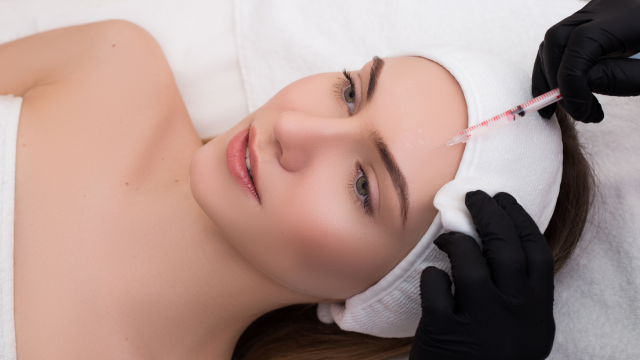
Botox at JD Clinic: A Ten-Minute Treatment, Explained
The shortest appointment on the menu, with a published caution attached. What the treatment reduces, how long that lasts, and what it does not promise.
Learn More
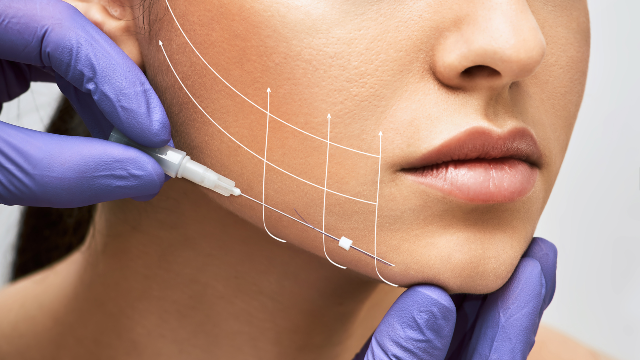
Thread Lifting vs Energy Lifting: When Do You Need It?
One category shows you something the same day; the other shows you something in six weeks. That timing difference decides more than any mechanism argument.
Learn More
Botox vs Dermal Fillers: One Test in Front of a Mirror
Stop moving your face and look. A line that disappears and a line that stays are two different findings, and each one leads to a different injectable.
Learn More